ai
-

The education landscape is set for radical transformation by 2040, focusing on personalized, competency-based learning due to technological advancements and economic demands. However, systemic challenges like digital inequity and institutional resistance highlight the need for proactive policy reforms. Educators must evolve into learning architects to facilitate this change effectively.
-

The report discusses the transition from traditional digital workflows to AI-integrated systems within organizations, highlighting a significant gap between employee familiarity with AI and its deployment. It introduces the “AI Workathon,” an experiential learning model aimed at bridging this gap through practical applications, while detailing necessary planning, execution, and assessment strategies.
-

The library landscape is evolving from passive information custodianship to active knowledge facilitation, largely due to AI integration. Libraries now utilize AI for resource management, metadata creation, and user personalization, transforming traditional services. This shift not only improves efficiency and user experience but also redefines the role of librarians in navigating the digital world.
-

Knowledge institutions are facing significant disruptions due to advanced technologies, economic pressures, and declining public trust. This report highlights the impact of Generative AI on academic integrity, the financial strain on higher education, and a crisis of authenticity due to deepfakes. Proactive governance reforms are essential for resilience and trust in knowledge systems.
-

The ongoing AI transformation, particularly through Generative AI and LLMs, is reshaping various sectors, accelerating market growth and worker skills demands. While it may displace some jobs, forecasts suggest a net gain of millions of new roles, emphasizing the need for continuous reskilling. Firms face strategic risks tied to infrastructure, compliance, and talent shortages.
-

The enterprise knowledge management landscape is rapidly evolving due to Generative AI, transitioning from passive document repositories to dynamic ecosystems that integrate knowledge into workflows. Organizations must enhance governance and architectural maturity to ensure AI outputs are explainable and trustworthy, paving the way for informed decision-making and resilient operations by 2025.
-

The global labor market faces significant transformation driven by automation and advanced technologies, resulting in both job displacement and creation. By 2030, an estimated 170 million new roles will emerge, yet many workers will need retraining due to rapid skill obsolescence. Continuous, adaptive learning and educational reform are essential to address skills gaps and enhance…
-

Social capital significantly influences various aspects of social life, including economic development and public health. It is characterized by bonding and bridging networks, which facilitate resource access and community resilience. However, excessive bonding can lead to exclusion, highlighting the need for balanced structures in research and policy to enhance overall community well-being.
-
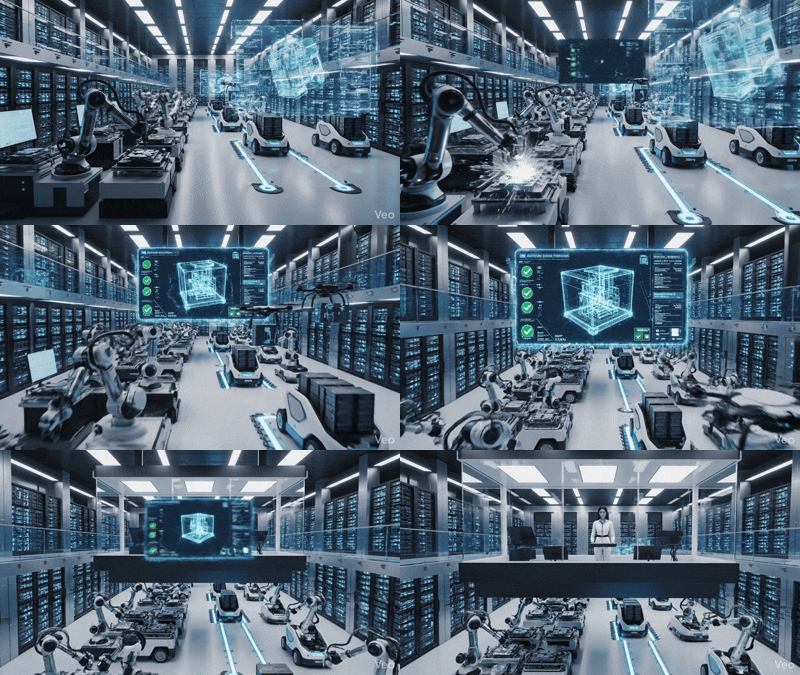
The integration of AI into business processes marks a transformative shift, requiring organizations to move from experimental use to enterprise-wide implementation. Successful AI deployment distinguishes between automation and augmentation, urging businesses to redesign workflows and adopt hybrid strategies. Governance, ethics, and continuous optimization are paramount for enduring success in this evolving landscape.
-

Abstract Businesses worldwide are investing in artificial intelligence (AI) with hopes of major productivity gains, yet many organizations see only modest improvements. This research proposal outlines a study on how companies can fulfill the promise of AI-driven productivity by fully integrating AI across all operations. Emphasizing generative AI – the latest AI frontier for creating…
 Journal for Policy & Market Research