business
-

The autonomous vehicle industry is transitioning from experimental phases to a structured market, projected to grow from $34.66 billion in 2025 to $237.12 billion by 2035. Key sectors include autonomous trucking, which addresses labor shortages and fuel optimization. Startups must navigate technical, legal, and financial challenges while focusing on safety and innovative regulatory compliance.
-

The global biotechnology industry is transitioning towards a disciplined growth model characterized by rigorous scientific inquiry and regulatory oversight as it moves into late 2025. Challenges remain in capital-efficient scaling, technology transfer, and intellectual property management, necessitating strategic partnerships and funding approaches to navigate high attrition rates and market complexities.
-

The global asset management sector is evolving due to technological advancements, regulatory dynamics, and market complexities. Establishing a firm today requires an understanding of jurisdictional differences, efficient capital strategies, and compliance with standards like GIPS. The industry is increasingly focused on democratizing access to private markets while embracing operational efficiency through outsourcing.
-
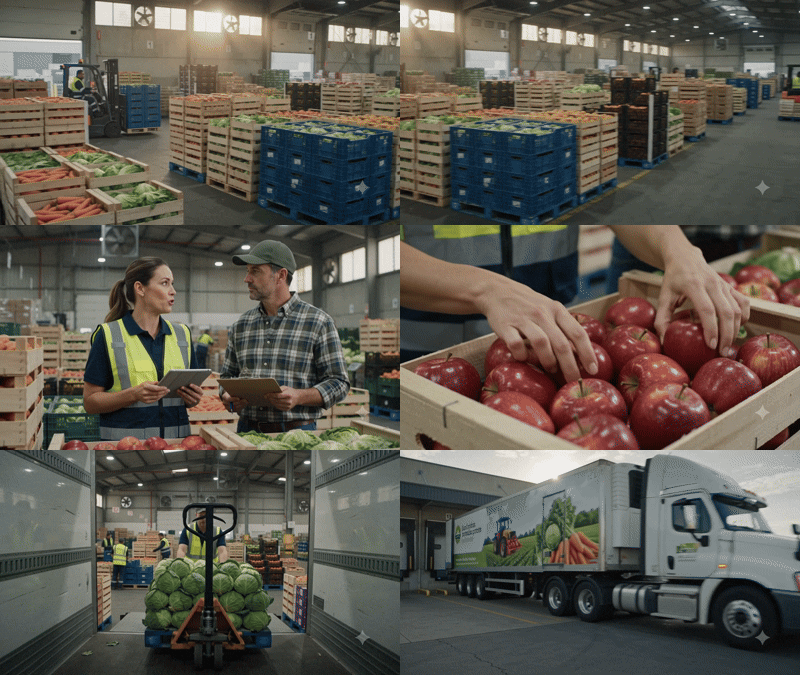
The agricultural wholesale distribution industry connects production to consumption within a volatile global food system facing technological and regulatory challenges. By 2026, businesses must adapt through advanced logistics, regulatory compliance, and strategic partnerships. Success hinges on effective supply chain management, cold chain integrity, and technological integration to ensure sustainability and profitability amidst shifting consumer demands.
-

The retail landscape is experiencing a significant transformation, driven by the direct-to-consumer (DTC) model. This shift enables brands to bypass intermediaries, gain control over customer engagement, and enhance profit margins. With rising e-commerce expectations and tailored experiences, companies must adapt their strategies to succeed in a more competitive, data-driven environment.
-

The agricultural machinery industry is transforming due to advancements in AI, robotics, and sustainable power systems. By 2026, agricultural robotics is expected to exceed $20 billion. This shift addresses labor shortages and enhances productivity through technology integration. Entrepreneurs face challenges in capital-intensive manufacturing, regulatory compliance, and building relationships with modern farmers.
-

The advertising agency landscape has transformed, emphasizing niche specialization, automation, and recurring revenue models due to digital advancements and data privacy laws. New agencies face high failure rates if they lack focus. Success in 2026 relies on strategic specialization, optimized legal and operational frameworks, and effective client acquisition strategies.
-

The administrative support industry has transformed into a strategic global sector focusing on specialized services, particularly virtual assistance. By 2025, 34.6 million U.S. workers will engage in telework, leveraging technology for efficiency. The demand for niche roles and AI integration will shape future growth, emphasizing operational complexity and specialized support.
-

The accounting and payroll services sector is evolving rapidly, blending compliance with strategic advisory roles. Successful firms in 2026 must leverage technology, understand global trends, and navigate complex regulations. The shift toward subscription pricing and specialized niches, alongside the adoption of AI, is reshaping industry growth and operational strategies.
-

The corporate strategy landscape in 2026 is influenced by volatility and technological advancements, leading case studies to evolve into diagnostic tools for executives. This shift emphasizes sustainability and operational adjustments in legacy industries while introducing new metrics for evaluating case impact. Companies leverage AI and sustainability for transformative strategies, focusing on resilience amid global challenges.
 Journal for Policy & Market Research