digital-marketing
-

The 2026 education and training services landscape is being reshaped by AI, a global skills gap, and a shift to lifelong learning. Successful entrants must understand pedagogical excellence, regulatory compliance, and market positioning. Emphasizing niche selection and engaging target audiences will be vital, alongside hybrid business models for scalability and impact.
-
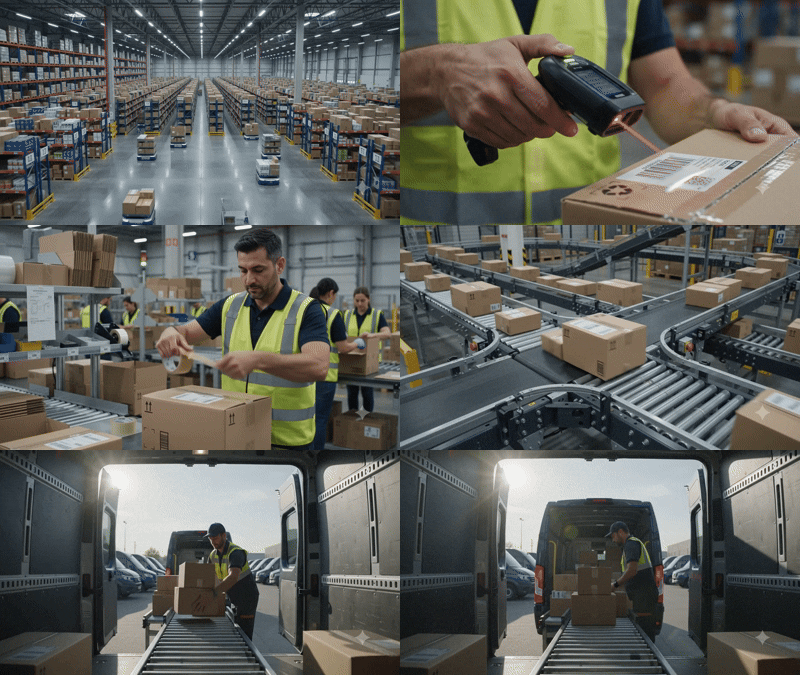
By 2025, the global ecommerce market is projected to reach $6.42 trillion, shaped by advanced technologies and shifting consumer behaviors. Crucial strategies involve leveraging generative AI, optimizing supply chains, varying business models, and ensuring regulatory compliance. Success hinges on brand-centric approaches and enhancing customer experiences through personalization and sustainability.
-

The document management industry has evolved into a foundational component of enterprise-level AI, focusing on data quality as a competitive advantage. By 2026, AI and blockchain integration will enhance document workflows and secure authenticity. Businesses must adopt strategic partnerships, quality control measures, and advanced technologies to thrive in this rapidly transforming landscape.
-

The organizational landscape for events is shifting towards hybrid models, combining in-person and online experiences. By 2026, hybrid events are expected to become the standard, enhancing audience reach and engagement. This change requires robust technology, flexible content delivery, and a focus on meaningful interactions, ultimately transforming event strategies and monetization approaches.
-

In 2026, direct marketing has evolved into a data-driven ecosystem, blending traditional and digital channels. Marketers are now focusing on hyper-personalization, leveraging AI and automation to enhance engagement. Successful agencies require specialization, strategic partnerships, and a robust technology stack while navigating stricter legal frameworks surrounding data privacy.
-
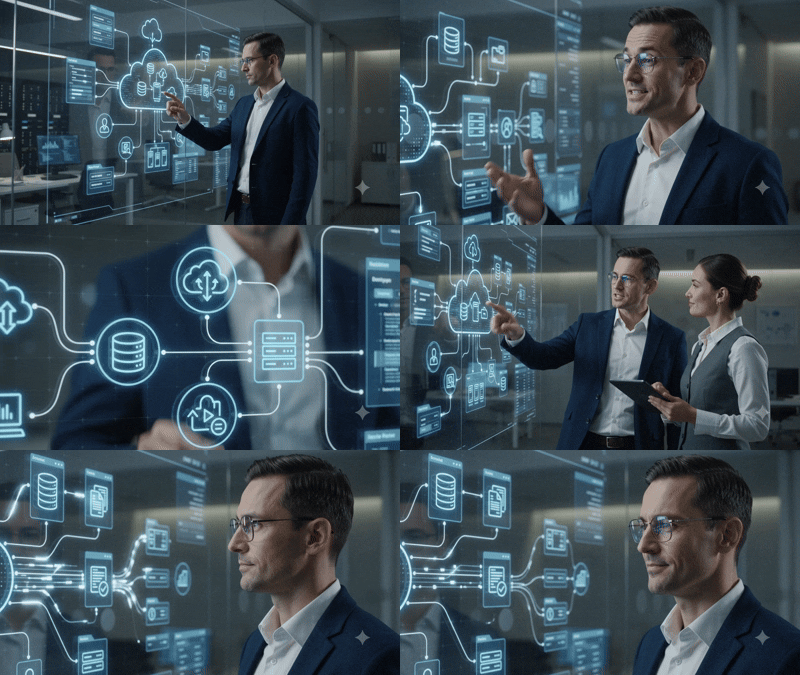
The digital transformation landscape is evolving, moving beyond simple digitization to strategies that enhance business value through AI and cloud solutions. Consultancies must embrace a comprehensive approach, focusing on legal structures, talent orchestration, value-based pricing, and industry specialization to thrive in a market projected to reach $3,289.4 billion by 2030.
-

The digital advertising industry in 2026 is evolving significantly with the rise of generative ecosystems and privacy-first practices. Agencies must navigate complex legal and regulatory frameworks while transitioning to performance-driven models like Generative Engine Optimization (GEO). The focus is on hyper-personalization, automation, and client relationships, ensuring sustainable growth amidst rapid technological changes.
-

The global content marketing landscape is shifting from traditional volume-centric strategies to an orchestration-based approach, emphasizing AI integration and emotional intelligence. Agencies must focus on specialization, strengthen technological infrastructure, and document standard operating procedures for scalability. As audiences demand authenticity, the success of marketing will hinge on depth, storytelling, and ethical AI governance.
-

The creator economy is transforming from a decentralized activity into a significant economic force, with a projected North American market growth from $34.12 billion in 2025 to $277.41 billion by 2032. A shift towards entrepreneurial models over social-first approaches is crucial for creators, emphasizing audience ownership and diversified revenue streams for sustainable success.
-

The physical retail landscape in 2026 is evolving into a sensory-driven experience that integrates digital and physical shopping. Consumers, especially Gen Z, prefer in-person interactions. Successful brick-and-mortar businesses require comprehensive planning, location analytics, and an understanding of regulatory frameworks, along with innovative marketing strategies and seamless operational integration.
 Journal for Policy & Market Research