news
-

The African Investment Mandate (2025-2035) highlights the continent’s high-growth potential amidst significant risks, forecasting a 4.1-4.4% economic growth driven by demographics and integration efforts. Key strategies include operationalizing the AfCFTA, investing in infrastructure, and focusing on sectors like FinTech and renewable energy, while prioritizing localization and risk assessment.
-

The global economic landscape has shifted from a stable period of globalization to a fragmented system influenced by geopolitical competition. This transition to a Geotechnomic Nexus emphasizes the need for resilience over efficiency in supply chains. Economic forecasts indicate subdued growth and persistent inflation driven by protectionist policies and technological rivalry, particularly between the U.S.…
-

The cultivation of thriving communities requires a multi-dimensional approach, prioritizing social relationships, governance, and subjective well-being over economic indicators. Essential for success are six interconnected domains of flourishing: individual well-being, relationships, proficient leadership, healthy practices, shared purpose, and a supportive physical environment. This comprehensive framework enables effective governance, equitable development, and community resilience.
-

Agritourism is a growing sector that merges agriculture with tourism, enhancing rural economies by diversifying income sources. With projected growth rates of around 11.9%, it leverages farm resources for experiential marketing. However, challenges such as sustainability and preserving authenticity must be managed to prevent environmental degradation and commodification of rural life.
-

The investment landscape in Africa is shifting from reliance on foreign direct investment to mobilizing diaspora capital, which reached $656 billion in remittances in 2023. This transition is driven by FinTech growth and targeted investments in sectors like FinTech, agribusiness, and renewable energy, emphasizing structured financial products for sustainable development.
-

The informal economy is a crucial aspect of Africa’s economic landscape, responsible for over 60% of employment and nearly 38% of GDP. Predominantly comprising women and youth, its growth is hampered by financial exclusion and regulatory challenges. Effective policies must promote formalization, improve financial access, and leverage digital solutions for sustainable job creation.
-
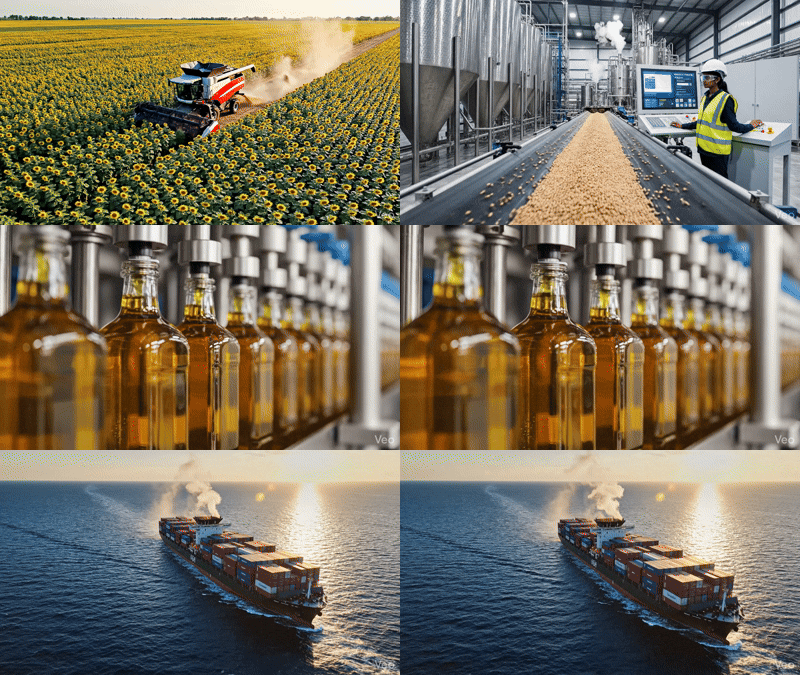
The global oilseed and vegetable oil industry is rapidly evolving due to advancements in biotechnology and increasing demand for biofuels. By 2025, the market is expected to reach USD 321.36 billion, with significant growth driven by soybeans. Competition from South America and changes in consumption patterns in Asia-Pacific further influence this dynamic sector.
-

The African investment landscape presents a paradox of high potential returns against significant risks. Strategic success relies on tailored approaches, emphasizing digital transformation and localized solutions. Despite projected GDP growth, vulnerabilities exist due to fiscal pressures. Key sectors include fintech, renewable energy, and agribusiness, requiring targeted investments and risk management strategies.
-

Wealth advisors specialize in serving High-Net-Worth (HNW) and Ultra-High-Net-Worth (UHNW) clients, offering integrated financial services encompassing investment management, tax and estate planning, and philanthropic strategies. Their unique role involves acting as central coordinators among various specialists, ensuring comprehensive support for complex financial needs while adhering to fiduciary standards.
-

The African market in 2026 is poised for disciplined growth, emphasizing self-sufficiency and profitability despite global funding challenges. Businesses must address domestic infrastructure gaps while leveraging the African Continental Free Trade Area (AfCFTA). High-quality job creation is crucial for socioeconomic stability, particularly for the continent’s young population facing employment crises.
 Journal for Policy & Market Research