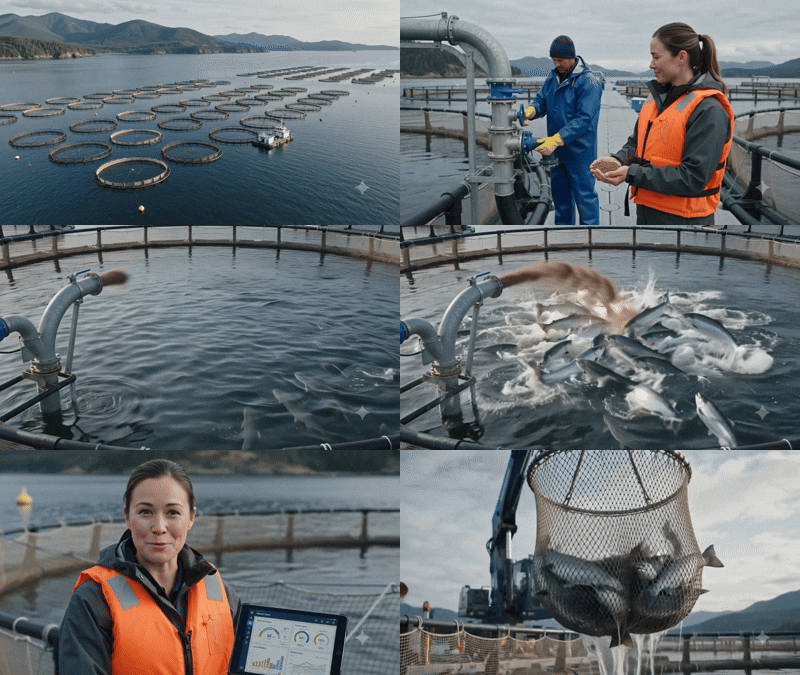
The global seafood landscape is undergoing a fundamental transformation as wild-capture fisheries reach their biological limits and the human population continues to expand. This transition, often referred to as the “Blue Revolution,” places aquaculture at the forefront of global food security and economic development. Defined by the National Aquaculture Act of 1980 as the propagation and rearing of aquatic species in controlled or selected environments, aquaculture represents the most resource-efficient method of producing high-quality animal protein.[1, 2] In the United States, federal policy has increasingly prioritized the expansion of sustainable domestic production to reduce the trade deficit in seafood and foster resilient rural and coastal economies.[2] The complexity of starting and growing an aquaculture business necessitates a sophisticated integration of biological science, engineering, financial modeling, and regulatory navigation. This report provides an exhaustive analysis of the strategic pathways for establishing and scaling aquaculture ventures, synthesizing data from federal agencies, research institutions, and industry benchmarks to guide professional stakeholders through the lifecycle of an aquatic enterprise.
Technical Paradigms of Production Systems
The selection of a production system is the foundational decision that dictates an enterprise’s capital requirements, operational complexity, and environmental footprint. Systems range from traditional low-input ponds to hyper-intensive, technologically driven recirculating systems.
Recirculating Aquaculture Systems (RAS)
Recirculating Aquaculture Systems represent the frontier of land-based, controlled-environment aquaculture. These systems are designed to reuse up to 99% of culture water by cycling it through a series of mechanical and biological treatment units.[3] In a standard RAS configuration, water exits the rearing tanks carrying metabolic waste, which is first processed by solids removal hardware, such as rotary drum filters, to eliminate fecal matter and uneaten feed. Subsequently, the water enters a biological filter where nitrifying bacteria convert toxic ammonia (NH3) into nitrite (NO2−) and then into less harmful nitrate (NO3−). Further treatment steps include degasification to remove excess carbon dioxide, oxygenation to maintain life-sustaining levels for high-density populations, and disinfection via ultraviolet (UV) radiation or ozone to neutralize pathogens.[3, 4]
The strategic advantage of RAS lies in its geographic flexibility and biosecurity. Because the system is largely independent of the external environment, it can be sited near major urban markets, reducing transportation costs and the environmental impact of logistics.[4, 5] However, this control comes at a massive capital cost. A commercial-scale RAS facility may require an initial investment exceeding $850 million, with a significant portion allocated to specialized plumbing, bioreactors, and redundant life-support systems.[6] The operational risk is similarly high; mechanical failures or power outages can result in the rapid loss of the entire stock if sophisticated backup systems are not in place.
Pond and Semi-Intensive Cultivation
Pond aquaculture remains the most prevalent method globally, particularly for species like catfish, tilapia, and shrimp.[7, 8] These systems utilize natural or man-made earthen structures where the culture environment is managed through a combination of natural productivity and supplemental aeration. While traditional pond farming has lower capital entry barriers—ranging from $2,500 to $8,000 per acre for excavation—it is characterized by lower stocking densities and higher susceptibility to climate fluctuations and predation.[7, 9]
Modern pond management has evolved toward “semi-intensive” models, which incorporate mechanical aeration (such as paddlewheel aerators) to maintain dissolved oxygen (DO) levels above 5 mg/L, essential for robust growth and reduced mortality.[10] In regions with high evaporation rates, pond culture faces significant water-use challenges; a one-hectare pond can consume up to 30,000 tons of water annually through seepage and evaporation.[11] To mitigate these issues, farmers are increasingly adopting “biofloc” technology or partial recirculation within pond systems to enhance nutrient recycling and water efficiency.[3, 10]
Open Water Cage and Net-Pen Infrastructure
For the production of high-value finfish like Atlantic salmon and rainbow trout, open water cages and net-pens offer unmatched scalability. These structures consist of floating steel or high-density polyethylene (HDPE) frames with suspended nets moored in sheltered coastal waters or deep lakes.[7] They rely on natural water currents to provide oxygen and flush away metabolic byproducts, making them highly efficient in terms of water use.[7]
The primary challenge for cage culture is the lack of environmental control. Farms are vulnerable to external threats such as harmful algal blooms (HABs), sea-level rise, and storm events.[12] Furthermore, the regulatory environment for marine cage culture is intensely rigorous, requiring extensive environmental impact statements (EIS) to ensure that nutrient loading and potential escapes do not adversely affect wild populations or benthic habitats.[2, 13]
Comparative Metrics of Production Systems
The following table provides a concise comparison of the primary aquaculture systems utilized in modern commercial operations.
| System Type | Capital Intensity | Environmental Control | Water Efficiency | Land Requirement | Typical Species |
|---|---|---|---|---|---|
| RAS | Extremely High | Total | Excellent | Low (Indoor) | Tilapia, Salmon, Shrimp |
| Ponds | Low to Moderate | Minimal | Low | High | Catfish, Carp, Shrimp |
| Cages | Moderate | Partial | High (Natural) | N/A (Water-based) | Salmon, Trout, Cobia |
| Flow-Through | Moderate | Partial | Low | Moderate | Trout, Char, Smolt |
| Aquaponics | High | Total | Excellent | Low | Tilapia, Leafy Greens |
[6, 7, 9, 11, 14]
Strategic Business Planning and Market Analysis
The transition from a pilot-scale hobby to a commercial aquaculture enterprise requires a rigorous business planning process. Industry data suggests that more aquaculture businesses fail due to poor management and financial planning than due to technical production failures.[15] A comprehensive business plan serves not only as a roadmap for the entrepreneur but also as a primary document for securing external financing from agricultural lenders and government agencies.[16, 17]
Foundational Business Planning Components
An expert-level aquaculture business plan must integrate biological realities with conservative financial projections. The core sections typically include:
- Executive Summary and Mission: Clearly defining the legal structure (LLC, Corporation, etc.), ownership, and the core values that drive the enterprise.[15, 17]
- Market Analysis: Identifying the target “trade area” and specific customer segments. This includes analyzing per capita fish consumption trends, which have risen significantly since the 1980s, and identifying niche opportunities for locally grown, sustainable seafood.[17]
- Operations and Site Selection: Detailing the topography, soil quality (clay content for ponds), and water supply of the chosen location.[17] This section must also address zoning and environmental restrictions that could impede development.[16]
- Management Team: Resumes of key personnel, including biologists and technicians, and a clear division of roles for feeding, water testing, and sales.[9, 17]
- Financial Projections: Three-year projections of balance sheets, income statements, and cash flow budgets. Cash flow is particularly critical, as the lag between stocking and harvest can range from 8 months to 3 years depending on the species.[6, 10, 15]
Market Strategy and Supply Chain Logistics
A common pitfall for new aquaculture entrants is a lack of focus on the marketing and distribution end of the supply chain. In the oyster industry, for example, research has shown that small-scale farms often struggle with profitability when relying solely on local markets, which may have limited absorption capacity.[18] A more resilient strategy involves a diversified marketing approach, selling a portion of the harvest to wholesalers at the “farmgate” while maintaining high-margin direct-to-restaurant channels for premium products.[18]
For shellfish and finfish destined for the live or fresh half-shell market, reputation and reliability are the primary drivers of price premiums. Branding strategies that emphasize sustainability, quality, and the “story” of the farm can help producers differentiate their products from generic imports.[18, 19] Furthermore, producers must account for the volatility of the seafood market, which can be impacted by everything from religious holidays (creating seasonal demand spikes) to global health crises that close restaurant channels.[15, 18]
Regulatory Framework and Permitting Processes
Aquaculture in the United States is governed by a complex web of federal, state, and local regulations designed to ensure food safety, water quality, and environmental protection.[2] Navigating this “permitting maze” is often the most time-consuming phase of starting a business, with some marine leases taking between three and ten years to secure.[20]
Federal Agency Oversight
Depending on the scale and location of the project, several federal agencies may have jurisdiction:
- U.S. Army Corps of Engineers (USACE): Responsible for permitting structures in navigable waters under Section 10 of the Rivers and Harbors Act and Section 404 of the Clean Water Act. Many shellfish and seaweed operations fall under “nationwide permits” (e.g., NWP 48, 55, 56), which streamline the process for small-scale projects.[13]
- Environmental Protection Agency (EPA): Manages the National Pollutant Discharge Elimination System (NPDES). Facilities that discharge water into the environment for more than 30 days per year and produce more than specific weight thresholds (e.g., 100,000 lbs for warm-water species) are classified as Concentrated Aquatic Animal Production (CAAP) facilities and must adhere to strict effluent guidelines.[21]
- National Oceanic and Atmospheric Administration (NOAA): Through NOAA Fisheries, the agency provides guidance on marine aquaculture policy and serves as the lead for National Environmental Policy Act (NEPA) reviews for offshore projects.[2]
- U.S. Department of Agriculture (USDA): While primarily a support and funding agency, the USDA’s Animal and Plant Health Inspection Service (APHIS) provides critical consultation on aquatic animal health and biosecurity.[13, 22]
Food Safety and Quality Standards
The Food and Drug Administration (FDA) is responsible for the safety of both domestic and imported aquaculture products. Central to this oversight is the control of animal drug residues. Only medicinal products approved by the FDA may be used in aquaculture, and producers must strictly observe “withdrawal periods”—the time required for a drug to clear the animal’s system before harvest—to ensure that no harmful residues reach the consumer.[23] Additionally, producers must implement Hazard Analysis Critical Control Point (HACCP) plans to identify and mitigate biological, chemical, and physical hazards throughout the production and processing cycle.[23]
Capitalization and Financial Management
Aquaculture is an intensely capital-demanding industry, requiring significant upfront investments in infrastructure and specialized equipment before the first harvest can generate revenue.[6, 24] Understanding the breakdown of Capital Expenditure (CAPEX) and Operational Expenditure (OPEX) is vital for long-term survival.
CAPEX Breakdown for Modern Facilities
For a high-intensity land-based facility, such as a commercial RAS, the initial outlays are dominated by fixed assets.
| Expenditure Category | Estimated Cost (Commercial Scale) | Description |
|---|---|---|
| Land & Construction | $45,000,000 | Site acquisition and building of biosecure facility. |
| RAS Equipment | $12,000,000 | Filtration, bioreactors, UV, and pumping hardware. |
| Processing Gear | $800,000 | Machinery for value-added filleting and packaging. |
| Initial Stock | $150,000 | Purchase of broodstock or juveniles (fingerlings). |
| Working Capital | $792,000,000 | Buffer to cover negative cash flow until breakeven. |
[6]
While these figures represent a massive industrial operation, entry-level ventures can start for as little as $10,000 to $500,000, focusing on pond culture or small-scale shellfish leases.[24] Regardless of scale, entrepreneurs must secure funding that matches the useful life of their equipment, often utilizing a mix of equity and long-term debt secured by facility collateral.[6]
OPEX and Feed Efficiency
Operational costs in aquaculture are dominated by feed, which typically accounts for 50% to 70% of total production costs.[3, 24] The Feed Conversion Ratio (FCR)—the amount of feed required to produce one kilogram of fish weight—is the primary driver of profitability. An FCR of 1.5 to 2.0 is common for semi-intensive tilapia farming, while high-efficiency salmonid operations strive for FCRs closer to 1.0.[10, 25]
Energy costs also represent a significant portion of OPEX, particularly in RAS and flow-through systems that require continuous pumping and aeration. Innovations in renewable energy, such as solar or wind integration, are increasingly being used to mitigate these costs and improve the environmental profile of the business.[12, 25]
Species Selection and Biological Management
The choice of species must be an intersection of the farm’s environmental capabilities and the market’s demand.[5, 9] Different species groups present unique biological challenges and market opportunities.
Finfish: Tilapia, Catfish, and Salmonids
Tilapia is widely considered an ideal species for beginners and large-scale intensive operations alike due to its fast growth, resilience to poor water quality, and high tolerance for crowding.[9, 10] Channel catfish remain the backbone of the U.S. freshwater industry, primarily cultured in large pond clusters in the Mississippi Delta region.[8, 26]
Salmonids (trout, salmon, char) require cold, highly oxygenated water and are primarily produced in flow-through raceways or open-water net-pens.[7] While they command higher market prices, their sensitivity to water temperature and environmental stress makes them a higher-risk venture in the face of warming climates.[12]
Shellfish: Oysters, Clams, and Mussels
Shellfish aquaculture is highly regarded for its positive environmental impacts. As filter feeders, oysters and mussels improve water quality by removing nitrogen and suspended solids from the water column.[2, 19] The business model for shellfish often focuses on the high-value “half-shell” market, where aesthetics and geographic branding (terroir) drive consumer preferences.[18] Siting is the most critical factor for shellfish, as the farm must have access to clean, nutrient-rich water with consistent tidal flow to supply natural plankton.[19]
Macroalgae: The Emerging Seaweed Sector
The cultivation of seaweeds (kelp, dulse, nori) is an rapidly expanding sector with applications in food, pharmaceuticals, and carbon sequestration.[20, 27] Seaweed farming is attractive because it requires no freshwater, fertilizers, or arable land.[20] The production cycle typically involves a land-based hatchery phase where “propagules” are set on spooled string, which is then out-planted to open-water longlines for the winter growing season.[20]
Scaling Operations through Industry 4.0
To achieve global competitiveness and operational resilience, aquaculture businesses are increasingly turning to advanced technologies often grouped under the “Aquaculture 4.0” umbrella.[3, 28]
IoT and Smart Monitoring
Real-time monitoring systems use IoT sensors to continuously track critical water quality parameters, including Dissolved Oxygen (DO), pH, ammonia, nitrite, and salinity.[3] This data is streamed to mobile dashboards, allowing managers to respond instantly to environmental shifts. Advanced systems utilize cameras and machine learning to analyze fish behavior, detecting signs of distress or disease before clinical symptoms appear.[3]
Automation and Robotics
As labor remains one of the highest operating costs, automation in feeding and maintenance is essential for scaling. Precision feeders utilize acoustic or visual sensors to detect when fish are satiated, cutting off the feed supply to minimize waste and nutrient loading.[3] Underwater drones (ROVs) are increasingly used for net inspections and cleaning, reducing the need for dangerous diving operations and improving overall safety.[3]
Breeding and Genetic Selection
The development of genetically improved strains is a quiet revolution in the sector. Selective breeding for traits such as fast growth, thermal tolerance, and disease resistance has led to significantly improved yields.[12, 25] For example, the development of Pacific oyster strains resistant to ocean acidification is critical for the survival of the industry in the Pacific Northwest.[12]
Biosecurity and Pathogen Management
In the high-density environment of commercial aquaculture, disease is a constant threat that can cause billions of dollars in losses globally.[12, 29] A robust biosecurity plan is the primary defense against catastrophic mortality.
Major Pathogens and Environmental Triggers
Many aquatic pathogens are “opportunistic,” meaning they become lethal only when the fish are stressed by poor water quality or fluctuating temperatures.[12] Common threats include:
- Bacteria: Vibrio spp. (vibriosis), Aeromonas hydrophila (hemorrhagic septicemia), and Flavobacterium columnare (columnaris disease).[12]
- Viruses: White Spot Syndrome Virus (WSSV) in shrimp, which can be triggered by rapid temperature spikes.[12, 29]
- Parasites: Ichthyophthirius multifiliis (white spot disease), which spreads more rapidly in warmer water.[12]
Biosecurity Strategies
Effective biosecurity involves a multi-layered approach:
- Exclusion: Sourcing disease-free eggs or fingerlings from certified hatcheries and implementing strict quarantine protocols for all new stock.[5, 10]
- Vaccination: Using automated vaccine injectors to provide individual protection to high-value finfish.[3]
- Water Treatment: In RAS, the use of UV sterilization and ozone disinfection to neutralize waterborne pathogens before they reach the rearing tanks.[3]
- Monitoring: Implementing molecular detection systems (e.g., qPCR) to identify pathogens at the genetic level before an outbreak manifests.[12]
Waste Management and the Circular Bioeconomy
A major frontier in aquaculture growth is the transition from a linear “take-make-waste” model to a circular bioeconomy, where every byproduct is viewed as a valuable resource.[30, 31]
Valorization of By-Products
Approximately 70% of fish weight can end up as processing waste (heads, skins, viscera, bones).[31] However, this “waste” contains high concentrations of bioactive compounds.
| By-Product | Potential Value-Added Product | Industrial Application |
|---|---|---|
| Skins | Collagen and Gelatin | Cosmetics, Medical wound healing. |
| Bones | Calcium and Lipids | Animal feed, Nutritional supplements. |
| Viscera | Enzymes (Trypsin) and Oils | Biofuels, Proteolytic enzymes for food. |
| Scales | Chitin and Chitosan | Bioplastics, Antimicrobial coatings. |
| Swim Bladder | High-grade Collagen | Functional foods, Traditional medicine. |
[31, 32, 33]
Large-scale processors, such as StarKist, have successfully integrated fish meal and oil production into their facilities, supplying local aquaculture farms and reducing the need for imported feed.[34]
Integrated Multi-Trophic Aquaculture (IMTA)
IMTA systems represent a biological approach to waste management. By farming species from different trophic levels together—for example, finfish, seaweed, and shellfish—the nutrients from the finfish feed are recycled by the seaweed and filter-feeders.[12, 25] This not only reduces the environmental impact of nutrient loading but also provides the farmer with multiple revenue streams from a single site.[25]
Climate Resilience and Adaptive Management
Climate change is fundamentally altering the environmental parameters of aquaculture, including water temperature, salinity, pH, and oxygenation.[12] Building a resilient business requires long-term planning for these shifts.
Impacts of a Warming World
Warming waters have dual negative impacts: they reduce the available dissolved oxygen for fish while simultaneously accelerating the metabolic rates of pathogens.[12] Ocean acidification threatens the entire shellfish sector by making it difficult for organisms to build their calcium carbonate shells.[12, 35] Furthermore, the increased frequency of extreme weather events, such as hurricanes and floods, poses a direct threat to infrastructure like cages and pond levees.[12, 29]
Adaptive Strategies
Forward-thinking entrepreneurs are adopting several strategies to mitigate climate risk:
- Climate-Smart Species Selection: Shifting toward species with higher thermal tolerances, such as barramundi or specific tilapia strains.[12]
- Offshore Expansion: Moving coastal aquaculture further into the open ocean to access more stable water temperatures and higher flushing rates.[2, 25]
- Digital Early Warning Systems: Utilizing satellite imaging and predictive modeling to monitor ocean temperatures and harmful algal blooms, allowing for proactive stock management.[12]
Conclusions and Strategic Outlook
The global aquaculture industry stands at a critical juncture. The shift toward intensification and technological integration is inevitable as land and water resources become increasingly scarce. For the modern entrepreneur, starting and growing an aquaculture business is no longer just a matter of animal husbandry; it is a complex exercise in systems engineering and strategic management.
The successful ventures of the next decade will be those that embrace “Lean” management principles—minimizing waste and maximizing value at every step of the production cycle.[36] They will be businesses that leverage Industry 4.0 tools not just for efficiency, but for the transparency and traceability that the modern consumer demands.[3] By aligning with the regulatory priorities of the National Aquaculture Act and the sustainability goals of the circular bioeconomy, aquaculture producers can build resilient enterprises that are both economically profitable and ecologically restorative. The path forward requires a persistent commitment to innovation, a rigorous approach to biosecurity, and a deep understanding of the complex social-ecological systems in which these businesses operate.
——————————————————————————–
- Aquaculture and Aquaponics – National Agricultural Library – USDA, https://www.nal.usda.gov/farms-and-agricultural-production-systems/aquaculture-and-aquaponics
- Aquaculture – NOAA Fisheries, https://www.fisheries.noaa.gov/topic/aquaculture
- Top Aquaculture Technologies Transforming Farming in 2025, https://agtech.folio3.com/blogs/top-aquaculture-technologies-in-farming/
- Explained: What is RAS Aquaculture? – ASC International, https://asc-aqua.org/blog/explained-what-is-ras-aquaculture/
- How To Start an Aquaculture and Fish Farming Business | ClickUp™, https://clickup.com/p/small-business/how-to-start-aquaculture-and-fish-farming-business
- Fish Farming Startup Costs: $76M CAPEX & 15-Month Breakeven;, https://financialmodelslab.com/blogs/startup-costs/fish-farming
- Aquaculture production systems | ontario.ca, https://www.ontario.ca/page/aquaculture-production-systems
- AQUACULTURE METHODS AND PRACTICES: A SELECTED REVIEW, https://www.fao.org/4/t8598e/t8598e05.htm
- Fish Farming Business Plan: From Startup to Sustainable Growth – Hiseadock, https://www.hiseadock.com/fish-farming-business/
- Fish Farming Business Plan: Step-by-Step Guide to Profitable Setup – Boss Wallah Media, https://bosswallah.com/blog/local-business/fish-farming-business-plan-step-by-step-guide-to-profitable-setup/
- 4 Types Of Aquaculture Systems | Atlas Scientific, https://atlas-scientific.com/blog/types-of-aquaculture/
- Review on climate change, microbial resilience, and disease risks in …, https://pmc.ncbi.nlm.nih.gov/articles/PMC12362130/
- Offshore Aquaculture Permitting Guide | NOAA Fisheries, https://www.fisheries.noaa.gov/pacific-islands/aquaculture/offshore-aquaculture-permitting-guide
- Aquaculture grow out systems explained, https://www.aquacultureid.com/grow-out-systems/
- Planning for Success in Your Aquaculture Business – RI Coastal Resources Management Council, https://www.crmc.ri.gov/aquaculture/riawg/NRAC101_planning_for_success.pdf
- Factors to Consider in Establishing a Successful Aquaculture Business in the North Central Region, https://www.ncrac.org/files/inline-files/tb106_0.pdf
- Aquaculture Business Plan Business Name – Type your information …, https://southcenters.osu.edu/sites/southc/files/site-library/site-documents/abc/aquaculturebusinessplan.pdf
- ASSESSMENT OF CRITICAL TRANSPORTATION AND …, https://www.agecon.msstate.edu/pdf/Assessment-of-critical-transportation-and-marketing-roadblaocks-and-opportunities-for-gulf-coast-shellfish-aquaculture.pdf
- How To Start a Shellfish Aquaculture Business | ClickUp™, https://clickup.com/p/small-business/how-to-start-shellfish-aquaculture-business
- Seaweed Aquaculture | California Sea Grant, https://caseagrant.ucsd.edu/our-work/discover-california-seafood/seaweed-aquaculture
- Aquaculture NPDES Permitting | US EPA, https://www.epa.gov/npdes/aquaculture-npdes-permitting
- Aquaculture is Agriculture: USDA’s Role in Supporting Farmers of Fish and Shellfish, https://www.usda.gov/farming-and-ranching/aquaculture/aquaculture-agriculture-usdas-role-supporting-farmers-fish-and-shellfish
- Aquacultured Seafood – FDA, https://www.fda.gov/food/seafood-guidance-documents-regulatory-information/aquacultured-seafood
- How to Start a Fish Farm – ZenBusiness, https://www.zenbusiness.com/start-fish-farm/
- Implementing sustainable aquaculture management systems – Food Forward NDCs, https://foodforwardndcs.panda.org/food-production/implementing-sustainable-aquaculture-management-systems/
- North Central Regional Aquaculture Industry: Business Models – MU Extension, https://extension.missouri.edu/publications/mx466
- Kelp Farming Guidebook – University of Connecticut, https://seagrant.media.uconn.edu/wp-content/uploads/sites/1985/2024/05/Kelp-Farming-Guide-w-Annex-5.8-MR.FINAL_.pdf
- Use of industry 4.0 technologies to reduce and valorize seafood waste and by-products: A narrative review on current knowledge – NIH, https://pmc.ncbi.nlm.nih.gov/articles/PMC10160358/
- Transforming risk into resilience: a review of insurance strategies for sustainable shrimp aquaculture in India and beyond – Frontiers, https://www.frontiersin.org/journals/sustainable-food-systems/articles/10.3389/fsufs.2025.1663329/full
- “The Waste Management Of Large-Scale Recirculating Aquaculture Systems ” by Franco R. Pilone – DUNE, https://dune.une.edu/theses/393/
- Fish Waste to Valuable Products | springerprofessional.de, https://www.springerprofessional.de/en/fish-waste-to-valuable-products/26744538
- The Revalorization of Fishery By-Products: Types, Bioactive Compounds, and Food Applications – NIH, https://pmc.ncbi.nlm.nih.gov/articles/PMC11300074/
- Fish Waste: From Problem to Valuable Resource – PMC – NIH, https://pmc.ncbi.nlm.nih.gov/articles/PMC7923225/
- Adding value to fish processing by-products – SPC … – ResearchGate, https://www.researchgate.net/profile/Jean-Pascal_Berge2/publication/262808270_Adding_value_to_fish_processing_by-products/links/02e7e538ecacd000cf000000.pdf
- Climate Change Effects on Aquaculture Production: Sustainability Implications, Mitigation, and Adaptations – Frontiers, https://www.frontiersin.org/journals/sustainable-food-systems/articles/10.3389/fsufs.2021.609097/full
- Lean management in aquaculture: A practical guide for smallholder fish farmers – WorldFish Digital Repository, https://digitalarchive.worldfishcenter.org/bitstreams/a7135d40-4de8-4b60-8542-e69e9bc1f365/download


Leave a comment