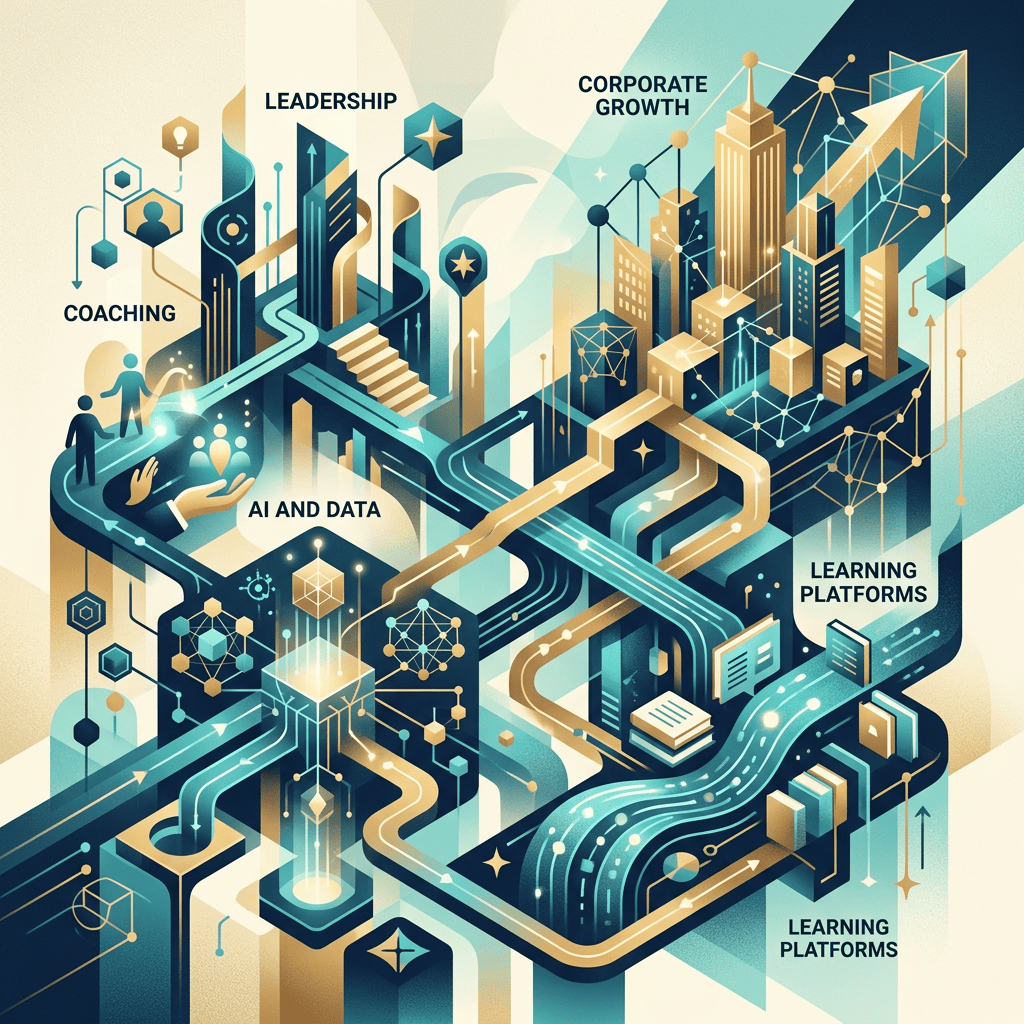
The global professional development landscape is currently undergoing a structural transformation, shifting from a supplemental corporate function to a primary driver of economic resilience and organizational competitiveness. As of 2024, the market size was estimated at 573.25 billion USD, with rigorous projections suggesting a trajectory toward 1,090.69 billion USD by 2035.[1] This expansion is characterized by a compound annual growth rate (CAGR) of 6.02% over the 2025–2035 forecast period, underpinned by the urgent necessity for workforce reskilling in the face of rapid technological displacement.[1] The market is moving away from generic, episodic training toward continuous, AI-driven learning ecosystems that link developmental expenditure directly to measurable productivity outcomes.[2]
Market Dynamics and Economic Forecasting
The professional development sector’s growth is largely fueled by a profound skill gap; approximately 70% of employees currently report a lack of the skills essential for excellence in their roles.[1] This deficiency has catalyzed a massive reallocation of corporate capital, with total training expenditures projected to exceed 370 billion USD by the conclusion of 2025.[1] The economic justification for these investments is increasingly evidenced by the productivity lifts associated with modern delivery models. Organizations implementing remote learning solutions have observed productivity increases of up to 40%, while those integrating AI-guided programs in technical roles report lifts as high as 50% alongside 75% reductions in traditional classroom time.[1, 2]
| Professional Development Market Valuation and Projections (2024–2035) | Value (USD Billion) | Growth Metric / CAGR |
|---|---|---|
| Estimated Market Size (2024) | 573.25 | Baseline [1] |
| Projected Market Size (2025) | 607.77 | 6.01% YoY [1] |
| Projected Market Size (2030) | 72.89 (Segmented Scope) | 5.08% CAGR [2] |
| Projected Market Size (2035) | 1,090.69 | 6.02% CAGR [1] |
| Estimated Corporate Training Spend (2025) | 370.00 | Total Expenditure [1] |
The mathematical modeling of this market’s growth highlights the compounding effect of digital transformation. Using the compound annual growth rate formula for the period between 2025 and 2035 ($n=10$):
$V_{2035} = V_{2025} \times (1 + r)^{n}$
Where $V_{2025} = 607.77$ and $r = 0.0602$, the resulting valuation underscores a trillion-dollar opportunity for providers who can effectively leverage personalized and technology-driven training methodologies.[1] Geographically, North America remains the most dominant market, capturing 38% of revenue in 2024, yet the Asia-Pacific region is identified as the most aggressive growth frontier, with a projected 10.60% CAGR through 2030.[2]
High-Growth Niches and Talent Demand Analysis
The 2025 professional landscape is defined by the “human-AI partnership,” where technical literacy must be balanced with sophisticated interpersonal capabilities. The World Economic Forum indicates that by 2030, approximately 39% of current skill sets will be transformed or rendered outdated.[3] Consequently, the demand for professional development is concentrating in niches that address this displacement.
The Primacy of Interpersonal and Social Stylings
As automation absorbs routine analytical and clerical tasks—displacing an estimated 1.6 million jobs globally—the premium on “uniquely human” soft skills has intensified.[3, 4] Emotional Intelligence (EQ) has emerged as the most critical foundation for leadership, encompassing empathy, conflict resolution, and the ability to foster collaborative environments.[4] Employers in 2025 prioritize professionals who can maintain composure under pressure and influence stakeholders effectively.[4] Furthermore, adaptability and resilience are no longer elective traits but operational necessities; the post-pandemic era has established that industries must evolve rapidly, requiring workers who can master new tools and systems without significant lag.[4, 5]
| Top 10 In-Demand Skills for 2025–2030 | Skill Category | Market Relevancy |
|---|---|---|
| Analytical Thinking | Cognitive | Most sought-after core skill [3] |
| Emotional Intelligence (EQ) | Interpersonal | Foundation for team leadership [4, 5] |
| AI and Big Data Literacy | Technical | Fastest-growing technical skill [3, 5] |
| Resilience and Agility | Behavioral | Critical for rapid digital shifts [4, 5] |
| Cybersecurity Awareness | Risk | Standard for remote/hybrid work [5, 6] |
| Inclusive Decision-Making | Leadership | Essential for global/diverse teams [7] |
| Creative Thinking | Cognitive | Key driver of innovation [3, 5] |
| Sustainable Resource Management | Green Sector | Driven by ESG and climate mandates [3, 5] |
| Digital Health Management | Healthcare | Largest sector-specific demand [6] |
| Strategic AI Application | Leadership | Foundational for executive strategy [8] |
Technical Segments: AI, Data, and Cybersecurity
Technical upskilling is predominantly focused on the integration of generative AI and large-scale data processing. Big Data specialists, AI and machine learning engineers, and fintech specialists are currently the fastest-growing job categories in percentage terms.[3] However, there is a distinct shift toward “Strategic Understanding” for non-technical executives.[8] These leaders do not necessarily require coding proficiency in Python or R, but they must possess the statistical thinking necessary to evaluate data-driven recommendations and the ethical frameworks to govern AI deployment.[8]
In specialized sectors like healthcare—which represents the largest single industry for professional development—the focus is on digital health management and data analytics.[1, 6] Nursing and geriatric care remain high-volume roles due to aging populations, yet these professionals are increasingly required to interface with telemedicine platforms and predictive modeling systems for patient tracking.[6]
Business Architecture: Modeling for Scalability
Choosing the correct business structure is the most consequential decision for an emerging professional development firm. The choice between a consultancy, an agency, or a platform determines not only the day-to-day operations but also the eventual asset value of the organization.
The Consultancy vs. Agency Models
Consultancies are distinguished by their focus on strategic advice and higher-level problem-solving.[9] They typically engage in long-term relationships as trusted advisors, focusing on complex, urgent, and high-value issues for senior management.[9] This positioning allows consultancies to command significant premiums, often operating with 15–25% annual profit margins.[9] In contrast, agencies are execution-driven, focusing on specific tasks like content creation, training delivery, or marketing.[9] While agencies often have more diversified client portfolios, they frequently struggle with lower margins and fragmented projects.[9]
| Professional Service Model Comparison | Primary Deliverable | Profitability Driver | Growth Limitation |
|---|---|---|---|
| Strategic Consultancy | Advice / Roadmaps | High billable rates [9] | Talent acquisition [10] |
| Execution Agency | Products / Tasks | Volume / Repeatability [9] | Fragmented projects [9] |
| Talent Platform | Connection / Experts | Transactional fees [11] | Network density [12] |
| Productized Service | Standardized Modules | Recurring revenue [10] | Initial dev cost [2] |
Platform and Hybrid Ecosystems
The most scalable model in the 2025 era is the platform model, which facilitates connections between businesses and independent experts.[11, 12] Unlike linear businesses that create value through internal production, platforms create value by facilitating interactions at scale, unleashing powerful network effects.[12] Learning platforms, specifically, start with the presumption that participants have untapped potential that can be drawn out through collaborative, social learning environments.[12] For many professional development businesses, the “Productized Model” offers a middle ground, adding repeatability and predictability by packaging services into consistent modules that can eventually function without the founder’s daily involvement.[10]
Sales and Authority Building: The LinkedIn Strategy
For professional development providers, LinkedIn is the central marketplace. It is the platform where decision-makers spend their professional time and where premium services achieve higher conversion rates through relationship building.[13]
Profile Optimization and Content Pillars
The modern professional development brand is part expert and part content creator.[14] Authority is projected through a digital presence that emphasizes specific solutions rather than generic credentials. A headline such as “I help tech executives lead high-performing teams without burnout” is significantly more effective than “Certified Executive Coach with 10 years’ experience” because it immediately addresses a pain point.[13]
Content strategy should be built on 3–4 core pillars that solve real client problems, such as career stagnation, leadership in crisis, or work-life balance.[15, 16] Data indicates that posts with images receive 2x higher engagement, while short-form videos with captions humanize the brand and increase trust.[14, 15] Consistency is paramount; spending 20 minutes daily on focused engagement—sharing thoughtful perspectives rather than generic praise—builds a stronger network than sporadic updates.[13]
Lead Generation and Automation
Successful businesses integrate lead magnets—such as CV templates, salary negotiation scripts, or career readiness assessments—to build an email funnel.[4, 14] Automation tools can then nurture these leads. For instance, companies using marketing automation see a 451% increase in qualified leads.[14] Tools like Artisan utilize an AI business development representative named Ava to manage personalized outreach and nurturing on LinkedIn and email, allowing human representatives to focus exclusively on closing high-value deals.[17, 18]
| LinkedIn Authority Content Matrix | Objective | Key Tactical Element |
|---|---|---|
| Transformation Stories | Social Proof | Before-and-after scenarios [13, 15] |
| Practical Quick Tips | Loyalty / Trust | One clear idea per post [15] |
| Infographics | Retention | Turning data into visuals [15, 16] |
| Polls and Questions | Engagement | 3–5 day duration for max reach [15] |
| Case Study Videos | Credibility | Testimonials with measurable ROI [13, 16] |
Pricing Strategies and Value Engineering
The shift toward value-based pricing is the primary hallmark of a mature professional development business. While hourly billing is simple and transparent, it often limits earning potential and fails to account for the actual impact delivered.[19, 20]
Transitioning to Value-Based Models
Value-based pricing focuses on setting rates based on the perceived value to the client rather than the cost of production or competitor prices.[19, 20] This approach is particularly effective for high-stakes leadership development or specialized digital transformation coaching.[20] For a corporate trainer, the “perceived value” might be the cost of turnover saved by improved management or the revenue generated by a more efficient sales team.[19] This requires extensive market research to understand the client’s willingness to pay and the financial “ceiling” of their problem.[19, 21]
Licensing Proprietary Curriculum
Licensing represents an advanced stage of business growth, allowing a provider to expand their reach and generate recurring income without increasing their personal workload.[22] Licensing involves selling the rights for other organizations to conduct classes using a proprietary curriculum for a specified period—usually one year.[22, 23]
| Licensing Fee and Structural Options | Mechanism | Business Impact |
|---|---|---|
| One-Time License Fee | Flat annual fee for content use | High predictable revenue [23] |
| Per-Event / Per-User Fee | Fee per session or per attendee | Scalable with client growth [23] |
| Tiered Licensing | Basic materials vs. Premium support | Upsell opportunities [23] |
| Train-the-Trainer (TtT) | Fee for certifying internal leaders | Deep organizational scaling [24] |
A successful licensing strategy follows a six-step framework: identifying unique intellectual property (IP), protecting that IP through legal means, setting usage parameters (duration/location), promoting the program, negotiating the agreement, and establishing a seamless onboarding process.[22] It is critical to ensure that pre-existing IP remains with the supplier; many standard corporate contracts attempt to transfer all IP to the client, which would legally prevent the trainer from ever using that material with another customer.[25]
Operational Frameworks: Automation and Technology Stacks
Operating a professional development business in 2025 requires a “tech-first” mindset. The administrative burden of scheduling, invoicing, and content management can easily lead to burnout if not systematized.[16]
Sales Pipeline and CRM Automation
The modern sales stack involves several layers of automation. CRMs like HubSpot or Salesforce act as the central hub for contact management and deal tracking.[17, 26] Lead-scoring algorithms then identify high-intent prospects based on website interactions or email engagement.[17, 27] For instance, Leadfeeder uses IP data to identify companies visiting a provider’s site, allowing for proactive, account-based sales outreach.[17]
| Sales and Delivery Automation Stack | Tools / Platforms | Primary Function |
|---|---|---|
| Prospecting / Outreach | Artisan, Dripify, Crunchbase | Finding and contacting leads [17, 18, 26] |
| CRM / Deal Management | HubSpot, Salesforce, Zoho | Visualizing the sales pipeline [17, 26, 27] |
| Scheduling / Bookings | Calendly | Eliminating back-and-forth emails [26, 28] |
| Conversation Intelligence | Gong.io, Dialpad | Analyzing sales calls for coaching [26] |
| Course Authoring | Articulate 360, Vyond | Rapid content development [29] |
| Impact Measurement | Docebo Learn Data, Shape | Proving ROI to stakeholders [29] |
Learning Management Systems (LMS)
The delivery of professional development has moved beyond static PDF guides. Integrated LMS platforms like Docebo or Reach 360 allow for the creation of structured “Coaching Tracks” that provide a curated starting point for learners.[16, 29] These systems support microlearning—short, focused bursts of training that can improve retention by 20%—and allow for progress tracking and automated “nudges” to keep learners engaged.[16, 30] High-quality delivery now includes interactive assessments, such as EQ 360 or Social Style 360, which provide rapid, data-driven insights into a learner’s strengths and blind spots.[4, 16]
Regulatory Compliance, Insurance, and Risk Management
Professional development businesses are not immune to liability. Negligence in advice, errors in curriculum, or data breaches can lead to significant financial and legal consequences.
Insurance Mandates and Recommendations
In jurisdictions like California, specific insurance types are mandatory. Workers’ compensation insurance is required for any business with employees, while commercial auto insurance is necessary for business-related travel.[31] Furthermore, professional liability (Errors and Omissions) insurance is highly recommended—and often required by corporate contracts.[31] This coverage protects against claims that a training program failed to meet outcomes or caused business disruption.[31]
| Insurance and Compliance Requirements | Type / Limit | Strategic Value |
|---|---|---|
| General Liability | $2,000,000 typical limit [32] | Protects against site accidents [31] |
| Professional Liability (E&O) | Mandated for LLCs in some states [33] | Covers advice-related claims [31] |
| Cyber Liability | Essential for digital platforms | Protects learner personal data [31] |
| Workers’ Compensation | Statutory requirement | Legal mandate for employees [31] |
| Annual Reporting / Franchise Tax | Varies by state ($300+ typical) [34] | Maintains legal standing [34] |
Legal Structure and Continuity
Maintaining legal compliance involves meeting both internal and external requirements. External requirements include filing annual reports and paying franchise taxes, while internal requirements involve documenting meetings and maintaining bylaws.[34] For an LLC, the aggregate dollar amount of E&O insurance and other security requirements is often calculated based on the number of licensees rendering professional services, with minimums typically starting at $500,000.[33] Proper documentation is essential for creating a “sellable” asset; if a provider intends to exit the business, they must demonstrate clear ownership of all IP and a history of regulatory adherence.[34, 35]
B2B Procurement: Winning Corporate Contracts
The path to high-value corporate contracts often leads through the Request for Proposal (RFP) process. Success in this area requires a shift from “selling a service” to “solving a business problem”.[36, 37]
The RFP Response Strategy
Corporate procurement teams evaluate proposals based on a weighted set of criteria. Typically, technical capabilities account for 30–40%, while pricing only represents 20–30% of the total score.[38] Successful responses avoid generic jargon and instead utilize a “Win Lab” approach to workshop the buyer’s specific needs and differentiate the solution.[39]
| RFP Scoring and Evaluation Criteria | Weighting % | Core Objective |
|---|---|---|
| Technical Capabilities | 30–40% | Methodological expertise [38, 40] |
| Pricing and Financial Terms | 20–30% | Transparency and value alignment [38] |
| Vendor Experience / References | 15–25% | Proof of previous success [38] |
| Implementation / Timeline | 10–15% | Feasibility and speed [38] |
| Ongoing Support / Impact | 10–15% | Long-term sustainability [38] |
The most effective proposals use the “Resonate-Differentiate-Substantiate” framework. This involves aligning with both stated and unstated needs, demonstrating a unique approach (e.g., using a proprietary AI coaching model), and providing hard data (ROI, time-to-proficiency) to substantiate claims.[36, 39] Proactive engagement with decision-makers before the RFP is released is a key differentiator; “wired” RFPs—where the specs heavily favor a specific competitor—are common pitfalls that firms should identify early to avoid wasting resources.[39]
Human Capital: Hiring and Compensation
As a professional development business grows, the transition from a solo operator to a firm with associate trainers requires a scalable compensation and development model.
Associate Compensation Models
Determining how to pay associate trainers is a delicate balance of protecting firm margins and ensuring trainer motivation. While a 50/50 fee split is common, it often undervalues the firm’s role in lead generation and overhead management.[41, 42] Modern models suggest a “Base + Bonus” or “Tiered Commission” approach.[43] A base salary provides stability and “buys” the time necessary for new employees to learn the business, while bonuses linked to productivity or revenue benchmarks incentivize top performance.[42, 43]
| Compensation Structure | Advantage | Disadvantage |
|---|---|---|
| 100% Commission | Low fixed cost for firm [43] | High turnover / bad practices [43] |
| 50/50 Fee Split | Simple to calculate [41] | Often unsustainable for firms [41, 42] |
| Base Salary + Bonus | Encourages brand loyalty [42] | Higher initial cash requirement [42] |
| Tiered / Accelerator | Rewards high-performers [43, 44] | Requires detailed tracking [43] |
| Day Rate / Flat Fee | Predictable expenses [44] | Limits trainer upside [44] |
Talent Pipelines and Benchmarks
Innovative firms like Revature utilize an “immersive, paid training program” to identify and develop talent before placing them on client projects, ensuring a standardized level of quality.[45] Compensation for professional development trainers varies significantly by niche; for instance, Learning and Development Trainers typically earn between $60,000 and $111,000 annually, while Senior L&D roles can reach the 90th percentile at $127,500.[46, 47]
Professional Certifications: Establishing Credibility
Certifications serve as the “currency of trust” in corporate procurement. For a professional development agency, having staff certified by recognized bodies is often a prerequisite for high-tier contracts.
Comparison of Key Credentials
The Association for Talent Development (ATD) and the Society for Human Resource Management (SHRM) offer the most recognized credentials in the corporate space. The ATD’s Certified Professional in Talent Development (CPTD) is a specialist certification focused exclusively on learning and performance, requiring at least five years of experience.[40, 48] In contrast, SHRM certifications (SHRM-CP and SHRM-SCP) are generalist HR credentials that include L&D as part of a broader strategy.[49]
| Certification Provider | Credential | Focus Area | Experience Req. |
|---|---|---|---|
| ATD | CPTD / APTD | Specialist L&D [40, 48] | 3–5+ Years [48] |
| SHRM | SHRM-CP / SCP | HR Generalist / Strategy [49] | Role dependent [49] |
| HRCI | PHR / SPHR | HR Management [49, 50] | Industry standard [50] |
| ICF | Certified Coach | Professional Coaching | Hour-based [40] |
| Training Industry | CPTM | Training Management [40, 48] | Process-focused [48] |
For specialized niches, such as athletic training, the Board of Certification (BOC) examination remains the gold standard, requiring a master’s degree from an accredited CAATE program.[51] Microcredentials, such as those for “Secondary School Mental Health Preparedness,” are becoming increasingly popular as they allow professionals to demonstrate specialized, evidence-based expertise in a shorter timeframe.[51]
Failure Analysis: Why Professional Development Firms Stagnate
Despite a growing market, many development initiatives fail to drive real business results. Understanding these failure points is essential for building a resilient business.
Information Overload and the Forgetting Curve
One of the most common reasons for training failure is “Information Overload,” where learners are overwhelmed with too much data in a single workshop.[29, 30] According to the Ebbinghaus Forgetting Curve, people forget up to 70% of new information within 24 hours if it is not reinforced.[29, 30] Successful businesses combat this by moving from “one-and-done” sessions to continuous learning experiences that utilize spaced repetition and microlearning.[29, 30]
Lack of Practical Application and ROI
Training that feels disconnected from daily work leads to disengagement; 78% of employees want learning that relates directly to their responsibilities.[30] Furthermore, failing to measure the impact of learning—tracking only attendance rather than behavioral change—prevents a provider from proving their worth to stakeholders.[29, 30]
| Symptom of Failure | Root Cause | Strategic Remediation |
|---|---|---|
| Low Engagement | Lack of relevance to daily work [29, 30] | Start with “why” and job-specific goals [30] |
| Skill Decay | “One-and-done” delivery model [29, 30] | Implement spaced microlearning [30, 52] |
| No Budget Renewal | Inability to prove ROI [29, 30] | Track knowledge retention and behavior change [29] |
| Internal Friction | No leadership buy-in [29, 53] | Align training with executive business goals [29] |
| Operational Chaos | Centralized founder bottlenecks [53] | Use RACI matrix for delegated decisions [53] |
A professional development business must also navigate financial challenges. Many startups fail due to poor cash flow management or “Centralized Decision-Making,” where founders remain involved in every day-to-day choice, creating bottlenecks that prevent scaling.[53, 54] The implementation of quarterly strategy reviews and agile feedback loops is necessary to ensure that the business remains aligned with changing market needs and technological advancements.[53]
Future Outlook: The Trillion-Dollar Era of Workforce Agility
As the professional development market moves toward its 2035 projection of 1.09 trillion USD, the defining characteristic of success will be “Workforce Agility”.[1] The traditional model of front-loading education at the beginning of a career is being replaced by a lifelong “Continuous Learning” model.[3, 55]
Providers who succeed in this new era will be those who can seamlessly blend human empathy with AI efficiency. This involves moving beyond content delivery to become “Architects of Capability,” using data to identify skill gaps before they disrupt business operations and deploying adaptive platforms to close those gaps in real-time.[1, 55] The integration of immersive technologies like VR/AR will become standard for high-stakes roles, while AI will handle the personalization of learning pathways for every employee in an organization.[1, 55]
Ultimately, the professional development business is moving from a “discretionary spend” to an “operational necessity.” Those who build their firms on a foundation of proprietary IP, scalable licensing, and rigorous impact measurement will not only survive the coming decade of technological disruption but will lead the transformation of the global labor market.
Final Strategic Recommendations
For entrepreneurs entering the professional development space, the path to sustainable growth requires a three-phased approach.
Phase I: Niche Dominance and IP Creation. Start by identifying a high-demand niche where credentials and specialized expertise command a premium—such as healthcare data management, executive AI strategy, or ESG compliance. During this phase, focus on creating a proprietary framework or methodology. This intellectual property is the foundation of your future asset value. Protect this IP legally from day one, ensuring you retain the rights to license it in the future.
Phase II: Operational Systematization. Once the methodology is proven, pivot to automating the sales and delivery pipeline. Implement a CRM and sales automation tools to ensure a consistent flow of leads without founder intervention. Simultaneously, transition your content into an LMS-based “productized service.” This move reduces the “one-and-done” failure risk and provides the data-driven insights necessary to prove ROI to corporate procurement teams.
Phase III: Scalability through Licensing and Platform Dynamics. With a systematized operation and protected IP, the focus shifts to scaling through others. This involves hiring associate trainers under a “Base + Bonus” model that encourages brand loyalty, and eventually, licensing your entire curriculum to corporate clients or other training agencies. By moving up the value chain from “facilitator” to “licensor,” you decouple revenue from time, enabling the business to participate in the trillion-dollar growth projected for the 2035 era.
Those who implement these steps—backed by rigorous insurance coverage and adherence to professional certifications—will establish a resilient, high-margin enterprise that thrives on the very technological changes that threaten traditional employment models.
——————————————————————————–
- Professional Development Market Size, Share, Trends 2035 – Market Research Future, https://www.marketresearchfuture.com/reports/professional-development-market-27792
- Professional Development Market Size, Trends, Share & Industry …, https://www.mordorintelligence.com/industry-reports/professional-development-market
- The Future of Jobs Report 2025 | World Economic Forum, https://www.weforum.org/publications/the-future-of-jobs-report-2025/digest/
- Top Soft Skills Employers Want in 2025 | Career Ready.AI, https://careerready.ai/top-soft-skills-employers-want-in-2025/
- The 25+ Most In-Demand Skills in 2025 & Beyond • Toggl Hire, https://toggl.com/blog/most-in-demand-skills
- Top Skills in Demand for 2025: IT, Healthcare, and Beyond – Gini Talent, https://ginitalent.com/top-skills-in-demand-for-2025-it-healthcare-and-beyond/
- Top 10 In-Demand Leadership Skills for 2025 – ICAgile, https://www.icagile.com/resources/top-10-in-demand-leadership-skills-for-2025
- 10 High-Income Skills To Start Learning in 2025 – IMD Business School, https://www.imd.org/blog/learning-and-development/high-income-skills/
- Agency vs. Consultancy | Operating.app, https://www.operating.app/blog-posts/running-a-profitable-professional-services-business
- Consulting Business Models (3 Potential Paths) – StartingPoint, https://www.startingpoint.ai/post/consulting-business-models
- Consulting Platforms – The End of Traditional Employment – Consultport, https://consultport.com/future-of-consulting/consulting-platforms-the-end-of-traditional-employment/
- Platform Business Model explained…in under 100 words | Deloitte Switzerland, https://www.deloitte.com/ch/en/services/consulting/perspectives/platform-business-model-explained.html
- LinkedIn for coaches | 10 steps to winning more clients FAST, https://coachvox.ai/win-clients-on-linkedin/
- How Career Coaches are using digital tools to build authority (2025 Edition), https://excellentbusinessplans.com/how-career-coaches-are-using-digital-tools-to-build-authority-2025-edition/
- Why Coaches Need LinkedIn Content Strategy in 2025 – Growbo, https://www.growbo.com/linkedin-content-strategy/
- Effective LinkedIn Marketing Strategies for Your Coaching Business, https://simply.coach/blog/linkedin-marketing-strategies-for-coaching-business/
- A Full Guide to Sales Pipeline Automation & Tools You Need – ONSAAS.ME, https://www.onsaas.me/blog/sales-pipeline-automation
- Dripify: Sales Automation Software | Driving Growth 24/7, https://dripify.com/
- Value-Based Pricing | Strategy Definition + Examples – Wall Street Prep, https://www.wallstreetprep.com/knowledge/value-based-pricing/
- Pricing 101 for Business Coaches: What You Need to Know – Flowlance, https://www.flowlance.com/blog/pricing-guide-for-business-coaches
- Twelve Potential Pricing Strategies for Training Companies – LMS Portals, https://www.lmsportals.com/post/twelve-potential-pricing-strategies-for-training-companies
- 6 Steps to License Your Course, Training, Program, or Curriculum for Coaches, Speakers, Consultants, and Experts – April Beach, https://www.sweetlifeco.com/blog/6-steps-to-license-your-course-training-program-or-curriculum-for-coaches-speakers-consultants-and-experts-2
- How to expand a training business with course licensing – Workshop Butler, https://workshopbutler.com/blog/licensing-training-courses-a-lucrative-strategy-to-expand-your-training-business/
- Licensing Training: Pros, Cons, and Best Practices – The Humphrey Group, https://www.thehumphreygroup.com/blog/licensing-training-pros-cons-and-best-practices
- Ownership and licensing of intellectual property in learning programs. – Global Integration, https://www.global-integration.com/insights/ownership-and-licensing-of-intellectual-property-in-learning-programs/
- 30 Best Sales Automation Tools for 2025 – Crunchbase, https://about.crunchbase.com/blog/sales-automation-software
- The Beginner’s Guide to Sales Automation – Salesloft, https://www.salesloft.com/learn/sales-automation
- Sales Automation in 2026: Best Tools, Insights, and Ideas – Highspot, https://www.highspot.com/blog/sales-automation/
- 10 reasons why learning initiatives fail – and how to fix them …, https://omniplexlearning.com/blog/10-reasons-why-learning-initiatives-fail-and-how-to-fix-them/
- Employee Training Programs Fail for 5 Key Reasons – Diversity Resources, https://www.diversityresources.com/why-employee-training-programs-fail/
- California Training & Development Provider Insurance – Fusco Orsini, https://www.foagency.com/business-insurance/specialized-business-insurance/california-training-and-development-provider-insurance
- Corporate Trainer Insurance – Insurance Canopy, https://www.insurancecanopy.com/educator-insurance/corporate-trainer
- Business Entity Limited Liability Company Requirements, https://www.insurance.ca.gov/0200-industry/0020-apply-license/0300-business-license/business-entity-limited-liability.cfm
- Stay legally compliant | U.S. Small Business Administration, https://www.sba.gov/business-guide/manage-your-business/stay-legally-compliant
- A Breakdown of Regulatory Compliance for Employers, Insurers, and Benefit Providers, https://lewisellis.com/industries/employee-benefits/a-breakdown-of-regulatory-compliance-for-employers-insurers-and-benefit-providers/
- How to Respond to a Training and Development RFP: Stand Out, Stay Grounded and Win the Work, https://trainingindustry.com/articles/learning-services-and-outsourcing/how-to-respond-to-a-training-and-development-rfp-stand-out-stay-grounded-and-win-the-work/
- Best Practices for Winning RFPs – Revenue Management Labs, https://revenueml.com/insights/articles/best-practices-for-winning-rfps
- What Is the RFP Process? A Complete Guide for Marketers – Brandmovers Blog, https://blog.brandmovers.com/what-is-the-rfp-process-a-complete-guide-for-marketers
- Responding to RFPs in B2B Sales: A Strategic Approach – RAIN Group, https://www.rainsalestraining.com/blog/responding-to-rfps-in-b2b-sales
- Best Certifications for Corporate Trainers in 2025 (Ranked) – Teal, https://www.tealhq.com/certifications/corporate-trainer
- The Problem with Associate Fee Splits – Slaw.ca, https://www.slaw.ca/2023/11/22/the-problem-with-associate-fee-splits/
- Commission Models and Profitability: Why the 50/50 Split Needs an Overhaul – commonsku, https://commonsku.com/articles/commission-models-and-profitability-why-the-50-50-split-needs-an-overhaul-path-to-profit-series-part-7
- 9 Sales Commission Structures (How to Pick the Best for Your Team) – Close CRM, https://www.close.com/blog/pick-sales-commission-structure
- What Is the Gym Commission Structure for Personal Trainers? – ISSA, https://www.issaonline.com/blog/post/breaking-down-big-gym-pay
- Get Hired – Revature, https://www.revature.com/get-hired
- The 10 Top Types Of Professional Development Trainer Jobs – ZipRecruiter, https://www.ziprecruiter.com/t/Most-Popular-Types-Of-Professional-Development-Trainer-Jobs
- $60k-$140k Professional Development Trainer Jobs (NOW HIRING) – ZipRecruiter, https://www.ziprecruiter.com/Jobs/Professional-Development-Trainer
- 10 Best Training Certifications for Corporate Trainers – Time.ly, https://time.ly/blog/10-best-training-certifications-for-corporate-trainers/
- 9 Types of Learning and Development Certifications To Boost Your L&D Expertise – AIHR, https://www.aihr.com/blog/learning-and-development-certifications/
- 5 Top Corporate Training and Development Certifications – BusinessNewsDaily.com, https://www.businessnewsdaily.com/10658-best-corporate-training-development-certifications.html
- NATA: Home Page, https://www.nata.org/
- A One-Size-Fits-All Approach to Professional Development Fails – Compt, https://compt.io/blog/why-a-one-size-fits-all-approach-to-professional-development-wont-work-and-what-to-do-about-it-instead/
- Strategic Growth Failures: Why Most Plans Fall Short 2025 – Strategy Ladders, https://www.strategyladders.com/strategic-growth-failures/
- Why Startups Fail in 2025: The Most Common Reasons and Solutions – Netguru, https://www.netguru.com/blog/why-startups-fail
- Professional Development Market 2025-2033: Preparing for Growth and Change, https://www.marketreportanalytics.com/reports/professional-development-market-6145
 Journal for Policy & Market Research
Leave a comment