-

The 2025/26 marketing year for cash crop exports is shaped by record production, shifting geopolitics, and a move towards sustainable products. Key commodities like corn and soybeans show varied market trends influenced by international demand and production dynamics. Exporters must adapt to heightened regulatory standards and climate impacts while enhancing logistical efficiency.
-

The U.S. pay TV sector is undergoing significant changes, shifting from traditional cable to a software-driven connectivity model, with the market projected to decline slightly from USD 69.37 billion in 2024 to USD 57.83 billion by 2033, largely due to “cord-cutting” trends. New opportunities lie in specialized content and mobile services.
-

The global BPO market, valued at around USD 347.95 billion, is projected to grow to USD 840.60 billion by 2034, with a CAGR of 10.30%. This growth is driven by a shift towards strategic partnerships and technological advancements like AI. North America leads the market, while emerging hubs in Asia, Africa, and Latin America gain…
-

The global public transportation sector is evolving with digital orchestration, multimodal integration, and a shift toward Mobility-as-a-Service (MaaS), enhancing consumer access to transit options. Entrepreneurs face challenges in regulatory compliance and technology deployment while exploring diverse business models. The industry’s future hinges on AI, electrification, and workforce engagement strategies.
-

The 2026 television landscape is undergoing significant transformation, merging traditional broadcasting with digital-first models. Investors must navigate complex regulations, shifting revenue streams, and the transition to ATSC 3.0 technology. Compliance with public interest mandates and the Children’s Television Act remains crucial, while broadcasters embrace digital bundling and data exploitation for growth.
-

The physical retail landscape in 2026 is evolving into a sensory-driven experience that integrates digital and physical shopping. Consumers, especially Gen Z, prefer in-person interactions. Successful brick-and-mortar businesses require comprehensive planning, location analytics, and an understanding of regulatory frameworks, along with innovative marketing strategies and seamless operational integration.
-

The branding identity sector in 2025 and 2026 emphasizes ethical accountability, cognitive psychology, and advanced technology. Branding strategies must evolve to encompass dynamic, data-driven ecosystems, while market entry focuses on exhaustive audience research and differentiation. Agencies are urged to adopt value-based pricing, integrate AI tools, and prioritize sustainability to thrive.
-

The contemporary book publishing industry is evolving rapidly, facing challenges and opportunities due to digital distribution, author relations, and algorithmic changes. New publishing houses must navigate legal structures, financial complexities, and production strategies to achieve sustainable growth, while adapting to trends like audiobooks and direct-to-consumer sales to thrive in a competitive landscape.
-

The autonomous vehicle industry is transitioning from experimental phases to a structured market, projected to grow from $34.66 billion in 2025 to $237.12 billion by 2035. Key sectors include autonomous trucking, which addresses labor shortages and fuel optimization. Startups must navigate technical, legal, and financial challenges while focusing on safety and innovative regulatory compliance.
-
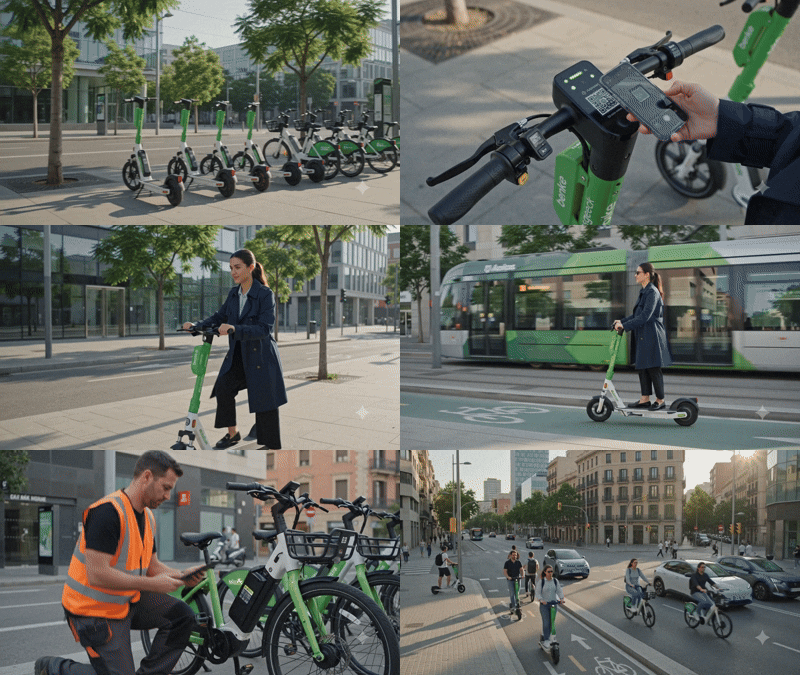
The shared micromobility sector is evolving rapidly, marked by increased ridership and technological integration. By 2026, operators face challenges from regulatory demands, trade tensions, and competition. However, emerging opportunities are found in suburban markets and last-mile logistics, aiming for sustainable, inclusive urban transport amidst a volatile economic landscape.
-
Subscribe
Subscribed
Have a WordPress.com account? Log in now.

