-

The global biotechnology industry is transitioning towards a disciplined growth model characterized by rigorous scientific inquiry and regulatory oversight as it moves into late 2025. Challenges remain in capital-efficient scaling, technology transfer, and intellectual property management, necessitating strategic partnerships and funding approaches to navigate high attrition rates and market complexities.
-

The healthcare landscape in 2026 is transitioning towards integrated, tech-driven ecosystems aimed at affordability and efficiency, prompted by a $4.5 trillion industry shift. Demand for HealthTech solutions is rising, especially post-COVID-19. Entrepreneurs must identify specialized niches, navigate regulatory complexities, and prioritize compliance to capitalize on this evolving sector.
-

The global asset management sector is evolving due to technological advancements, regulatory dynamics, and market complexities. Establishing a firm today requires an understanding of jurisdictional differences, efficient capital strategies, and compliance with standards like GIPS. The industry is increasingly focused on democratizing access to private markets while embracing operational efficiency through outsourcing.
-

The educational technology sector is rapidly transforming due to generative AI integration in K-12 education, projected to grow from $6.90 billion in 2025 to $41.01 billion by 2030, at a 42.83% CAGR. Teachers increasingly adopt AI tools, despite policy gaps and training inconsistencies, revealing significant opportunities for EdTech ventures.
-

The global seafood industry is shifting toward aquaculture due to overfishing and population growth. This “Blue Revolution” aims to ensure food security through sustainable practices. Challenges include high capital costs, diverse production systems, and regulatory complexities. Effective business planning, innovative technologies, and climate resilience are crucial for future success in aquaculture.
-

The 2026 livestock industry emphasizes data-driven management and integration of precision livestock farming technologies amid high asset values and supply chain disruptions. The U.S. cattle herd is at a historic low, while poultry and swine face challenges from diseases and costs. Successful producers adopt strategic vertical integration and biosecurity measures to enhance profitability.
-

The evolution of airport commerce has transformed it into a significant non-aeronautical revenue source for airports. The sector’s complexity involves intricate business models and regulatory frameworks, particularly through the ACDBE program, empowering disadvantaged businesses. However, navigating high costs, stringent compliance, and operational challenges is essential for success in this lucrative environment.
-

The agricultural sector is transforming through agroforestry, integrating trees into farming for enhanced productivity and sustainability. The global market is projected to grow from USD 108.33 billion in 2025 to USD 165.05 billion by 2032. Successful implementation requires understanding biological interactions, financial modeling, and regulatory dynamics.
-
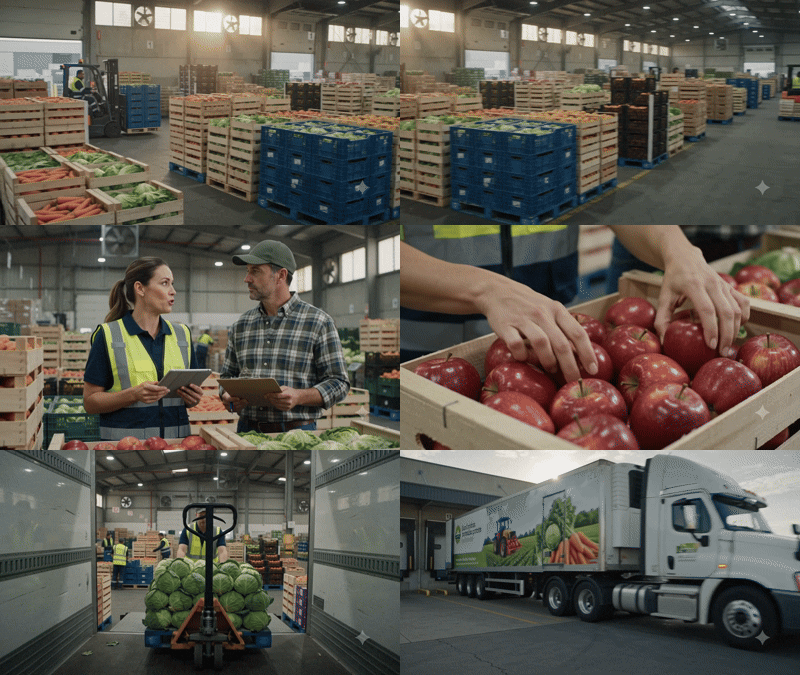
The agricultural wholesale distribution industry connects production to consumption within a volatile global food system facing technological and regulatory challenges. By 2026, businesses must adapt through advanced logistics, regulatory compliance, and strategic partnerships. Success hinges on effective supply chain management, cold chain integrity, and technological integration to ensure sustainability and profitability amidst shifting consumer demands.
-

The retail landscape is experiencing a significant transformation, driven by the direct-to-consumer (DTC) model. This shift enables brands to bypass intermediaries, gain control over customer engagement, and enhance profit margins. With rising e-commerce expectations and tailored experiences, companies must adapt their strategies to succeed in a more competitive, data-driven environment.
-
Subscribe
Subscribed
Have a WordPress.com account? Log in now.

