politics
-

In 2026, global conferences will emphasize practical technology implementation, economic realism, and regional leadership, particularly from the Global South. Major gatherings such as the G20 in Miami and the G7 in France will focus on economy-driven agendas, while climate discussions at COP31 aim for actionable results, reshaping international dialogue and collaboration.
-

The concept of social capital has transformed social science, emphasizing the role of relationships in economic productivity, political stability, and social cohesion. Differentiated into bonding, bridging, and linking forms, it has significant implications for community resilience and economic performance. However, it also carries risks such as exclusion and groupthink.
-

The economic landscape for 2026 is shifting towards concentrated, capital-expenditure-driven growth amid regional disparities. The U.S. is expected to lead with a 14% equity gain, while high-growth areas like the Sunbelt thrive. Conversely, coastal regions face job market challenges. Globally, emerging markets show promise, driven by demographics and innovation.
-
Pip: Welcome to Journal for Policy and Market Research — where the topics range from who owns your neighborhood to who owns the concept of knowledge itself, which is either a very broad editorial mandate or a sign that Administrator has not slept in weeks. Mara: Administrator has been busy. This episode covers the structural…
-

The operational and conceptual boundaries of public service in 2025 have undergone a radical transformation, shifting from a centralized bureaucratic model to a decentralized, mission-oriented ecosystem. This evolution is characterized by a seamless integration of government agencies, non-profit organizations, and international non-governmental entities, all of which are increasingly reliant on data-driven policy and digital transformation.[1,…
-
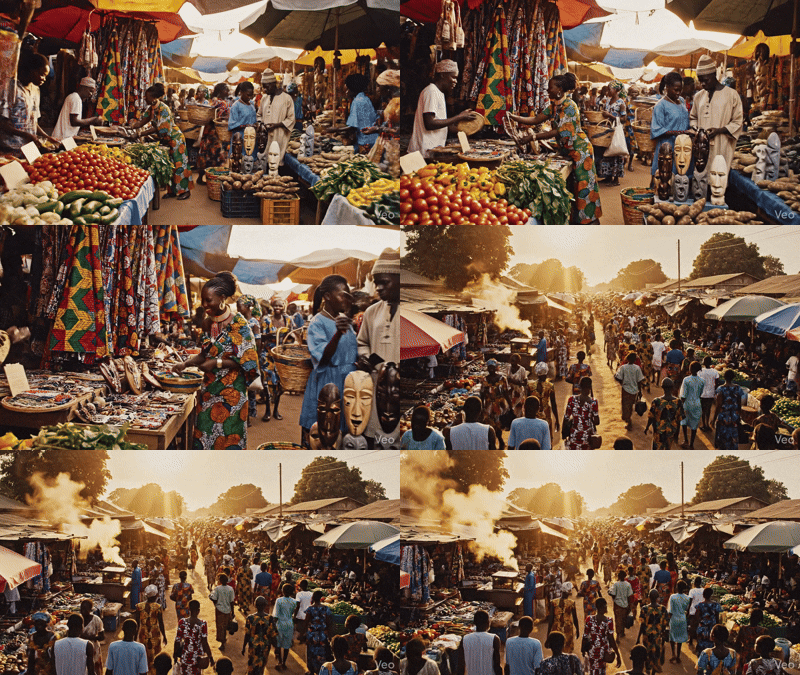
This report examines the evolution of African intellectual history, highlighting its resilience and richness. It delves into various philosophical systems like Ubuntu and Yoruba concepts, critiques colonial perspectives on African knowledge, and emphasizes the integration of Indigenous Knowledge Systems in contemporary society. The narrative underscores the importance of redefining African identity and sovereignty.
-

In 2026, local media faces a crisis marked by the decline of traditional outlets and a struggle for resources amid rising demands for accountability. News deserts impact civic engagement, yielding lower voter turnout and increased corruption. Alternative models, such as cooperatives and nonprofits, offer hope for sustaining community journalism and restoring democratic participation.
-

The success of Small and Medium-sized Enterprises (SMEs) relies on strategic guidance from mentorship and local support. Programs like SCORE and Small Business Development Centers provide essential resources for business development. Accessing capital through SBA loans and grants requires proper planning and mentorship, while upcoming regulatory changes necessitate proactive tax and compliance strategies for growth.
-

The African Investment Mandate (2025-2035) highlights the continent’s high-growth potential amidst significant risks, forecasting a 4.1-4.4% economic growth driven by demographics and integration efforts. Key strategies include operationalizing the AfCFTA, investing in infrastructure, and focusing on sectors like FinTech and renewable energy, while prioritizing localization and risk assessment.
-

The global economic landscape has shifted from a stable period of globalization to a fragmented system influenced by geopolitical competition. This transition to a Geotechnomic Nexus emphasizes the need for resilience over efficiency in supply chains. Economic forecasts indicate subdued growth and persistent inflation driven by protectionist policies and technological rivalry, particularly between the U.S.…
 Journal for Policy & Market Research