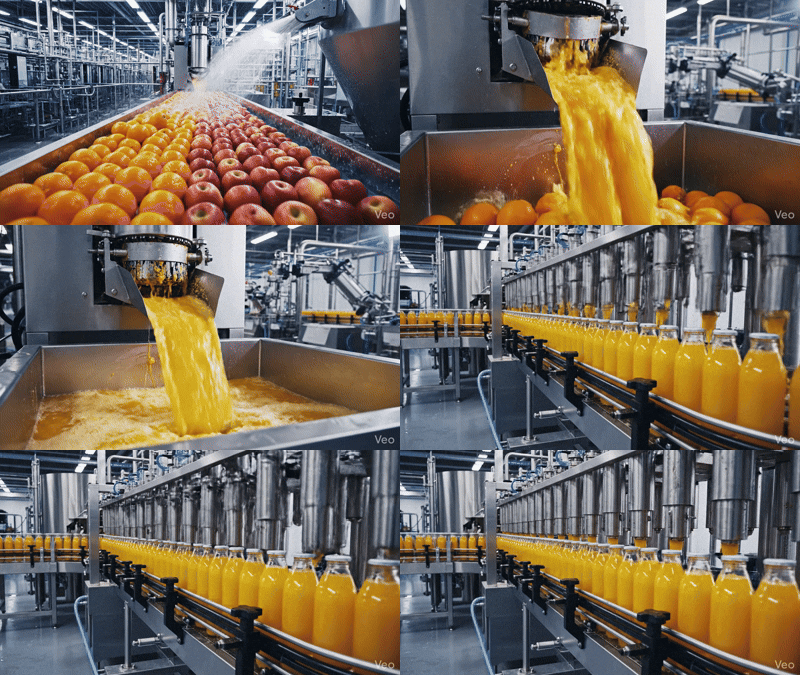
The industrial production of fruit juice is a complex, multi-stream manufacturing operation that extends far beyond simple pressing and bottling. Modern facilities are characterized by high levels of automation, stringent quality control, and sophisticated processes for extracting maximum value from every component of the raw fruit. This expert report provides a detailed analysis of the core technologies, operational flow, regulatory landscape, and strategic trends defining the contemporary fruit juice industry.
I. Foundations of Industrial Fruit Juice Production
The efficiency and quality of the final product hinge on optimizing the initial handling of raw materials and strategically choosing the appropriate processing path—Not From Concentrate (NFC) or From Concentrate (FC).
1.1. Raw Material Handling and Preparation
The industrial process commences with the meticulous management of raw fruits, typically sourced directly from fruit groves, specialized growers, or fruit packing sheds.[1]
Receipt and Initial Quality Control
Upon arrival, raw fruit is received and registered, often utilizing a scale house.[1] Critical quality control involves fruit grading to ensure acceptable ripeness, uniformity, and freedom from defects.[2] In high-volume operations, rapid segregation is necessary; materials, including liners, pails, and drums for eventual concentrates, are also received and staged.[1] A specific operational path allows for a “Field Direct Fruit Bypass,” where raw fruit is fed directly into the primary process line, typically when the quality is optimal and minimizes the need for extensive storage.[1] Any fruit deemed defective is immediately routed away via a dedicated fruit return belt.[1] Following initial checks, fruits undergo thorough cleaning and washing to eliminate soil, pesticides, and microbial surface contaminants before processing begins.[2]
Integrated Waste Stream Management
An essential feature of modern processing facilities is the integrated management of co-product streams. The process flow chart demonstrates that the operation is structured not as a linear sequence but as a circular system where immediate waste diversion enhances financial viability.[1] High-volume processing generates substantial quantities of peel and pulp, particularly for citrus fruits. The “Wet Peel” is instantly routed for valorization rather than disposal. This material is transferred to a Wet Peel Bin, where quicklime (added at approximately 0.5%) and water (Limer) is introduced to condition the waste. It then passes through hammer mills and a reaction screw before being sent to peel presses.[1] This specialized pathway transforms what would otherwise be a costly disposal problem into a high-volume value stream: pressed cake and pressed liquor, which are precursors for dried animal feed production.[1, 2]
1.2. Juice Extraction Technologies and Process Optimization
The technology selected for juice extraction directly influences yield, sensory quality, and the subsequent need for clarification and essence recovery. The objective is to extract the maximum amount of usable juice while minimizing the co-extraction of undesirable compounds like peel oil or excess solids.[2]
Mechanical and Centrifugal Extraction
For various fruits, including citrus, apple, pear, cantelope, and grape, standard mechanical pressing or juicing methods are employed.[3] However, modern industrial demands often necessitate more sophisticated systems. Decanter centrifuges are now commercially utilized, offering a crucial alternative to traditional presses in specific circumstances.[4]
Preserving Quality through Inert Gas Blanketing
A significant operational advantage of the decanter centrifuge lies in its suitability for producing unoxidized, naturally colored, and flavored juices.[4] The design of the decanter allows it to be easily blanketed with inert gas during operation. This capability is paramount for minimizing oxidative damage during high-speed processing. Oxidation rapidly degrades flavor compounds, color, and key nutrients like Vitamin C. By controlling the processing environment through inert gas blanketing, producers can preserve the inherent quality of the raw material, justifying the higher capital expenditure on such equipment and enabling the creation of premium NFC products.[4] This strategic technological choice directly enables market differentiation based on a superior, “fresh-like” sensory profile, contrasting sharply with commodity juice production focused solely on volume maximization.
Citrus Co-product Streams
For citrus fruits, the extraction phase is complex, producing not just the raw pulpy juice but also generating an oil emulsion and valuable aroma components from the peel.[1] These co-products are critical and are immediately separated for dedicated recovery lines, ensuring that every fraction of the fruit yields maximum economic return.[1]
1.3. Fundamental Product Differentiation: NFC vs. Concentrate (FC)
The post-extraction fate of the juice establishes the two fundamental categories of commercial products: Not From Concentrate (NFC) and From Concentrate (FC), or Frozen Concentrated Orange Juice (FCOJ).
Not From Concentrate (NFC) Processing
NFC juice is derived directly from the extracted fruit juice with minimal modification. The fruit is washed, squeezed or pressed, and then subjected to pasteurization.[5] Crucially, NFC juice bypasses the concentration and reconstitution steps, thereby retaining all its natural water content, sugars, and native flavors.[5] This minimal processing preserves a higher concentration of vitamins, minerals, and antioxidants, making it generally superior in nutritional content.[5] NFC is stored in NFC Holding Tanks and eventually loaded into tankers or drums.[1] The primary logistical constraint for NFC is its limited shelf life, typically less than 45 days, requiring continuous refrigeration and rapid distribution.[5, 6]
Concentrate (FC) Production and Reconstitution
Concentrate production is designed to reduce mass and volume, optimizing preservation and logistics. This process involves sophisticated thermal engineering.
- Clarification and Pasteurization: The juice is clarified and pre-heated to pasteurization temperature.[2]
- Evaporation and Essence Recovery: The juice passes through evaporation stages where water is removed, concentrating the soluble solids up to 66 °Brix.[2] During this evaporation, volatile flavor components “flash off.” These components, or essences, are essential for sensory integrity and are recovered in a specialized essence recovery unit.[2] The recovered Essence Oil and Aroma is drummed or loaded into tankers as a separate commodity.[1] The concentrated flavor is separated from the concentrated sugar/acid matrix.
- Storage and Blending: The resulting juice concentrate is cooled, blended with other batches to level out quality fluctuations, and stored as FCOJ, often under frozen conditions, sometimes for several years.[2] The removal of water facilitates preservation and dramatically reduces transportation costs.[6]
- Reconstitution: The product commonly marketed as “fresh juice” often refers to reconstituted juice.[6] This process involves hydrating the concentrate by mixing it with cold, filtered water, usually at a 1:5 ratio (one part concentrate to five parts water), until the original single-strength Brix level is restored.[7] Additives may sometimes be introduced to improve the taste profile.[5]
The operational complexity of concentrate production demands the management of two distinct commodity streams: the high-Brix concentrate and the volatile aroma/essence stream.[1, 2] The flavor integrity of the final reconstituted product depends entirely on the effective recovery and subsequent re-blending of these natural essences. If volatile flavors are lost during evaporation, the reconstituted juice will taste bland or thermally degraded. Therefore, the separate “Essence Oil and Aroma Drumming” process is not mere waste management; it is a critical quality control operation that allows manufacturers the flexibility to accurately reconstruct the desired sensory profile during final blending.
The distinctions between the two product types are summarized in the following table:
Table I. Product Differentiation: NFC vs. Concentrate (FC)
| Feature | Not From Concentrate (NFC) Juice | From Concentrate (FC) / Reconstituted Juice |
|---|---|---|
| Processing Intensity | Minimal (Extraction, Pasteurization) [5] | High (Extraction, Evaporation, Storage, Reconstitution) [5, 6] |
| Nutritional Value | Superior (Higher retention of delicate nutrients/vitamins) [5] | Slight nutrient loss possible due to thermal processing [5] |
| Shelf Life (Refrigerated) | Shorter (Typically <45 days) [5, 6] | Concentrate has a 1-year shelf life (ambient/frozen storage) [6] |
| Logistics/Cost | Higher transport/storage costs due to high water content | Lower logistic costs; convenient preservation and global transport [6] |
II. Advanced Processing and Quality Enhancement
After initial extraction, juice quality is optimized through clarification, stabilization, and the valorization of co-products.
2.1. Clarification and Pulp Management
Clarification is a mandatory unit operation, particularly for light-colored or clear juices (e.g., apple juice), where the goal is to enhance visual appeal, improve shelf stability, and achieve specific mouthfeel targets.[8]
The Challenges of Colloidal Instability
Raw pressed juice is thermodynamically unstable, containing pectin, starch, proteins, and suspended colloidal materials that collectively cause undesirable turbidity and viscosity.[8, 9] These macromolecules pose a severe industrial challenge: they form gels and accumulate on filter surfaces, creating a secondary membrane that fouls filtration equipment and lowers processing rates.[9, 10]
Enzymatic Pre-treatment
To mitigate these issues, enzymatic treatment is employed. Treating the juice with pectinase and other polysaccharides leads to the degradation of pectin.[10] Enzymatically clarified juice experiences a crucial viscosity reduction and facilitates cluster formation (flocculation), making subsequent separation through centrifugation or filtration significantly easier.[10] Beyond reducing viscosity, specific enzyme treatments, such as incubating banana pulp with pectinase, can increase the recovery of total soluble sugars and reducing sugars.[9]
Advanced Membrane Separation Techniques
The industry has increasingly adopted membrane filtration, specifically Ultrafiltration (UF) and Microfiltration (MF), as replacements for traditional methods, providing superior control, higher efficiency, and better product quality.[11]
Ultrafiltration (UF) is typically executed using membranes with a Molecular Weight Cut-Off (MWCO) around 100−200 kDa.[11] This precise mechanical separation process efficiently removes key haze-forming agents, including microorganisms, proteins, suspended colloids, starch, pectin, and polyphenolic compounds.[11] The removal of these substances results in improved juice clarity and texture.[11]
The benefits of UF over conventional technologies are substantial: it is a cost-effective, low-temperature process that helps preserve the juice’s nutritive, sensory, and organoleptic qualities.[11] For clarified apple juice, UF is highly effective, achieving very low turbidity levels, often a maximum of 0.5 NTU.[11] Compared with traditional technologies, MF/UF clarification ensures yields typically reach 94% or more.[11] Furthermore, the incorporation of diafiltration, a related process used in conjunction with membrane separation, can push the yield even higher, up to 99%, depending on the pulp content of the fruit being processed.[11] This yield maximization through filtration technologies represents a critical financial advantage in large-scale operations.
Selective Clarifying Agents
The choice of clarifying agent can influence the functional properties of the final product. Recent studies show that incorporating plant-based clarifiers (e.g., LittoFresh Liquid, FloaClair) in apple juice can improve transmittance levels by an average of 30% and reduce turbidity by up to 45% compared to untreated samples.[8] Importantly, these plant-based agents retained up to 20% more polyphenols and exhibited 15% higher antioxidant capacity than traditional gelatin-based clarifiers.[8] This differentiation demonstrates that clarification is not merely about achieving visual clarity but has become a crucial tool for optimizing the nutritional and functional profile of the final juice product. For premium applications, such as producing anthocyanin-rich açaí juice, highly effective clarification using pectinases associated with chitosan results in a clear juice free of lipids and insoluble solids, yielding a genuinely high-value functional ingredient.[9]
2.2. Co-product Recovery: Oil, Essence, and Concentrate
Industrial juice production is economically dependent on maximizing resource utilization, which requires parallel processing of valuable co-products alongside the main juice stream. The operational architecture of a modern facility is functionally equivalent to a complex chemical processing plant, managing at least four simultaneous high-volume product streams: NFC, Concentrate, Essential Oils, and Animal Feed.
Essential Oil and Aroma Recovery
As previously discussed, volatile flavor components, which are crucial for reconstructing the authentic taste of reconstituted juice, are recovered during the pre-evaporation and concentration stages.[2] These are condensed and managed via Essence Oil and Aroma Drumming.[1]
Cold Press Oil and D-Limonene
For citrus fruits, the peel is a source of highly valuable essential oils. The oil emulsion recovered from the wet peel is sent through a specialized recovery circuit.[1] This involves multiple finishing steps, including desanders, hydroclones, desludgers, and several stages of centrifuges (pre-polisher and polisher), resulting in “Finished Oil” storage.[1] The system also recovers D-Limonene, a key flavor and industrial solvent, via the Pre-evaporator/Deoiler section.[1] This rigorous extraction of cold press oil ensures that the maximum economic value is derived from the fruit peel, contributing significantly to the overall profitability of the factory.
Final Concentration and Blending
Concentrated juice is transferred to a Tank Farm for storage, requiring strict temperature control via a Concentrate Chiller.[1] Quality management necessitates blending concentrate batches before final loading (tankers or drums) to level out natural fluctuations in quality (e.g., Brix/acid ratio) that occur across different harvesting periods.[2]
III. Preservation Technologies and Shelf-Life Extension
The chosen preservation technology is the primary determinant of product safety, shelf stability, and the retention of nutritional and sensory qualities. The industry balances the proven reliability of heat treatments with the quality advantages offered by non-thermal methods.
3.1. Conventional Thermal Processing (TT)
Conventional thermal processing (pasteurization) is the traditional method used to produce shelf-stable fruit juices.[12] This involves heat treatment typically carried out between 84∘C and 88∘C for holding times ranging from 15 to 45 minutes.[12] The primary goal is to eliminate pathogenic bacteria and significantly reduce spoilage microorganisms.[12]
However, the high heat exposure required for microbial inactivation results in unavoidable quality trade-offs.[13] Thermal treatment causes the loss of delicate, valuable components, including vitamins (such as ascorbic acid), phenolic compounds, anthocyanins, and volatile odor-active compounds.[12] Consequently, TT-treated products often suffer from impaired sensory quality, described as having “cooked” or “off” flavors.[12] To compensate for this flavor degradation, manufacturers sometimes resort to adding artificial flavor compounds, a practice that contributes to the perception that these products lack naturalness.[12]
3.2. Emerging Non-Thermal Preservation Methods (NTP)
In response to consumer demand for healthier, fresh-tasting foods without chemical preservatives, the industry is increasingly adopting Non-Thermal Processing (NTP) technologies.[14] These methods achieve microbial safety while minimally affecting the native physicochemical properties of the juice.
High-Pressure Processing (HPP)
HPP is a commercially established non-thermal technology.[12, 14] The process involves subjecting the packaged food material to elevated hydrostatic pressures, often up to 900 MPa (87,000 psi), using only cold water.[13, 14]
HPP effectively eliminates bacteria and other food safety threats.[13] Because it avoids high heat, HPP maintains the juice product’s natural taste, texture, and nutrient profile, delivering an optimally fresh final product.[13] This technology is essential for developing functional juices (e.g., pomegranate, blueberry) where functional properties—such as antioxidant or antimutagenic compounds—would be destroyed by thermal preservation.[15] HPP significantly extends the shelf life, potentially multiplying it by 3 to over 10 times compared to untreated products stored at the same temperature.[15] The regulatory requirements for HPP are similar to traditional pasteurization, requiring the development of a Hazard Analysis Critical Control Point (HACCP) plan.[14]
Pulsed Electric Field (PEF)
PEF processing utilizes short bursts of high-voltage electric pulses (in the range of 20−80 kV) for microbial inactivation.[14] Operating primarily at ambient temperatures, PEF causes minimal detrimental effects on food quality attributes.[14] PEF-treated products are known for their high quality, excellent flavor, nutritional value, and extended shelf life.[14] The short treatment time minimizes the adverse effects of heating, leading to higher retention of bioactive compounds compared to thermal methods.[12] Furthermore, PEF retards non-enzymatic browning and helps retain ascorbic acid, thereby improving color stability. The electroporation effect can also enhance desirable color characteristics by facilitating the release of color compounds from the cell structure.[12]
Ohmic Heating (OH)
Ohmic heating is an emerging thermal technology that employs electric current to generate heat directly within the food product. It is characterized by rapid, internal heating, leading to very short treatment times.[12]
3.3. Comparative Analysis of Preservation Techniques
The choice between conventional and non-thermal methods reflects a fundamental operational trade-off between logistical stability (ambient storage for TT) and product quality (freshness and nutrition for NTP).
Table III. Advanced Preservation Technology Comparison
| Parameter | Conventional Thermal Processing (TT) | High-Pressure Processing (HPP) | Pulsed Electric Field (PEF) |
|---|---|---|---|
| Mechanism | External heat (84−88∘C) [12] | Hydrostatic Pressure (up to 900 MPa) [14] | High Voltage Pulses (20–80 kV) [14] |
| Nutrient Retention | Low (Major losses of phenolics/Vitamins) [12] | High (Nutrients and bioactives intact) [13, 15] | High (Minimal heating effects) [12] |
| Sensory Impact | Impaired (Cooked flavors generated) [12] | Fresh-like sensory profile maintained [15] | Fresh-like sensory profile maintained [12] |
| Shelf Life | Shelf-stable (Ambient) | Extended (Refrigerated, up to 12 weeks) [15] | Extended (Requires cold storage) [12] |
| Enzyme Inactivation | Effective | Often challenging; residual activity possible [12] | Often challenging; residual activity possible [12] |
The most significant technical challenge for non-thermal methods like HPP and PEF relates to enzyme inactivation.[12] While these methods effectively eliminate vegetative bacteria, achieving full inactivation of enzymes (e.g., pectinase) is difficult at ambient temperatures. This residual enzyme activity can adversely affect sensory quality and stability during storage, despite the initial microbial safety achieved.[12] Consequently, products treated by HPP or PEF rely heavily on a rigorous cold chain management system.[15] The successful deployment of non-thermal preservation necessitates both specialized high-pressure equipment and robust logistical infrastructure to maintain low temperatures, which accounts in part for the higher price point of these premium juices.[16]
IV. Quality Assurance, Authenticity, and Regulatory Compliance
The fruit juice sector is heavily regulated to protect public health and ensure economic integrity against fraudulent practices. Compliance is maintained through mandatory regulatory requirements and voluntary industry standards.
4.1. Mandatory Regulatory Frameworks
Juice manufacturing is governed by various international and national regulatory bodies, including the Codex Alimentarius Commission, the U.S. Food and Drug Administration (FDA), and European Union (EU) directives.[17]
HACCP Requirements
In the United States, the processing of any product that can be labeled as 100 percent juice is mandatorily produced under a Hazard Analysis Critical Control Point (HACCP) system.[14, 18] This system is required to control safety hazards throughout the production process.[14] It is crucial to note the scope: even if juice is used as an ingredient in a non-juice beverage (e.g., carbonated fruit-flavored drinks), the juice component itself must be produced under HACCP compliance.[18]
Labeling and Warning Statements
Regulatory frameworks also dictate consumer information requirements. For packaged fruit and vegetable juice products that have not been processed to eliminate pathogenic microorganisms, FDA regulations require a warning statement.[18] Furthermore, strict requirements govern labeling, including the mandatory placement of the percentage juice declaration on the principal display panel if the package lacks an information panel, using a minimum type size equivalent to the net quantity statement.[19]
4.2. Ensuring Authenticity and Preventing Adulteration
Food fraud, such as the addition of water, cheaper sugars, or undeclared extracts (like pulpwash), presents a continuous risk to the industry’s economic credibility. Industry systems work to prevent this adulteration through verification and testing.[20]
Industry Voluntary Control Systems
Several international and voluntary control organizations provide critical frameworks for managing authenticity:
- AIJN Code of Practice (CoP): This European reference guideline is widely accepted globally. The CoP establishes Reference Guidelines that consolidate minimum and maximum values or ranges for characteristics typically found in authentic fruit juice.[20] By comparing a product’s composition against these established statistical ranges, anomalies that indicate issues of quality, identity, or potential adulteration can be identified.[20]
- SGF/IRMA Approval: Suppliers who are SGF/IRMA approved provide assurance that raw materials meet required authenticity standards.[20] The Voluntary Control System (VCS) they manage permits complete traceability of the juice, from the fruit source (“tree to the bottle”), which protects the industry from dishonest competitors.[20]
Advanced Analytical Methods for Fraud Detection
The International Fruit and Vegetable Juice Association (IFU) develops and recommends standardized analytical methods crucial for laboratory compliance and forensic testing.[20] The reliance on these complex analytical techniques highlights that simple chemical analysis is often insufficient to detect sophisticated, low-level economic adulteration. For example, IFU R03 (The Use of Isotopic Procedures in the Analysis of Fruit Juices) is specifically designed to detect various types of adulteration.[20] This method compares the ratios of stable isotopes, which effectively fingerprint the botanical origin and method of photosynthesis of added sugars or water, revealing if the final product deviates from the expected composition for authentic fruit juice. Other methods target specific marker compounds: IFU 58 determines Hesperidin and Naringin (to distinguish citrus types), and IFU 71 analyzes anthocyanin profiles (for berry juices).[20]
Table IV. Key IFU Analytical Methods for Juice Authenticity and Quality Control
| IFU Number | Title | Purpose (Adulteration/Quality Control) |
|---|---|---|
| IFU 58 | Determination of Hesperidin and Naringin HPLC | Determine authenticity in different citrus species |
| IFU 59 | Total Carotenoids and Individual Groups | Used to distinguish orange from mandarin |
| IFU 71 | Anthocyanins by HPLC | Compare typical anthocyanin profiles |
| IFU R03 | Use of Isotopic Procedures | Detect different types of adulteration (advanced fingerprinting) |
| IFU R18 | Approaches to analyse for pulpwash | Detect pulpwash and second extracts of citrus fruits |
The mandatory need for rigorous supplier verification and laboratory testing across global supply chains ensures compliance with these international standards, mitigating significant financial and reputational risk.[20]
V. Market Trends, Sustainability, and Future Outlook
The industrial fruit juice sector is undergoing a profound transformation driven by shifting consumer values favoring health, sustainability, and quality.
5.1. Market Drivers and Product Innovation
The market landscape is increasingly segmented, moving away from high-volume, commodity-grade FC juice towards specialized, premium offerings.
The Rise of Premiumization
The primary catalyst for change is the consumer shift towards healthier food alternatives, driven by a reduction in sugary beverage consumption, a trend significantly amplified during the COVID-19 pandemic.[16] This shift has powered the growth of cold-pressed juices, which are valued for their high nutritional content and minimal processing.[16]
North America is the dominant market for cold-pressed juice, holding a 46.88% market share in 2023.[16] The success of this segment validates the investment in costly non-thermal technologies like HPP, as consumers are demonstrably willing to pay a premium for a high-quality product.[16] However, the high production cost of cold-pressed juice remains a limiting factor for widespread market expansion.[16]
Functional and Organic Growth
The demand for beverages rich in vitamins, minerals, and other functional compounds is accelerating market expansion.[16]
- Blended Juices: The mixed fruit juice segment currently holds the largest share, leveraging versatility and high nutritional content.[16] Blend formulations are forecast to expand rapidly, indicating consumer appetite for complex flavor profiles and functional ingredient flexibility.[21]
- Organic Segment: Conventional products still dominate the volume of cold-pressed juice, but organic variants are projected to have the highest Compound Annual Growth Rate (CAGR), estimated at 11.67% through 2030.[21]
Distribution and Convenience
The accelerating pace of modern lifestyles has driven demand for ready-to-drink (RTD) juice products.[16] Furthermore, online sales channels are experiencing explosive growth, with a forecasted CAGR of 12.67% through 2030.[21] This growth is propelled by direct-to-consumer (D2C) subscription models and streamlined logistics, which are particularly crucial for managing the short shelf life of premium NFC/HPP products.[21] D2C distribution provides the necessary speed and control to move high-value, perishable inventory efficiently to the consumer, circumventing the slow traditional retail distribution cycles that can jeopardize short-shelf-life products.[6]
5.2. Waste Valorization and Circular Economy
The long-term sustainability and competitiveness of the fruit juice industry depend heavily on transitioning from simple waste disposal to maximizing the value extracted from processing residues.
Recovery of Bioactive Compounds
Fruit processing generates massive amounts of residual materials, primarily peel, pulp, and seeds.[22, 23] These residues are not merely waste; they represent a significant, cost-effective, and sustainable source of valuable bioactive compounds, notably polyphenols.[22, 23]
The operational focus is shifting toward recovering these high-value components for use in other sectors. Recovered bioactives are utilized for fortification in novel functional food products, such as short-dough biscuits, kefir, yogurt, and extruded snacks.[22] They also serve as natural food colorants.[22]
Technical Challenges in Extraction
The high seasonal variability and diverse chemical composition of fruit waste complicate their industrial utilization.[22] To overcome this, the industry requires substantial investment in optimizing extraction methodologies. The emphasis is on developing novel or modified conventional techniques that achieve high extraction efficiency without relying on hazardous organic solvents or incorporating energy-intensive evaporation steps that could thermally degrade sensitive bioactive compounds.[22] The successful valorization of fruit waste requires on-site, pilot-scale processing capabilities specifically designed to handle seasonal residues efficiently, thereby supplying specialty ingredients to the growing functional food market.[22]
5.3. Packaging Solutions and Sustainability
Packaging serves as a sophisticated protective shield, critical for maintaining the product’s integrity against environmental threats (light, oxygen, temperature), contamination, and physical damage.[24] It also plays a vital role in consumer convenience and brand communication.[24, 25]
Material Selection and Functionality
The material landscape is diverse:
- Plastic Containers (PET): Currently hold the largest market share due to their lightweight nature, ease of transport, cost-effectiveness, and flexibility in design.[16, 24]
- Glass Bottles: Offer excellent barrier properties but introduce higher cost and logistics challenges due to weight and fragility.[24]
- Flexible Films and Aseptic Cartons: Provide superior barrier systems, particularly for ambient-stored concentrates, and offer significant waste and plastic reductions compared to rigid bottles.[24, 26]
- Thermoform Packaging: Specialized solutions like thermoform packaging are used for cold-pressed juices to preserve freshness and quality.[25]
Sustainability Driving Innovation
Consumer preference is actively driving demand for brands that prioritize sustainable packaging options, necessitating a holistic approach that considers the entire product lifecycle.[27]
- Biodegradable and Renewable Materials: There is a growing adoption of biodegradable and compostable alternatives, including plant-based plastics derived from renewable resources (e.g., corn starch or sugarcane), and innovative materials like seaweed or mycelium (mushroom packaging).[27]
- Circular Economy: Utilizing recycled content in packaging conserves natural resources, reduces energy consumption during manufacturing, and decreases greenhouse gas emissions, aligning with circular economy principles.[27]
A significant technical challenge exists in reconciling sustainability goals with processing requirements. For high-value HPP juices, the packaging must be able to withstand the extreme hydrostatic pressure (up to 87,000 psi).[13] This often restricts material choice to specialized, pressure-tolerant PET formulations. Innovation is required to develop renewable or recycled materials that can meet both the structural demands of non-thermal preservation and the escalating consumer desire for eco-conscious packaging.[27]
VI. Conclusions and Recommendations
The industrial fruit juice sector is defined by a technological divergence between high-volume commodity production and the rapidly expanding high-value, premium segment.
- Technological Shift Towards Quality: Industrial success increasingly depends on advanced mechanical separation (decanter centrifuges with inert gas blanketing) [4] and high-efficiency filtration systems (Ultrafiltration and Diafiltration).[11] These technologies are foundational for preserving the juice’s native characteristics and maximizing yields (up to 99%).[11]
- Preservation Determines Market Position: High-Pressure Processing (HPP) has become the gold standard for premium, fresh-like juices, successfully eliminating pathogens while preserving functional nutrients.[13, 15] However, the residual enzyme activity in non-thermal processes necessitates rigorous cold chain control to maintain quality and shelf life.[12]
- Regulatory Rigor is Paramount: Beyond mandatory HACCP compliance for safety [18], manufacturers must adhere to stringent anti-adulteration standards enforced by voluntary industry bodies like AIJN and SGF/IRMA.[20] The deployment of complex analytical techniques, such as IFU isotopic procedures [20], is mandatory for mitigating the persistent threat of sophisticated economic fraud.
- Integrated Sustainability Strategy: Future profitability will be driven by the mastery of waste valorization.[22] Investment in on-site, specialized processing capabilities for extracting high-value polyphenols and bioactives from peel and pulp will transition the operation from a beverage manufacturer to an integrated specialty ingredient supplier, turning waste into a strategic economic asset.[22]
- Logistics of the Future: The synergy between advanced preservation (HPP) and efficient D2C logistics (subscription models) is overcoming the short shelf-life constraints of premium products, directly fueling the market growth for cold-pressed and functional beverages.[21] The next frontier is developing pressure-tolerant, sustainable packaging materials that satisfy both HPP requirements and evolving circular economy mandates.[27]
——————————————————————————–
- Master Flowchart – Juice Processing Division, https://www.riograndejuice.com/assets/media/pdf/Master-Flow.pdf
- Fruit processing | Orange Book, http://orangebook.tetrapak.com/chapter/fruit-processing
- Juicing Watermelon Apple Pear Citrus Grape Cantelope in the Omega VRT330 VERT Juicer, https://www.youtube.com/watch?v=5QqI3Lcm51s
- Juice extraction from apples and other fruits and vegetables – PubMed, https://pubmed.ncbi.nlm.nih.gov/9315434/
- Juice Battles: Truth on Concentrate vs. Not From Concentrate – Eastcoast Beverages, https://eastcoastbeverages.com.au/concentrate-vs-nfc-juice/news/
- Differences between NFC Juice and FC Juice – Frozen Juice Spain, https://frozenjuicespain.com/differences-fc-juice-nfc-juice/
- Reconstituting FruitFast Juice Concentrates: Easy, Healthy, Versatile, https://www.fruitfast.com/reconstitution
- Evaluation of the Effectiveness of Plant-Protein-Based Cleaning Agents in the Production of Industrial-Filtered Clarified Apple Juice – MDPI, https://www.mdpi.com/2076-3417/15/6/3415
- Effects of clarification on physicochemical characteristics, antioxidant capacity and quality attributes of açaí (Euterpe oleracea Mart.) juice – NIH, https://pmc.ncbi.nlm.nih.gov/articles/PMC4571208/
- Enzymatic added extraction and clarification of fruit juices-A review – Dr. Steve Talcott Lab, https://talcottlab.tamu.edu/wp-content/uploads/sites/108/2020/01/Enzymes-3.pdf
- Fruit Juice Clarification with Membranes – PCI Membranes, https://www.pcimembranes.com/articles/fruit-juice-clarification-with-membranes/
- A review study on the effects of thermal and non-thermal … – Frontiers, https://www.frontiersin.org/journals/food-science-and-technology/articles/10.3389/frfst.2024.1405384/full
- HPP Juice | High Pressure Processing for Fresh Beverages – Universal Pure, https://universalpure.com/hpp-juice-beverages/
- Non-Thermal Preservation of Fruit Juices | CES – ASME Digital Collection, https://asmedigitalcollection.asme.org/CES/proceedings/CEC2008/99953/29/227619
- JUICES AND SMOOTHIES – Hiperbaric, https://www.hiperbaric.com/media/uploads/productos/documentos/Juices_whitepaper_nov-2013.pdf
- Cold Pressed Juice Market Size, Share & Growth Report [2032] – Fortune Business Insights, https://www.fortunebusinessinsights.com/cold-pressed-juice-market-106647
- Standards and regulations | Orange Book – Tetra Pak, http://orangebook.tetrapak.com/chapter/standards-and-regulations
- Guidance for Industry: Juice Hazard Analysis Critical Control Point Hazards and Controls Guidance, First Edition | FDA, https://www.fda.gov/regulatory-information/search-fda-guidance-documents/guidance-industry-juice-hazard-analysis-critical-control-point-hazards-and-controls-guidance-first
- 21 CFR 101.30 — Percentage juice declaration for foods purporting to be beverages that contain fruit or vegetable juice. – eCFR, https://www.ecfr.gov/current/title-21/chapter-I/subchapter-B/part-101/subpart-B/section-101.30
- International Fruit and Vegetable Juice Association – updated …, https://www.foodauthenticity.global/blog/international-fruit-and-vegetable-juice-association-updated-infor
- Cold Pressed Juice Market Size, Growth Trends & Report Analysis | 2030, https://www.mordorintelligence.com/industry-reports/cold-pressed-juice-market
- Fruit Juice Industry Wastes as a Source of Bioactives | Journal of Agricultural and Food Chemistry – ACS Publications, https://pubs.acs.org/doi/10.1021/acs.jafc.2c00756
- Fruit waste: a current perspective for the sustainable production of pharmacological, nutraceutical, and bioactive resources – Frontiers, https://www.frontiersin.org/journals/microbiology/articles/10.3389/fmicb.2023.1260071/full
- Packaging Solutions for Juice and Beverage Products – Agriculture Institute, https://agriculture.institute/food-processing-and-engineering-i/packaging-solutions-juice-beverage-products/
- Thermoform Packaging 101: Preserving The Freshness And Quality Of Cold-Pressed Juices, https://www.saludjuicery.com/post/thermoform-packaging-101-preserving-the-freshness-and-quality-of-cold-pressed-juices
- Juice-based drink packaging solutions – SIG – for better, https://www.sig.biz/en/categories/beverage/juice-based-drinks
- Fresh Juice Packaging Trends: Innovations in Sustainability and Design | MetaBrand, https://metabrandcorp.com/fresh-juice-packaging-trends-to-watch/
 Journal for Policy & Market Research
Leave a comment