I. Confectionery Foundation: Defining Toffee and Ingredient Science
The manufacture of high-quality toffee requires precise control over thermal processing and an understanding of the chemical interactions between core ingredients, primarily focusing on inhibiting sugar crystallization and achieving critical moisture content thresholds. Toffee is classified as a hard candy, defined by its glassy, brittle texture achieved through high-temperature cooking.
A. Taxonomy and Definitional Nuances of Toffee
The confectionery term “toffee” encompasses variations that differ primarily in their sugar base and inclusions. Historically, the distinction between styles is rooted in sugar selection. Classic English toffee is traditionally made using brown sugar, whereas the American variation, commonly known as buttercrunch, utilizes white granulated sugar (sucrose) [1]. A classic English toffee formulation is defined by its simplicity, often restricted to only sugar, butter, and water, lacking additional flavorings such as vanilla, chocolate, or nuts [2].
However, modern commercial and technical feasibility often overrides historical definitions regarding sugar choice. Although brown sugar provides a distinct molasses flavor profile, granulated sugar is technically superior for high-temperature confectionery production. Brown sugar inherently possesses a higher moisture content, and its composition increases the propensity for scorching during the extended, high-heat cooking required to reach the hard crack stage [3]. For manufacturers seeking process stability, product consistency, and mitigation of manufacturing defects, the stability and purity of granulated sugar (the basis of buttercrunch formulation) are typically prioritized over the inherent flavor complexity of brown sugar. The definition of “Butter toffee” is generally redundant, as butter is an essential structural and flavor component of toffee; this qualifier is only necessary when mass marketers substitute cheaper alternative fats [2].
To enhance flavor and consumer appeal, modern formulations frequently include modifications. These enhancements include the addition of specific ingredients to balance the sweetness and texture, such as sea salt, which can improve the overall taste profile, and nuts (e.g., almonds or peanuts), which serve to reduce the greasy mouthfeel associated with high-fat products [1, 4]. Finished products are often enrobed in chocolate, adding complexity and preventing moisture ingress [1, 4].
B. Core Formulation Parameters and Ingredient Ratios
Toffee structure is dependent on achieving a stable fat-in-syrup matrix. Analysis of proprietary formulations reveals specific ratios designed to achieve desired final product characteristics, such as lower hardness and reduced greasiness.
One documented patented toffee formulation specifies a high concentration of primary structural ingredients: white granulated sugar (150 parts), corn syrup (45 parts), unsalted butter (80 parts), and whole milk powder (45 parts) [4]. This formulation also incorporates stabilizing and flavoring agents, including pectin (1.0 part), sea salt (2.5 parts), nuts (150 parts), and chocolate (200 parts) [4]. The addition of dairy solids (whole milk powder) is crucial, as the proteins contribute not only to richness but also participate directly in flavor development kinetics during cooking, particularly the Maillard reaction. Pectin inclusion suggests an attempt to further stabilize the emulsion or modify the final texture to achieve lower hardness [4].
In development settings, standardized ingredient levels are necessary to maintain baseline confectionery structure. For example, research into fruit-based toffees maintained constant levels of non-pulp components, using 500 grams of sugar, 100 grams of butter fat, 50 grams of skim milk powder, and 2 grams of salt per kilogram of pulp [5]. These baseline ratios confirm the essential proportion of sugar (for structure), fat (for mouthfeel and flavor), and dairy solids (for emulsification and color/flavor reactions) required for a viable confectionery matrix.
Table 1 provides a synthesis of critical ingredients and their functional roles in toffee production.
Table 1: Critical Ingredient Functions and Target Ratios in Toffee Production
| Ingredient | Primary Function | Example Ratio (Reference) | Quality Impact |
|---|---|---|---|
| Sucrose (Sugar) | Sweetener, Bulk Agent, Structure | 150 parts [4] | Texture, Source of crystallization |
| Corn/Glucose Syrup | Crystallization Inhibitor, Texture Modifier | 45 parts [4] | Smoothness, Chewiness, Shelf Stability [6] |
| Butterfat (Unsalted) | Richness, Flavor, Emulsification | 80 parts [4] | Mouthfeel, Greasy/Separation risk [3] |
| Dairy Solids (Milk Powder) | Flavor development (Maillard), Texture | 45 parts [4] | Color development, Maillard catalyst [7] |
C. Functional Role of Primary Ingredients: The Anti-Crystallization Mechanism
The foundational chemical challenge in hard candy production is controlling the crystallization of sucrose, the primary bulk sweetener [6]. Sucrose molecules inherently tend to aggregate into large, orderly crystals as the syrup cools, which would result in a grainy, opaque texture characteristic of fudge or rock candy, not the intended smooth, glossy, amorphous glass state of toffee.
This challenge is managed through the strategic inclusion of corn syrup, a liquid sweetener derived from cornstarch that contains primarily glucose [6]. Corn syrup acts as a critical crystallization inhibitor, interfering with the orderly formation of sucrose crystals [6, 8]. The successful outcome—a smooth, stretchy, and glossy candy matrix—relies heavily on maintaining the precise ratio of sucrose to inverted sugars (glucose/corn syrup). Glucose molecules disrupt the sucrose lattice, preventing the nucleation and growth of large crystals. This mechanism ensures the final product remains in an amorphous, glassy state [8].
Beyond crystal inhibition, corn syrup offers several secondary technical benefits. It serves as a bulking agent, allowing for a decrease in the more expensive sucrose, thereby potentially reducing the overall cost of production [8]. Furthermore, corn syrup is less intensely sweet than sucrose, which allows for sweetness regulation in the final product [8]. Glucose also plays a vital role in moisture retention, enhancing the final texture, increasing chewiness, and significantly extending the product’s shelf life [6, 8].
II. The Chemistry of Toffee Production: Phase Transitions and Thermal Dynamics
Toffee production is a thermal process defined by the progressive removal of water and subsequent elevation of the sugar syrup’s boiling point. Achieving the desired hard, brittle texture depends entirely on hitting a narrow, critical temperature range known as the Hard Crack stage.
A. The Candy Stages and the Pursuit of Low Moisture
As sugar, butter, and water are cooked, the mixture transitions through sequential candy stages corresponding to increasing sugar concentration and temperature. This process involves the transformation of the syrup from a watery solution to a highly viscous, near-anhydrous mass.
Progression begins with the Soft Ball stage (235°F–240°F, 85% sugar) and advances through the Firm Ball (245°F–249°F, 87% sugar) and Hard Ball (250°F–265°F, 92% sugar) stages. Products like caramels and fudge are finished at these earlier stages [9, 10]. The temperature continues to climb to the Soft Crack stage (270°F–290°F), where the sugar concentration reaches approximately 95%. This stage yields pliable strands and is the endpoint for confections like saltwater taffy and butterscotch [2, 10].
The thermal processing for toffee specifically targets the Hard Crack stage, which occurs between 300∘F and 310∘F (149∘C–154∘C), corresponding to approximately 99% sugar concentration [9, 10]. This is the critical window where the molten liquid transforms into a brittle, glass-like state. Missing this range by even a few degrees means the candy will either remain slightly pliable (if too cool) or begin to burn (if too hot) [10]. Failure to achieve this low moisture concentration results in a soft, pliable candy, such as the texture associated with butterscotch, which finishes at the Soft Crack stage [2].
The narrow nature of this thermal band renders precise temperature control non-negotiable. A reliable candy thermometer is essential to guide the process, and the target temperature must be scientifically adjusted based on the manufacturing facility’s elevation, decreasing by 2∘F (1.2∘C) for every 1,000 feet above sea level [9, 10]. Furthermore, controlling moisture content is not solely a function of final temperature; adequate time must be allowed during cooking for sufficient water evaporation to occur, especially in batch processes [11].
Table 2 details the specific temperature ranges for candy stages relevant to hard confectionery production.
Table 2: Sugar Cooking Stages Relevant to Toffee Production
| Stage | Target Temperature Range (∘F) | Target Temperature Range (∘C) | Sugar Concentration | Resulting Texture |
|---|---|---|---|---|
| Soft Crack | 270∘F–290∘F | 132∘C–143∘C | 95% | Forms brittle strands that bend slightly [10] |
| Hard Crack (Toffee) | 300∘F–310∘F | 149∘C–154∘C | ∼99% | Brittle, glass-like threads that break cleanly [10] |
| Caramel (Dry) | 320∘F–350∘F | 160∘C–177∘C | 100% | Deep color and flavor, increased burning risk [9] |
B. Non-Enzymatic Browning Reactions and Flavor Dynamics
The signature flavor and deep color of toffee are derived from two distinct, non-enzymatic browning reactions that occur under high-heat conditions: the Maillard reaction and caramelization.
The Maillard reaction is dominant in toffees containing dairy solids (milk powder or cream). This process involves a chemical reaction between reducing sugars (like glucose) and the amino acids present in dairy proteins [7, 12]. The Maillard reaction is responsible for producing the rich brown coloration and a vast array of complex, unidentified savory and sweet flavor compounds that characterize butter-rich confections [7].
Caramelization is a separate process, defined as the pyrolysis (thermal degradation) of sugars themselves, which begins to occur at temperatures around 338∘F (170∘C) for pure sucrose [7]. As the sugar breaks down, new flavorful compounds are formed, contributing the characteristic burnt sugar or caramel notes [7].
Since toffee cooking temperatures are typically centered at 310∘F and sometimes are intentionally pushed higher to 320∘F (160∘C) before inclusions are added [9], the final thermal exposure dictates the resulting flavor profile. Cooking closer to the minimum Hard Crack temperature (300∘F) emphasizes the rich, buttery, and nutty Maillard notes driven by the dairy proteins. Conversely, pushing the temperature toward 320∘F initiates more significant sugar degradation, introducing the deeper, slightly bitter notes associated with full caramelization. The precise control of temperature, therefore, serves as the primary mechanism for flavor engineering in toffee production.
III. Crystallization Control and Process Stability
Controlling the tendency of supersaturated sugar solutions to crystallize is paramount in producing a defect-free, glossy toffee. Furthermore, maintaining the stability of the fat emulsion under extreme thermal conditions is essential for product quality.
A. Mechanisms of Sugar Crystallization and Defect Avoidance
Crystallization, or “graining,” transforms the desired amorphous, glassy toffee into an undesirable sugary, grainy mass [3]. This occurs through a process called nucleation, where sugar molecules begin to form organized structures.
The most common causes of crystallization include:
- Seeding and Contamination: The reintroduction of dry sugar crystals, often from scraping the sides of the cooking vessel, acts as a nucleus, or “seed,” initiating rapid, mass crystallization throughout the molten mass
[3]. - Temperature Fluctuation: Sudden drops or spikes in temperature can upset the supersaturated state of the syrup, encouraging the sugar to precipitate out of the solution
[3]. - Insufficient Moisture Removal: If the cooking process is too brief, leaving excess moisture in the syrup, the mixture is more prone to crystallization over time
[11].
To prevent these defects, several control measures are implemented. During the initial cooking phase, the sides of the pot must be brushed down with a wet pastry brush. This dissolves any stray sugar crystals clinging above the water line, preventing them from contaminating the boiling syrup and triggering crystallization [9, 10]. Additionally, minimizing constant or vigorous stirring is necessary to avoid promoting nucleation points within the syrup [3].
B. Emulsification Stability and Troubleshooting Separation
The introduction of butterfat into the sugar syrup creates an emulsion stabilized largely by the milk proteins and moisture content. At the high temperatures required for hard crack toffee, the reduced moisture content and sustained heat can destabilize this emulsion, leading to separation, often termed “oiling out.” This defect manifests as a greasy, buttery layer forming on the surface of the cooking mixture [3].
When separation occurs, the fat phase has effectively broken away from the sugar matrix. This issue can often be corrected through a controlled re-emulsification process. The defect can be repaired by carefully introducing a small amount of water—typically one tablespoon at a time—and slowly stirring the mixture [3]. This controlled reintroduction of the water phase temporarily restores the mobility of the stabilizing emulsifiers (primarily milk proteins), allowing them to re-integrate the fat droplets back into the highly viscous sugar matrix. This action must be performed cautiously to avoid cooling the mass too quickly or introducing too much water, which could trigger crystallization or prevent the mixture from reaching the required Hard Crack temperature.
IV. Industrial Manufacturing and Process Engineering
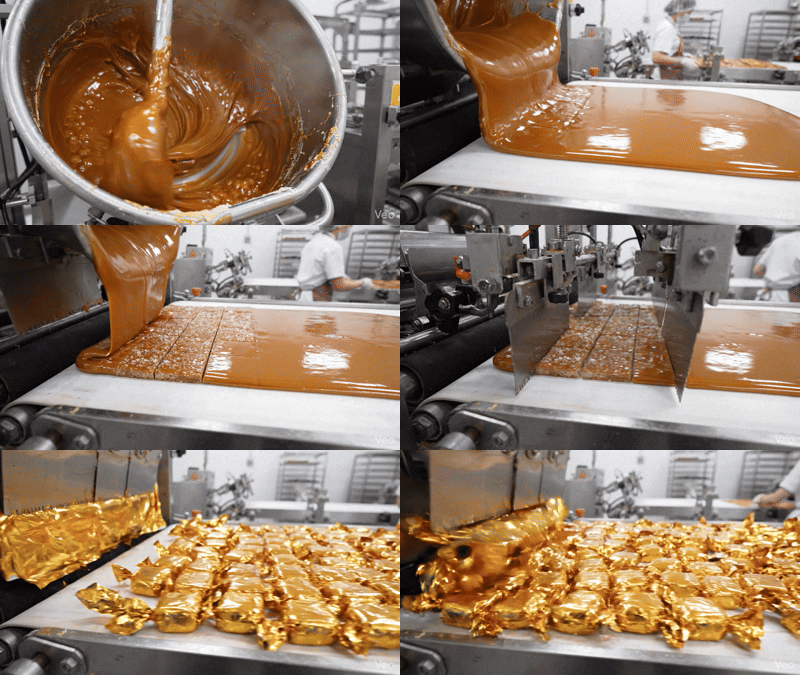
Scaling toffee production requires transitioning from batch kettles to automated continuous systems, leveraging advanced engineering solutions, particularly vacuum technology, to ensure consistent quality and high throughput.
A. Cooking Technologies Comparison: Batch versus Continuous Efficiency
Industrial toffee production utilizes both batch and continuous cooking methods, each optimized for different volumes and quality objectives.
Batch Cookers are favored for specialized, smaller volume production or when a specific product appearance, often difficult to replicate continuously, is desired. Machinery such as BCH’s ‘Low Type’ Cookers is highly regarded in the industry for achieving high-quality results. These cookers are available in capacities up to 500 liters and feature integrated vacuum evaporation and cooling technology to improve process efficiency and quality control [13].
Continuous Production Plants are designed for maximum scalability and output, offering high capacity, such as 800 kg of candy per hour, exemplified by machines like the Continuous Vacuum Batch Cooker (CVC-800) [14]. These systems provide the flexibility to operate non-stop for extended periods, reducing downtime for cleaning and significantly increasing product output [13]. They are fundamental components in high-volume confectionery manufacturing setups worldwide [14].
B. The Application of Continuous Vacuum Technology (CVC)
A core component of modern industrial hard candy production is the use of vacuum during the final cooking stages [14]. The application of vacuum technology facilitates moisture removal through a process known as flash evaporation.
Vacuum cookers extract moisture by exposing the superheated mass to a high vacuum environment, causing the remaining water to boil and flash off rapidly at a significantly reduced temperature [15, 16]. This provides several critical technical advantages essential for industrial quality assurance:
- Reduced Thermal Damage: Confectionery is inherently high in sugar. At the high temperatures required for atmospheric Hard Crack cooking, sugar is prone to caramelization and thermal degradation. Lowering the final required temperature through vacuum processing minimizes unwanted chemical side reactions, specifically reducing the thermal degradation of flavor compounds and added pigments. This also mitigates acid-catalyzed sucrose inversion
[15, 17]. - Consistency and Reproducibility: Because lower heat is used and the process is precisely controlled, the sugar consistency and final product characteristics remain highly stable, ensuring a reproducible taste, flavor, and color batch-to-batch
[17]. High-capacity cookers, such as those with dual vacuum chambers, allow for continuous vacuum exposure and filling cycles without interrupting throughput, maximizing consistency[16]. - Energy Efficiency: The reduced heat requirement translates directly into improved energy efficiency for the cooking process
[17].
Table 3 summarizes the technical benefits of employing vacuum processing in hard candy production.
Table 3: Benefits of Vacuum Processing in Hard Candy Manufacturing
| Process Parameter | Standard Atmospheric Cooking | Vacuum Cooking | Technical Advantage |
|---|---|---|---|
| Final Cooking Temperature | High (e.g., 300∘F–310∘F) | Reduced (e.g., 266∘F–284∘F) | Reduces thermal degradation and sucrose inversion [15, 17] |
| Moisture Removal | Slower, reliant on boiling point | Accelerated via flash evaporation | Ensures rapid achievement of low aw [16] |
| Product Consistency | Higher risk of variation | High reproducibility | Consistent color, flavor, and texture [17] |
| Energy Efficiency | Higher consumption | Lower energy demand | Improved production cost profile [17] |
C. Post-Cooking Handling and Forming Equipment
After vacuum processing, the hot toffee mass is immediately transferred to downstream equipment for flavoring, conditioning, and forming.
- Tempering and Kneading: The mass is often directed into a dynamic in-line mixer where colors, flavors, or acid (if required) are automatically added and blended at pre-set ratios
[16]. Following mixing, the mass is collected on a stainless steel cooling band. This band incorporates three independent cooling sections, utilizing folding ploughs and rollers to facilitate the smooth tempering and kneading of the mass before it proceeds to forming[16]. - Slab Forming: To create flat sheets suitable for cutting, the mass passes through a Slab Former. These machines utilize a temperature-controlled product inlet hopper and a jacketed feed hopper. They employ high-efficiency water cooling channels and variable roller gap adjustments, which are essential for precisely controlling the final slab thickness and width. This equipment is suitable for a wide range of confectionery products, including toffees and fudges, and can handle both batch and continuous feed processes
[13]. - Extrusion Technology: For products designed as small pieces, fingers, or multi-layered bars, extrusion technology is utilized. This technology includes a special flow dividing head capable of extruding multiple product ropes simultaneously. This process is critical for ensuring precise weight control of each individual rope before cutting
[13].
V. Finishing Processes, Cutting, and Packaging
The final stages of production involve carefully controlled cooling, precise cutting, and specialized packaging techniques to preserve the product’s quality and structure.
A. Thermal Conditioning and Cooling Tunnels
Rapid and uniform cooling is crucial for conditioning the toffee structure, setting the amorphous sugar glass, and ensuring brittleness. Cooling tunnels achieve this conditioning efficiently [13].
Advanced cooling tunnels employ a multi-faceted approach to temperature management. They use high-velocity air cooling, often supplemented by a water-cooled table beneath the belt, ensuring parallel cooling from both the top and bottom of the product [13]. Modern systems feature independent air cooling units placed at intervals along the tunnel, allowing operators to set distinct temperature profiles across different zones of the tunnel length. This zonal control is achieved via adjustable flow circulation managed by proprietary control and refrigerant systems [18]. This level of thermal precision is vital for minimizing internal stress and preventing fractures or stickiness as the toffee cools.
If the toffee is to be coated, specialized cooling tunnels are positioned downstream of the enrober. These dedicated tunnels rapidly cool the chocolate coating, stabilizing the temper and ensuring the enrobed confection is immediately ready for handling and packaging [19].
B. Cutting and Formatting: Addressing Sticky Products
Once cooled, the conditioned toffee slab or rope must be cut cleanly. Guillotine technology is standard for this purpose [13].
For traditional, firm toffee, conventional stainless steel blades may suffice. However, for products with higher fat content, softer inclusions, or those that exhibit slight hygroscopicity, the use of conventional blades risks product adherence to the cutting surface and results in crumbling, leading to yield loss [13]. To circumvent this, the industry employs ultrasonic blades. These blades oscillate at high frequencies, which fundamentally prevents the soft or sticky confectionery material from adhering to the blade surface, thereby ensuring clean, precise cuts and significantly reducing material waste [13].
C. Packaging Material Science and Shelf Life Protection
Packaging is the final safeguard against environmental degradation. The use of specialized equipment, such as Horizontal Form Fill Seal (HFFS) or Vertical Form Fill Seal (VFFS) machines, ensures high-speed, precise wrapping [18].
The choice of packaging material is crucial due to the highly hygroscopic nature of hard candy. Packaging materials, typically plastics or paper, are often gas permeable [15]. This permeability allows for the exchange of moisture and oxygen with the external environment, which can lead to color degradation and oxidation, particularly affecting color pigments concentrated at the candy surface [15].
Furthermore, the packaging’s vapor transmission rate must be carefully measured against the product’s water activity (aw). If the packaging permits too much moisture migration, the toffee’s texture will be compromised—either losing moisture and becoming excessively rock-hard, or gaining moisture and becoming sticky [20]. Selecting materials optimized to minimize vapor transmission is essential for meeting the desired shelf life metrics.
VI. Quality Assurance, Troubleshooting, and Shelf Life
Long-term stability and quality control in toffee manufacturing are governed by mastering the thermodynamic relationship between moisture content, water activity, and the glassy state of the sugar matrix.
A. Water Activity (aw) and Moisture Content: The Determinants of Stability
The hard, brittle nature of toffee is achieved because its high cooking temperature drives the residual moisture content to extremely low levels. This results in an intrinsically shelf-stable product.
Water Activity (aw) is the critical metric for shelf life prediction. Hard candies maintain stability by achieving an ultra-low water activity, typically aw<0.20. This threshold is significantly below the minimum required aw for virtually all microbial growth, making the product naturally resistant to spoilage without refrigeration [21]. The primary purpose of cooking the syrup to the Hard Crack stage is to rapidly achieve this low aw threshold.
A critical causal relationship exists between moisture and sugar structure: excess moisture or even subtle shifts in aw due to inadequate packaging or humid storage environments directly compromises the structure. High aw promotes recrystallization, results in a sticky surface (hygroscopicity), and leads to flavor degradation [21]. Water mobility affects how structural ingredients like pectin and sugars interact, making the maintenance of a low aw critical for preserving desired texture [21].
To predict product longevity, quality assurance protocols require measuring the product’s aw in conjunction with the packaging’s vapor transmission rate. This provides a robust methodology for anticipating shelf life limitations and ensuring product quality throughout its intended lifecycle [20].
Table 4 outlines the critical quality control thresholds for hard confectionery.
Table 4: Quality Control Thresholds for Hard Confectionery Stability
| Parameter | Target Range for Toffee | Significance | Failure Outcome |
|---|---|---|---|
| Sugar Concentration | ≥99% | Required for Hard Crack texture [9] | Soft/chewy texture, loss of brittleness |
| Water Activity (aw) | <0.20 | Inhibits microbial growth; prevents degradation [21] | Stickiness (hygroscopicity), crystallization, spoilage |
| Vapor Transmission Rate (VTR) | Minimal/Optimized | Controls moisture exchange through packaging [20] | Moisture loss (rock hard candy) or gain (sticky surface) [20] |
B. Defect Analysis and Corrective Actions
Maintaining high-quality production requires an understanding of common defects and their causes:
- Graininess/Crystallization: This defect is caused by the accidental introduction of seed crystals or fluctuations in processing temperature. It is mitigated through strict hygiene (brushing down pot sides) and the essential inclusion of glucose syrup as a crystallization inhibitor
[3, 10]. - Fat Separation (Oiling Out): Occurs when the high thermal load destabilizes the butter-syrup emulsion. This can be corrected by carefully reintroducing water and stirring gently to restore the emulsification capacity of the dairy proteins
[3]. - Scorching: Often results from uneven heat distribution or excessive temperature, particularly when high-moisture sugars, such as brown sugar, are used, underscoring the technical challenge of using traditional English toffee ingredients in large-scale processes
[3].
C. Optimization for Extended Shelf Life
Beyond aw control, formulation adjustments can optimize long-term quality. While sucrose is the standard, research into hard candy utilizing polyols (sugar substitutes) has shown advantages in maintaining the transparency and visual color acceptance of the product, especially when manufactured under high-heat conditions [15]. Such ingredient substitutions represent an ongoing area of research aimed at mitigating the thermal effects on appearance without compromising the fundamental glassy structure provided by the high sugar concentration.
Conclusions
The production of high-quality toffee is a discipline rooted in precision thermal engineering and anti-crystallization chemistry. The defining characteristic of toffee—its hard, brittle, and glossy structure—is a direct consequence of achieving the narrow 300∘F–310∘F Hard Crack stage, which removes sufficient moisture to achieve a water activity (aw) below 0.20.
Industrial scale-up relies critically on continuous processing technologies, particularly the application of vacuum cooking. This advanced methodology decouples the requirement for extremely high temperatures from the necessary low moisture content, thereby reducing thermal degradation (caramelization and color loss), ensuring batch-to-batch consistency, and enhancing energy efficiency. Downstream, highly specialized equipment, including cooling tunnels with zonal temperature control and ultrasonic guillotines, are required to manage the thermal conditioning and cutting of the highly viscous, sticky confectionery mass.
Successful long-term product viability hinges on the control of moisture migration. Formulations must maintain a precise ratio of sucrose to crystallization inhibitors (corn syrup), and packaging materials must be selected based on their vapor transmission rate to ensure the product’s aw remains stable, preventing hygroscopicity and subsequent crystallization throughout the product’s defined shelf life.
——————————————————————————–
- Untitled, https://www.thenibble.com/reviews/main/candy/toffee/toffee-information.asp#:~:text=English%20toffee%20is%20made%20with,%2C%20lavender%2C%20spices%2C%20etc.
- Buttercrunch Toffee Difference – The Nibble, https://www.thenibble.com/reviews/main/candy/toffee/toffee-information2.asp
- The Best Homemade Toffee {3 Tips for Foolproof Toffee!} – Mel’s Kitchen Cafe, https://www.melskitchencafe.com/the-best-homemade-toffee/
- CN112244129A – Toffee and production method thereof – Google Patents, https://patents.google.com/patent/CN112244129A/en
- Studies on preparation of mixed toffee from guava and strawberry …, https://pmc.ncbi.nlm.nih.gov/articles/PMC4573112/
- The Role of Corn Syrup in Candy-Making & Baking: Is It Replaceable?, https://www.bakewithyen.sg/blog/the-role-of-corn-syrup-in-candy-making–baking-is-it-replaceable
- Science of Candy: Caramelization & Caramels – Exploratorium, https://annex.exploratorium.edu/cooking/bread/caramels-story.html
- Glucose Syrup – Candy Mentor, https://www.candymentor.com/article/glucose-syrup
- English Toffee: Temps for Flavor and Texture – ThermoWorks Blog, https://blog.thermoworks.com/english-toffee-temperatures-for-flavor-and-texture/
- What Temperature Is The Hard Crack Stage for Candy? Our Guide for Perfect Results, https://youmakecandy.com/what-temperature-is-the-hard-crack-stage-for-candy/
- My toffee keeps crystallizing! I’m a fairly experienced baker and have made caramel and candy several times without a problem. I’m trying to make English toffee and the sugar crystallized twice! I used Anna Olson’s recipe the first time and Gemma’s recipe from Bigger Bolder Baking the second time : r/CandyMakers – Reddit, https://www.reddit.com/r/CandyMakers/comments/102t5kk/my_toffee_keeps_crystallizing_im_a_fairly/
- Maillard reaction – Wikipedia, https://en.wikipedia.org/wiki/Maillard_reaction
- Caramel – BCH Ltd, https://bchltd.com/bch-product/caramel/
- Continuous Vacuum Batch Cooker Manufacturers – Dhiman Group, https://www.dhimangroup.com/machinery/continuous-vacuum-batch-cooker-cvc-800/
- Hard Candy Production and Quality Parameters: A review. – Open Research Europe, https://open-research-europe.ec.europa.eu/articles/4-60
- Hard Candy Cooking – Varick Enterprises Inc., https://www.euromachines.com/hard-candy-cooking
- The Role of Vacuum in Confectionery | Busch United States, https://www.buschvacuum.com/us/en/industries/food-industry/confectionery/
- Chocolate Cooling Tunnel – ProBAKE, https://probake.com/equipment/chocolate-equipment/cooling-tunnels/
- Dedy Cooling Tunnels – TCF Sales, https://www.tcfsales.com/products/542-dedy-cooling-tunnels/
- Water activity, candy and confectionery: Maximize taste & texture – AQUALAB, https://aqualab.com/en/knowledge-base/market-insights/water-activity-candy-and-confectionery
- Water Activity and Moisture Content in Candy: Why It Matters, https://www.candymentor.com/article/water-activity-and-moisture-content
 Journal for Policy & Market Research
Leave a comment