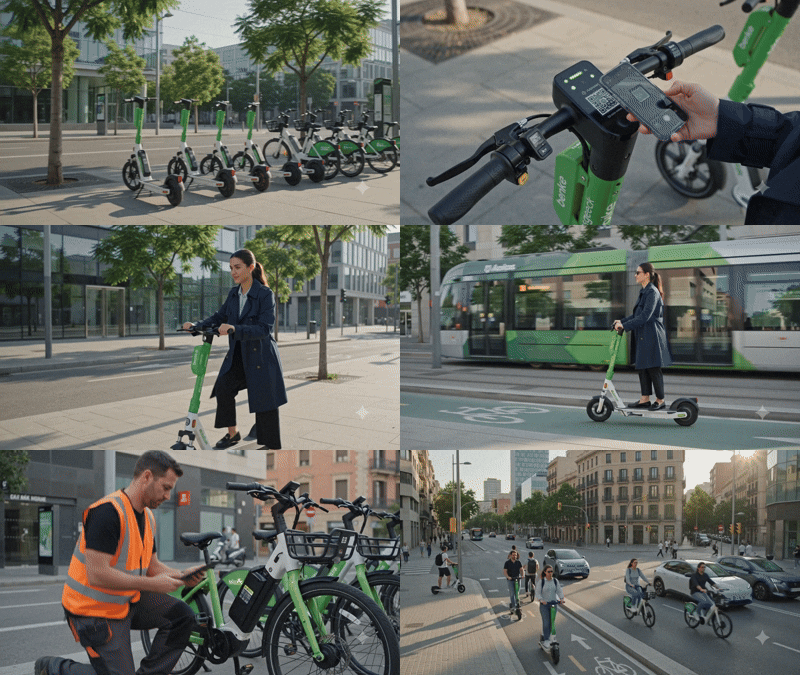
The global transportation sector is currently traversing a critical juncture defined by the transition from asset-heavy private vehicle ownership toward highly efficient, data-integrated shared mobility systems. As of 2025, the shared micromobility industry—encompassing both bike and scooter sharing—has matured from an experimental urban novelty into a sophisticated pillar of the “last-mile” connectivity ecosystem. The market landscape is characterized by a significant surge in ridership, with North America reporting a record 225 million trips in 2024, a 31% increase over the previous year.[1, 2] This growth is fundamentally underpinned by a triad of drivers: escalating fuel costs, an intensifying global focus on urban decarbonization, and the integration of micromobility into broader Mobility-as-a-Service (MaaS) frameworks.[3, 4]
However, the path to establishing and scaling a successful micromobility enterprise in 2026 is increasingly complex. New entrants must navigate a landscape of tightening municipal regulations, geopolitical trade tensions that influence hardware procurement costs, and the rigorous demands of achieving positive unit economics.[3, 5] This report provides an exhaustive analysis of the market dynamics, operational strategies, technological requirements, and regulatory frameworks necessary to launch and grow a shared micromobility business in the current global environment.
Global Market Landscape and Economic Projections
The shared micromobility sector is bifurcated into two primary segments: bike sharing and e-scooter sharing. While bike sharing remains a foundational element of urban mobility, e-scooter sharing is exhibiting the most rapid growth trajectory.[4, 6] The global bike-sharing market is projected to expand from USD 4.02 billion in 2024 to USD 4.24 billion in 2025, representing a steady compound annual growth rate (CAGR) of 5.6%.[3] In contrast, the e-scooter sharing segment is experiencing an accelerated CAGR of 16.84%, with projections suggesting a valuation of USD 9.5 billion by 2033.[4, 7]
Comparative Market Valuation and Forecast (2024–2033)
| Market Metric | Bike Sharing | E-Scooter Sharing | Shared Mobility (Aggregate) |
|---|---|---|---|
| 2024 Market Size (USD Billion) | 4.02 | 1.33 – 2.34 | 1,501.50 |
| 2025 Projected Size (USD Billion) | 4.24 | 1.54 – 1.81 | 1,559.32 |
| 2033/34 Forecast (USD Billion) | 11.65 (by 2033) | 7.08 – 16.10 (by 2034) | 1,784.22 (by 2029) |
| Projected CAGR (2025-2033) | 5.6% – 12.0% | 15.7% – 18.56% | 3.0% – 15.0% |
| Largest Regional Market | Asia-Pacific | Europe / North America | Asia-Pacific (China) |
| Fastest Growing Region | North America | Asia-Pacific | Asia-Pacific |
The economic outlook is shaped by significant regional variations. The Asia-Pacific region, led by China and India, continues to be the largest market for shared mobility, driven by extreme urban density and aggressive government electrification schemes.[3, 8, 9] For instance, the Indian government’s FAME scheme (Faster Adoption and Manufacturing of Hybrid and EV) has allocated substantial budgets to support the proliferation of electric two-wheelers, significantly lowering the barriers for shared mobility operators in that region.[10] Conversely, North America is identified as the fastest-growing region for shared micromobility systems, particularly as mid-sized and smaller municipalities adopt these solutions to mitigate congestion and improve public transit access.[1, 2, 3]
A critical headwind emerging in early 2026 involves the escalation of international trade tensions. Specifically, tariffs imposed between the United States and other major manufacturing hubs have significantly increased the cost of fleet-grade e-bikes, docking stations, and lithium-ion battery cells.[3, 5] These tariffs disrupt procurement cycles and place immense pressure on profit margins, as operators often have limited flexibility to pass these increased costs onto consumers in a competitive market.[3] Strategic responses among leading firms include the adoption of collaborative logistics, the renegotiation of supplier agreements, and the postponement of major fleet upgrades in favor of extending the lifespan of existing vehicles.[3]
The Evolution of Shared Mobility: A Post-Pandemic Analysis
To understand the 2026 landscape, one must consider the longitudinal recovery of the sector following the disruptions of 2020. Global shared mobility revenue plummeted to USD 727.71 billion in 2020, representing a massive contraction due to pandemic-related lockdowns.[9] However, the recovery has been robust. By 2023, revenues surged to USD 1,435.03 billion, reflecting a profound shift in consumer preference toward open-air, individual-oriented transportation.[9]
Global Shared Mobility Revenue Trend (2017–2029)
| Year | Revenue (USD Billion) | Growth Index (%) | Key Driver / Event |
|---|---|---|---|
| 2017 | 1,259.52 | 100 | Baseline Market Establishment |
| 2019 | 1,306.21 | 103.7 | Pre-Pandemic Maturity |
| 2020 | 727.71 | 57.8 | Global Pandemic Disruption |
| 2021 | 879.30 | 69.8 | Initial Recovery Phase |
| 2023 | 1,435.03 | 113.9 | Significant Growth Surge |
| 2025 (Projected) | 1,559.32 | 123.8 | Institutionalization & Regulation |
| 2029 (Forecast) | 1,784.22 | 141.7 | Mass Adoption of MaaS |
The digitalization of the industry is perhaps the most significant structural change. Online sales channels, which accounted for only 59% of the market in 2022, are projected to reach 69% by 2029.[9] This trend highlights the absolute necessity for operators to develop seamless, high-performance mobile applications and integrated payment systems that cater to a tech-savvy user base.[9, 11]
Strategic Framework for Business Initiation
Launching a shared micromobility venture in 2025 requires a methodical, multi-phase approach that prioritizes market validation and regulatory alignment before large-scale capital deployment. The analytical consensus among industry experts suggests a nine-step trajectory for successful business establishment.[12, 13, 14]
Market Validation and Audience Segmentation
The foundational step involves deep analysis of local commute patterns and last-mile connectivity gaps. Potential users are typically segmented into four categories: daily commuters seeking alternatives to public transit, students on large campuses, tourists exploring urban centers, and delivery personnel requiring efficient short-distance transport.[6, 12, 13] Data suggests that daily commuters represent the largest user pool (45.96% share), while delivery personnel constitute the fastest-growing segment, expanding at a CAGR of 23.62%.[6]
Successful entrants frequently utilize AI-powered demand analysis tools to identify geographic “sweet spots”—areas where vehicle density correlates with high ridership potential.[6, 15] These tools analyze historical ride data, foot traffic patterns, and public transit schedules to predict high-utilization zones. Furthermore, a competitive assessment is required to identify market gaps that established giants like Lime or Bird may be overlooking, such as underserved suburban zones or specialized corporate campus solutions.[3, 11, 12]
Regulatory Navigation and Legal Structuring
The complexity of local governance cannot be overstated. Operators must apply for city-specific tenders and permissions, a process that can take anywhere from one to two months depending on the municipality.[11, 14] Compliance with local safety and environmental guidelines is a prerequisite for being awarded a permit. In many jurisdictions, operators must demonstrate prior experience managing shared mobility programs of at least 200 devices in cities of significant population.[16]
From a corporate perspective, the selection of a business structure is critical for liability protection and tax efficiency. While a sole proprietorship is the simplest option, most industry experts recommend an LLC (Limited Liability Company) or a Corporation to protect personal assets from the significant liability risks associated with vehicle operation and potential accidents.[17] Registration with local authorities and obtaining a federal Employer Identification Number (EIN) are essential preliminary steps that facilitate banking and insurance procurement.[17]
Financial Planning and Capital Acquisition
The initial capital expenditure for a micromobility startup is heavily weighted toward fleet acquisition and technological infrastructure. For an initial fleet of 25 to 50 scooters, an operator can expect to generate between USD 30,000 and USD 100,000 in annual revenue, provided high utilization rates are maintained.[17] However, achieving profitability requires a meticulous understanding of both CAPEX and OPEX.[18]
| Cost Category | Component Detail | Financial Impact |
|---|---|---|
| CAPEX | Fleet Acquisition (E-Scooters/E-Bikes) | USD 600 – 1,200 per unit |
| CAPEX | App Development (Android/iOS) | USD 10,000 – 25,000 (total) |
| CAPEX | Permits and Business Licenses | USD 500 – 5,000 + per-vehicle fees |
| OPEX | Maintenance and Repairs | ~USD 2.20 per 100km (Electric) |
| OPEX | Charging and Battery Logistics | ~15% – 20% of total revenue |
| OPEX | Liability Insurance | ~USD 150 – 500 per vehicle / year |
| OPEX | Staff Salaries & Admin | Varies by region and scale |
Revenue modeling typically relies on a combination of pay-per-ride charges, monthly or weekly subscriptions, and potentially in-app advertising or corporate partnerships.[11, 15] Advanced operators also explore data monetization—selling anonymized ride trend data to city planners and mobility researchers—as a secondary revenue stream.[11]
Comparative Analysis of Operational Models
A defining strategic decision for any operator is the choice between docked, dockless, or hybrid systems. As of 2025, the market has shifted significantly toward dockless and hybrid models, though each configuration presents distinct advantages and operational burdens.[13, 19]
The Prevalence of Dockless Systems
Dockless or “free-floating” systems captured approximately 61.3% of the global shared fleet in 2025.[4, 19] Their primary appeal is unparalleled user convenience; riders can pick up a vehicle anywhere and leave it at their destination, provided it is within the designated geofenced service area.[13, 19] From an operator’s perspective, dockless systems allow for rapid scaling and minimal upfront infrastructure investment, as they do not require the construction of physical docking stations.[19]
However, the “free-floating” nature of these systems creates significant negative externalities, most notably “urban clutter.” Mis-parked vehicles obstructing sidewalks and transit access points have led to severe regulatory backlash in cities like Paris and Madrid.[19] Furthermore, dockless vehicles are more vulnerable to theft and vandalism, and they require intensive manual labor for rebalancing—moving vehicles from low-demand zones back to high-traffic areas.[11, 13]
The Organizational Order of Docked Systems
Traditional docked systems, such as Citi Bike in New York, require users to return vehicles to fixed stations. This model provides superior organizational order and simplifies the logistics of maintenance and charging.[13, 19] While docked systems offer enhanced integration with public transit and lower risks of theft, the capital costs for stations and land-use permissions are prohibitively high for many startups.[19, 20]
Evidence suggests that docking stations are often disproportionately located in affluent, high-employment areas, which can exacerbate issues of transportation inequity.[20] Furthermore, the lack of geographic reach in peripheral neighborhoods often limits the utility of docked systems for low-income residents.[20]
Hybrid Models and Geofencing Solutions
The industry is increasingly adopting hybrid systems that attempt to combine the flexibility of dockless models with the order of docked ones. In these systems, users are encouraged or required to park in designated virtual “hubs” or geofenced zones.[2, 13] High-quality mobile docking hubs—such as those developed by firms like Mosa—offer a modular, scalable alternative to traditional docks, allowing cities to install parking infrastructure in minutes that can be relocated as needed.[19]
Operational Model Trade-Offs
| Operational Attribute | Dockless | Docked | Hybrid |
|---|---|---|---|
| User Convenience | High (Anywhere to Anywhere) | Low (Fixed Points) | Moderate to High |
| Infrastructure Cost | Low (GPS/IoT based) | High (Civil Works/Stations) | Moderate |
| Maintenance Ease | Difficult (Scattered Fleet) | Simple (Centralized) | Moderate |
| Vandalism Risk | High | Low | Moderate |
| Regulatory Risk | High (Clutter concerns) | Low (Organized) | High (Policy-dependent) |
| Charging Model | Swapping / Collection | Dock-integrated | Swapping / Hybrid |
Unit Economics and Key Performance Indicators (KPIs)
For a shared micromobility business to be sustainable, it must achieve a healthy ratio between Customer Lifetime Value (LTV) and Customer Acquisition Cost (CAC). Industry benchmarks for 2025 suggest that a 3:1 or 4:1 LTV:CAC ratio is the “gold standard” for profitable growth.[21, 22]
Analyzing ARPU and Profit Margins
The Average Revenue Per User (ARPU) in the e-scooter sharing market is projected to rise from USD 26.10 in 2025 to USD 30.40 by 2030.[4] Gross profit margins typically range between 20% and 35%, while net profits usually fall within the 10% to 20% range after accounting for maintenance, insurance, city fees, and depreciation.[12, 17]
Data from Bird Global’s fiscal 2021 results illustrates the potential for margin improvement as systems mature. Bird reported a “Ride Profit” margin (before vehicle depreciation) of 49% in 2021, a significant increase from 20% in the prior year.[23, 24] This improvement was driven by operational efficiencies, longer vehicle lifespans, and a shift toward more durable hardware.
Customer Acquisition and Retention Strategies
The average CAC for eCommerce-adjacent models, which includes many app-based mobility services, ranges from USD 10 to USD 78.[22] To optimize this metric, operators leverage targeted digital marketing (SEO and social media), local partnerships with hotels and universities, and aggressive referral programs that incentivize existing users to invite new riders.[12]
High purchase frequency is the primary driver of LTV. Users who adopt micromobility for their daily commute—often through subscription plans—provide the most stable and predictable revenue streams.[22] Consequently, successful operators focus on increasing retention through loyalty programs and ensuring a superior app experience that minimizes the friction of finding and unlocking a vehicle.[12, 14]
Technological Infrastructure and App Development
The digital experience is the primary touchpoint for the customer. A failed unlock or an inaccurate GPS map can lead to immediate churn. In 2025, the technological requirements for a micromobility app have expanded beyond basic booking to include advanced AI-driven features.[11]
Essential Platform Components
An e-scooter or e-bike rental app must be developed for both Android and iOS and integrated with several backend systems:
- IoT and Hardware Integration: Vehicles must be equipped with IoT-based diagnostics and smart locks that communicate with the app via Bluetooth or QR codes.[11]
- Real-Time Mapping: Integrated GPS functionality is required for both anti-theft tracking and a user-facing map that shows the real-time location and battery status of nearby units.[11]
- Payment Gateways: Support for diverse payment methods—including credit cards, mobile wallets (Apple Pay/Google Pay), and region-specific options like UPI—is critical for user acquisition.[11]
- Fleet Management Software: Operators need a comprehensive admin dashboard to monitor vehicle health, battery levels, and user behavior in real-time.[11]
The Role of White-Label Software Solutions
Many startups choose white-label solutions to reduce time-to-market. Providers like Joyride, Wunder Mobility, and Atom Mobility offer ready-to-deploy platforms that include the user app, the operator dashboard, and IoT connectivity.[15, 25, 26] These solutions are particularly valuable for their ability to handle “General Bikeshare Feed Specification” (GBFS) and “Mobility Data Specification” (MDS) compliance, which are often mandated by municipal regulators.[27, 28]
Wunder Mobility, for instance, serves over 500 cities globally and handles more than 50 million API calls per day, providing a scalable backbone for operators of all sizes.[29] Their platform includes AI-powered dispatching and demand forecasting, which can reduce operational costs by up to 30% through more efficient rebalancing and maintenance scheduling.[12]
Comparative Software Costs and Features
| Platform / Vendor | Market Presence | Core Strength | Starting Cost (Enterprise) |
|---|---|---|---|
| Joyride | Global | Regulatory compliance (MDS/GBFS) | Varies by fleet size |
| Wunder Mobility | 500+ Cities | AI-powered workflows & multi-modal support | ~EUR 5,000 / month |
| Atom Mobility | All-encompassing | Branded services for diverse vehicle types | Competitive SaaS pricing |
| Apptunix | Custom focus | High customizability for startups | Project-based |
| Codiant | SME focus | Industry-specific white-label apps | Growth-oriented pricing |
Hardware Selection and Procurement Strategy
The choice of hardware is the single most important factor in a vehicle’s total cost of ownership (TCO). In 2025, the industry is dominated by high-durability models from manufacturers like Segway and Okai, while earlier players like Acton have pivoted toward campus and city-wide supply rather than consumer sales.[30]
Benchmarking the 2026 Fleet Leaders
Operators must select vehicles based on a balance of range, top speed, weight, and reliability. The Segway Ninebot Max G2 and the Okai Neon Ultra ES40 are currently the primary contenders in the mid-range commuter segment.[31, 32]
| Hardware Spec | Segway Ninebot Max G2 | Okai Neon Ultra ES40 | Okai Neon Pro |
|---|---|---|---|
| Tested Range | ~24.5 – 40 mi | ~24.5 – 43.5 mi | ~26.8 mi |
| Max Speed | 18.6 mph | 24 mph | 20.5 mph |
| Weight | 42.1 lbs | 49.8 lbs | 46.3 lbs |
| Battery Capacity | 551Wh | 720Wh | 706Wh |
| Brake System | Drum (F) + Regen (R) | Drum (F) + Regen (R) | Disc |
| IP Rating | IPX5 | IPX5 | IP55 |
| Reliability Score | 8.6 / 10 | 8.2 / 10 | High |
| MSRP (Unit) | USD 949 | USD 799 – 999 | USD 849 |
The Segway Ninebot Max G2 excels in portability and refined software integration, featuring self-healing tires that reduce the frequency of maintenance calls due to punctures.[32, 33] However, the Okai Neon Ultra offers a 30% larger battery and a higher top speed, making it a superior choice for urban environments with significant elevation changes.[32] For fleet operators, the Okai’s lower sale price often makes it more attractive for rapid expansion, despite a slightly lower reliability rating compared to Segway.[32]
Durability and Lifecycle Considerations
Shared vehicles undergo significantly more stress than personal-use scooters. A commercial-grade e-scooter must withstand 2,000+ kilometers of use in various weather conditions.[12] Robustness in design—such as concealed wires, puncture-resistant tires, and sturdier kickstands—is essential to thwart vandalism and ensure a long operational life.[34]
Manufacturers are increasingly focusing on modular designs that allow for easy replacement of components like batteries, motors, and handlebars. This modularity is a key driver in reducing lifecycle greenhouse gas emissions, as extending a vehicle’s life is the most effective way to lower its environmental impact.[35, 36]
Operational Logistics: Charging and Rebalancing
The most significant operational expense for a micromobility firm is the management of the “active” fleet. This includes ensuring vehicles are fully charged and positioned in areas where they will be used.
The Logistics of Battery Swapping
The debate between centralized charging (collecting entire scooters and bringing them to a warehouse) and battery swapping (replacing depleted batteries in the field) has largely been resolved in favor of the latter for large-scale urban fleets.[19, 37, 38]
Battery swapping offers several critical advantages:
- Reduced Downtime: Swapping a battery takes less than three to five minutes, allowing the vehicle to remain in service for nearly 24 hours a day.[37, 38]
- Logistics Efficiency: Batteries can be transported on e-cargo bikes or small electric vans, which are cheaper to operate and more maneuverable in dense traffic than large collection trucks.[35, 36, 39]
- Total Cost of Ownership (TCO) Savings: For B2B players, the battery-swapping model provides a 19.3% savings over fixed-battery EVs and a 25.5% savings compared to internal combustion engine (ICE) vehicles.[37]
However, the CAPEX for battery swapping is higher, as operators must maintain a “buffer” inventory of spare batteries and invest in swapping stations. A swapping station built on only 25 square meters can facilitate a swap every five minutes, making it a more efficient use of urban real estate compared to traditional fast-charging stations.[37, 38]
Rebalancing and Demand Forecasting
Micromobility systems are inherently prone to geographic imbalance. For example, during morning peaks, vehicles tend to cluster in downtown business districts, leaving residential neighborhoods empty. Operators use AI-driven demand forecasting to predict these shifts and deploy rebalancing crews proactively.[4, 40]
Sophisticated rebalancing algorithms—such as the “regret insertion heuristic”—allow operators to calculate the minimum number of vehicles and routes needed to redistribute the fleet efficiently.[40] In pilot cities, the use of predictive analytics has reduced average idle time per scooter from 65% to 45%, directly boosting the revenue generated per unit.[4]
Regulatory Compliance and Municipal Partnerships
In 2026, the relationship between operators and cities has evolved into a structured partnership. Most cities govern micromobility through permit programs that mandate strict adherence to safety, data sharing, and equity standards.[41, 42]
Data Standards: MDS and GBFS
Compliance with open data standards is no longer optional. These standards allow cities to monitor the public right-of-way and ensure that operators are meeting their permit obligations.[27, 43]
| Standard | Governing Body | Primary User | Purpose |
|---|---|---|---|
| GBFS | MobilityData | General Public | Trip planning and vehicle discovery in apps like Google Maps. |
| MDS | Open Mobility Foundation | City Regulators | Monitoring deployments, trip counts, and managing policy compliance. |
GBFS is a real-time, public data specification that focuses on vehicle availability. It helps users find the nearest bike or scooter and is the foundation for multimodal transit apps.[28, 43, 44] MDS, in contrast, is a non-public API used exclusively by regulators. It includes historical trip data and sensitive telemetry that helps cities analyze usage patterns and manage public space.[27, 28, 43] For an operator to be considered fully compliant, they must typically publish a public GBFS feed while providing authorized MDS access to city agencies.[27, 43]
Equity Requirements and Priority Zones
A defining feature of the 2025 regulatory landscape is the “Equity Priority Zone.” Approximately 70% of U.S. micromobility programs now include equity-related requirements.[45] These mandates are designed to ensure that the benefits of shared mobility are accessible to underserved populations.
Common equity requirements include:
- Adaptive Vehicles: Nearly half of all systems now offer adaptive vehicles for users with disabilities, up from 31% in 2023.[1, 2]
- Smartphone Alternatives: Many cities mandate that operators provide a way to unlock vehicles without a smartphone, such as via SMS or a physical smart card.[16, 45, 46]
- Low-Income Discounts: Operators are often required to offer deeply discounted fares (averaging 76% below full price) for income-qualified riders.[2, 45, 46]
- Deployment Mandates: Some cities, such as Berkeley, California, require that more than 50% of the fleet be deployed in designated “Equity Priority Communities”.[45]
Operators who successfully integrate these requirements into their business model are often rewarded in the RFP scoring process. Winning bid strategies emphasize the ability to serve “unbanked” residents and provide educational programs regarding legal and safe scooter use.[16, 41]
Risk Mitigation: Safety, Theft, and Vandalism
As shared micromobility proliferates, so do the risks associated with public operation. Safety concerns and high rates of theft and vandalism can jeopardize the financial viability of an operator.[6, 47]
Safety and Infrastructure Planning
Safety is a primary concern for municipal regulators. A four-year case study in Austin, Texas, revealed that targeted safety education and infrastructure improvements—such as protected bike lanes and traffic calming at intersections—are essential for reducing accident rates.[48]
Operators are increasingly using IoT sensors to monitor risky rider behavior, such as sidewalk riding or going against traffic flow. A university study in Los Angeles used LiDAR and camera sensors to track e-scooter movements, identifying that scooters frequently violate traffic signals or fail to use available bike paths.[49] Advanced apps now include “safety training” modules that users must complete before their first ride.[12, 16]
Theft Deterrence and Recovery
Theft and vandalism are significant “restraints” on the market’s CAGR, with an estimated -1.8% impact globally.[6] To combat this, operators employ a “defense-in-depth” strategy:
- Physical Security: Using high-grade locks and choosing well-lit, high-traffic parking zones.[47]
- Technological Security: IoT-enabled sirens, vibration detection, and geofencing that alerts the operator if a vehicle is moved without being unlocked.[11, 47]
- Remote Monitoring: The ability to remotely lock the motor or trigger an alarm via the smartphone app.[11, 47]
In extreme cases, such as the Manchester “Mobike” failure in 2018, unsustainable levels of theft and vandalism can force an operator to withdraw from a market entirely.[19] This underscores the importance of choosing hardware with “anti-theft encryption” and concealing critical components like wires and screws.[34]
Sustainability and Lifecycle Analysis (LCA)
Shared micromobility is frequently promoted for its contribution to transportation decarbonization. In North America, shared systems offset approximately 101 million pounds of CO2 emissions in 2024.[1, 50, 51] However, the environmental benefit depends heavily on the “lifecycle impact” of the vehicles.
The Greening of Micromobility
Research from the International Transport Forum (ITF) shows that shared micromobility has made significant progress in sustainability. Electrically assisted modes have a higher initial impact than manual bicycles due to battery production, but this is offset by the trips they replace.[35]
The lifecycle environmental impact is shaped by:
- Vehicle Lifetime: Increasing the durability and modularity of vehicles has led to the greatest reduction in GHG emissions.[35, 36]
- Fleet Servicing: The use of swappable batteries and electric cargo bikes for servicing has significantly lowered the operational carbon footprint.[35, 36]
- Renewable Energy: More than half of operators now source renewable energy for vehicle charging.[2]
Compared to private automobiles, shared e-scooters offer a far lower per-mile carbon footprint, positioning them as a critical tool for cities aiming for car-free or car-light urban centers.[6, 35]
Lifecycle GHG Comparison (Urban Transport Modes)
| Transport Mode | GHG Emissions (g CO2e / rider-km) |
|---|---|
| Private Internal Combustion Car | ~200 – 250 |
| Electric Car | ~80 – 120 |
| Public Transit (Bus) | ~60 – 90 |
| Shared E-Scooter (2025 Era) | ~30 – 55 |
| Shared E-Bike | ~25 – 45 |
| Personal Bicycle (Non-electric) | ~5 – 10 |
Strategic Scaling and Growth Opportunities
Once a business has established a stable operational base, the focus shifts to growth. Successful scaling in 2025 involves diversification of services and geographic expansion into new, often less-crowded markets.[5]
Diversification of Services
Leading operators are moving beyond simple “point A to point B” rentals toward more integrated service models:
- Corporate and Campus Mobility: Providing dedicated fleets for university campuses or large corporate industrial sites.[4, 30, 52]
- Last-Mile Logistics: Partnering with delivery companies to provide e-bikes and e-scooters for “hyper-local” deliveries, a segment growing at a 23.62% CAGR.[6, 52]
- Tourism and Recreational Fleets: Establishing presence in tourist-heavy cities and partnering with local boards to provide “guided” GPS routes.[4, 13]
Geographic Expansion into Suburban and Rural Markets
While Tier 1 cities are the traditional home of micromobility, the 2025 forecast highlights expansion into suburban and rural areas as a major trend.[5] These markets often have fewer competitors and a high demand for affordable transport where public transit is sparse. Success in these smaller markets often requires a “public-led” or community-oriented model, utilizing lower-cost modular docks and regional partnerships.[19]
MaaS Integration and Partnerships
The ultimate growth objective for many firms is full integration into the city’s multimodal transit network. This “Mobility-as-a-Service” (MaaS) approach allows users to view, book, and pay for their entire journey—including buses, trains, and shared scooters—through a single integrated app.[4, 25, 27, 53] Operators that can integrate their API with municipal transit apps gain a significant advantage in visibility and customer acquisition.[4, 25]
Analytical Synthesis and Expert Outlook
The shared micromobility industry in 2026 has reached a state of “mature volatility.” While the underlying demand for sustainable, efficient urban transport is at an all-time high, the operational and financial hurdles remain substantial. The successful operator of 2025 is not just a provider of vehicles, but a sophisticated data and logistics manager capable of navigating complex municipal politics.
The key to long-term profitability lies in three core pillars:
- Hardware Durability: Minimizing the TCO through the selection of high-spec, modular vehicles that can survive 2+ years of intensive urban use.
- Operational Efficiency: Leveraging AI for demand forecasting and adopting battery-swapping logistics to maximize vehicle uptime and minimize rebalancing costs.
- Regulatory Diplomacy: Working proactively with cities to meet equity and safety mandates, ensuring that micromobility is viewed as a “community asset” rather than a private nuisance.
As geopolitical trade tensions continue to influence CAPEX and fuel prices fluctuate, the flexibility of the micromobility model—its ability to scale up or down quickly and fill the “gaps” left by traditional transit—will remain its greatest strength. For those entering the market today, the focus must be on sustainable, inclusive growth that aligns with the broader global transition toward a greener, more connected urban future.
——————————————————————————–
- 2024 State of the Industry Report – nabsa, https://nabsa.net/2025/08/07/2024industryreport/
- Micromobility report shows rising demand, funding and equity models in North America, https://cities-today.com/micromobility-report-shows-rising-demand-funding-and-equity-models-in-north-america/
- Bike Sharing Market Report 2025 – Research and Markets, https://www.researchandmarkets.com/report/bike-rental
- E-scooter Sharing Market Size, Share & Trends, 2034 – Industry Research, https://www.industryresearch.biz/market-reports/e-scooter-sharing-market-107669
- E-Scooter Sharing Global Market Report 2025 – The Business Research Company, https://www.thebusinessresearchcompany.com/report/e-scooter-sharing-global-market-report
- Bike and Scooter Rental Market Size, Share & 2025-30 Outlook – Mordor Intelligence, https://www.mordorintelligence.com/industry-reports/bike-and-scooter-rental-market
- E-Scooter Sharing Market Size, Share & Growth Report by 2033 – Straits Research, https://straitsresearch.com/report/e-scooter-sharing-market
- Bike and Scooter Rental Market Size, Share & Growth Report by 2033 – Straits Research, https://straitsresearch.com/report/bike-and-scooter-rental-market
- Shared Mobility Statistics and Facts (2025) – Market.us News, https://www.news.market.us/shared-mobility-statistics/
- Electric Scooter Market Size, Share & Growth | Forecast [2032] – Fortune Business Insights, https://www.fortunebusinessinsights.com/electric-scooter-market-102056
- How to Start an eScooter Rental App Business – 2025 Guide – JPLoft, https://www.jploft.com/blog/how-to-start-an-escooter-rental-app-business
- How to Start an Electric Scooter Rental Business [2025 Guide: 9 …, https://www.serif.ai/start-a-business/how-to-start-an-electric-scooter-rental-business-2025-guide-9-steps-free-business-plan
- How to Start an E-Bike Rental Business in 2025? – Goteso, https://www.goteso.com/blog/how-to-start-an-e-bike-rental-business/
- A Guide On How To Start An Electric Scooter Rental Business – Squillion Tech, https://www.squillion.tech/guide-start-electric-scooter-rental-business/
- Micromobility that moves – Wunder Mobility, https://www.wundermobility.com/software/micromobility
- CITY OF CHICAGO REQUIREMENTS FOR SCOOTER SHARING EMERGING BUSINESS PERMIT PILOT PROGRAM I. Definitions. For purposes of this sco, https://www.chicago.gov/content/dam/city/depts/cdot/Misc/EScooters/EScootersPilotProgramTerms_06-07-19.pdf
- How to Start a Scooter Rental Business in 2026! – RentMy, https://rentmy.co/blog/how-to-start-a-scooter-rental-business/
- Electric Scooter Cost Model: Market Profit Outlook – IMARC Group, https://www.imarcgroup.com/insight/electric-scooter-cost-model
- Why Dockless Bike Share Is Surging – And Why Cities Sho… – Mosa, https://www.mosa.to/blog/docklessbikeshare
- Full article: Docked bikeshare: a review of the interrelationship between socio-economic disadvantage and the built environment, https://www.tandfonline.com/doi/full/10.1080/03081060.2024.2358105
- Average Customer Acquisition Cost: Benchmarks by Industry, https://userpilot.com/blog/average-customer-acquisition-cost/
- Benchmarking LTV / CAC Ratios for E-Commerce Seed Rounds – Qubit Capital, https://qubit.capital/blog/ltv-cac-benchmarks-ecommerce-seed-rounds
- Bird Announces Fourth Quarter and Full Year 2021 Financial Results – Bird Co., https://www.bird.co/blog/bird-announces-fourth-quarter-full-year-2021-financial-results/
- Bird Global – Investor Presentation (Q4 Update)_vF.pdf, https://www.slideshare.net/slideshow/bird-global-investor-presentation-q4-updatevfpdf/252910120
- Micro-Mobility Integration Systems Market Size, Forecasts 2034, https://www.gminsights.com/industry-analysis/micro-mobility-integration-systems-market
- Compare ATOM Mobility vs. Joyride in 2025 – Slashdot, https://slashdot.org/software/comparison/ATOM-Mobility-vs-Joyride/
- MDS and GBFS: Basics and best practices for micromobility businesses – Joyride, https://joyride.city/blog/mds-gbfs-micromobility-business/
- Understanding the Relationship between GBFS and MDS – Open Mobility Foundation, https://www.openmobilityfoundation.org/understanding-gbfs-and-mds/
- Wunder Mobility: market-leading software provider for shared mobility operators, https://www.wundermobility.com/
- Acton vs. Segway vs. WheelFeet: The 2025 E-Skate Showdown, https://wheelfeet.com/blogs/electric-roller-skates-eskates-complete-guide/acton-vs-segway-vs-wheelfeet-the-2025-e-skate-showdown
- Compare the Segway Ninebot Max and the Okai Neon | Levy Electric, https://www.levyelectric.com/compare-scooters/compare-the-segway-ninebot-max-and-the-okai-neon
- OKAI Neon Ultra ES40 – Taking on the Segway Max G2 – Electric Scooter Guide, https://electricscooterguide.com/okai-neon-ultra-es40-review/
- Compare the Okai Neon Pro and the Segway Ninebot Max | Levy Electric, https://levyelectric.com/compare-scooters/compare-the-okai-neon-pro-and-the-segway-ninebot-max
- Birds, Limes, Spins and more, is any e-scooter safe from vandals? – HERE Technologies, https://www.here.com/learn/blog/electric-scooter-abuse
- Greener Micromobility – International Transport Forum (ITF), https://www.itf-oecd.org/sites/default/files/docs/greener-micromobility.pdf
- Greener Micromobility – International Transport Forum (ITF), https://www.itf-oecd.org/greener-micromobility
- The relevance of EV battery swapping in emerging markets | Arthur …, https://www.adlittle.com/en/insights/viewpoints/relevance-ev-battery-swapping-emerging-markets
- Exploring the future of mobility through the battery swapping market – Electrical Engineering, https://electricalengineeringmagazine.co.uk/exploring-the-future-of-mobility-through-the-battery-swapping-market/
- A Mobile Battery Swapping Service for Electric Vehicles Based on a Battery Swapping Van, https://www.mdpi.com/1996-1073/10/10/1667
- The Electric Scooter Collection Problem: A Case Study in the City of Vienna – MDPI, https://www.mdpi.com/2071-1050/15/13/10058
- Request for Proposals Micromobility Sharing … – Hopkins, MN, https://www.hopkinsmn.com/DocumentCenter/View/3727/Micromobility-RFP-PDF
- RFQ 10809-24 Request for Qualifications Shared Micromobility Program – Redmond.gov, https://www.redmond.gov/DocumentCenter/View/31729/RFQ-10809-24-Shared-Micromobility-Program?bidId=
- Understanding the relationship between GBFS and MDS – GitHub, https://github.com/openmobilityfoundation/governance/blob/main/technical/GBFS_and_MDS.md
- FAQ – General Bikeshare Feed Specification, https://gbfs.org/documentation/faq/
- Equity Requirements in US Micromobility Programs Are on the Rise – Transport Findings, https://findingspress.org/article/124480-equity-requirements-in-us-micromobility-programs-are-on-the-rise
- Mobility for the People: Evaluating Equity Requirements in Shared Micromobility Programs – PDXScholar, https://pdxscholar.library.pdx.edu/context/trec_reports/article/1242/viewcontent/NITC_RR_1401_Mobility_for_the_People.pdf
- How to Keep Electric Scooter From Being Stolen?, https://unagiscooters.com/scooter-articles/how-to-keep-electric-scooter-from-being-stolen/
- Delving into Safety Considerations of E Scooters: A Case Study of Austin, Texas | Safe-D, https://safed.vtti.vt.edu/projects/delving-into-safety-considerations-of-e-scooters-a-case-study-of-austin-texas/
- Case Study: E-Scooter Monitoring and Behavior Analysis – Sensagrate, https://www.sensagrate.com/roads-of-tomorrow/case-study-e-scooter-monitoring-and-behavior-analysis-at-a-university-campus
- North American Bikeshare and Scootershare Association (NABSA) releases sixth annual report on shared micromobility usage | California Active Transportation Safety Information Pages (CATSIP), https://catsip.berkeley.edu/news/north-american-bikeshare-and-scootershare-association-nabsa-releases-sixth-annual-report-shared
- Launch Event Recap: 2024 State of the Industry Report – nabsa, https://nabsa.net/2025/08/08/2024industryrecap/
- Electric Scooters Market Size, Share | Industry Report, 2033 – Grand View Research, https://www.grandviewresearch.com/industry-analysis/electric-scooters-market
- Data Good Practices for Municipalities: Understanding the General Bikeshare Feed Specification (GBFS) – nabsa, https://nabsa.net/wp-content/uploads/2021/01/FINAL-Data-Good-Practices-for-Municipalities_-Understanding-the-General-Bikeshare-Feed-Specification-GBFS-1.pdf


Leave a comment