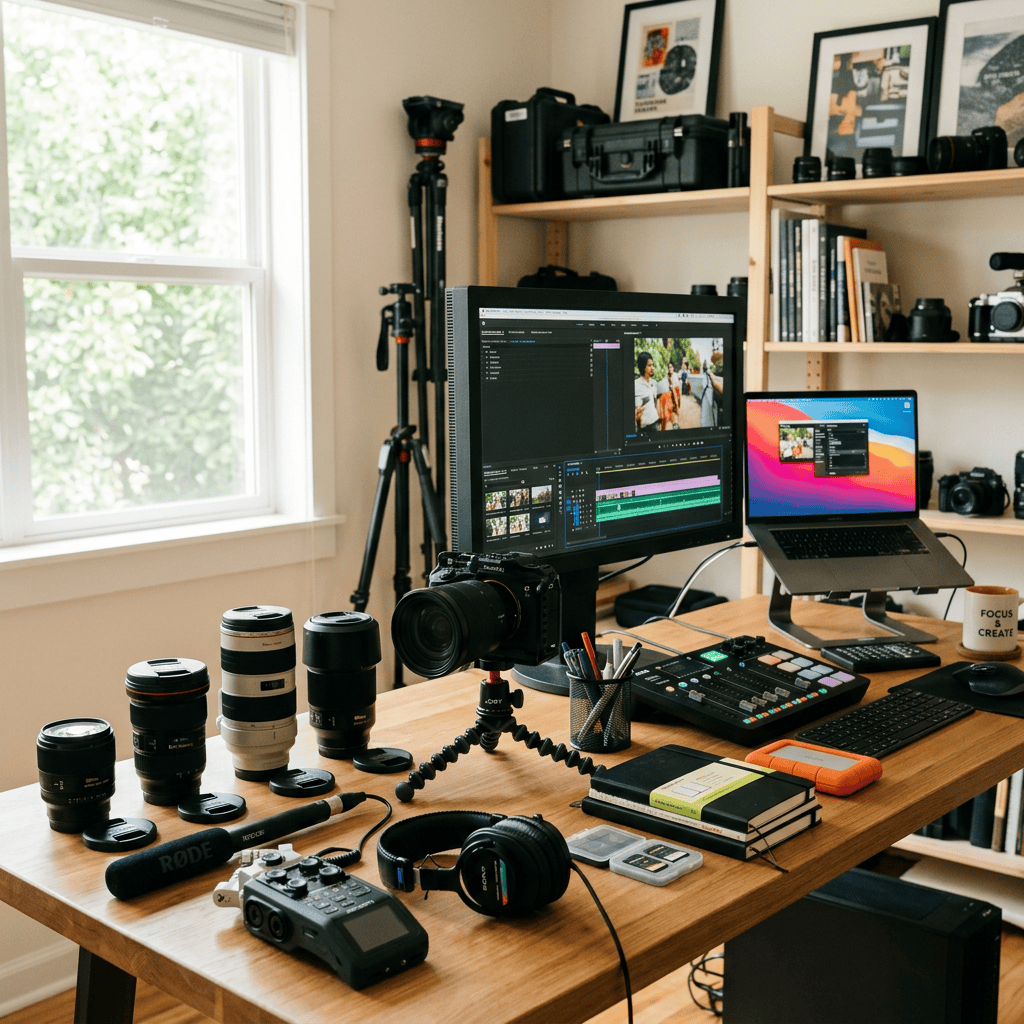
The professional landscape for visual content creators in 2026 is defined by a convergence of rapid technological evolution, shifting consumer psychology, and a global macroeconomic expansion of the digital asset economy. The global photographic services market enters this period with a valuation of approximately USD 37.51 billion, projected to grow at a compound annual growth rate (CAGR) of 4.80% to reach USD 47.46 billion by 2030.[1] Some industry forecasts suggest an even more aggressive trajectory, with the market potentially reaching USD 64.68 billion by 2034, expanding at a CAGR of 6.10% from 2025.[2] This growth is not merely a byproduct of increased volume but a fundamental transformation in how businesses and individuals utilize visual storytelling to drive commercial outcomes. The proliferation of digital-first brand campaigns, the exponential demand for e-commerce assets, and the integration of immersive technologies like 360-degree imaging have created a high-stakes environment where professional quality is the baseline for entry.[1, 2]
The Macroeconomic Landscape and Market Dynamics
The current market concentration is categorized as medium, with major global players like Getty Images and Shutterstock commanding approximately 85% of the stock photography market share.[1, 3] However, the segment for professional photography services is projected to expand at a 7.02% CAGR, outpacing stock licensing as corporate entities increasingly pivot toward unique, bespoke brand content that commodity libraries cannot replicate.[1] Geographically, the Asia-Pacific region represents the fastest-growing territory with a 6.58% CAGR, driven by a rising middle class and rapid e-commerce expansion in markets such as China and India.[1, 4] North America maintains its position as the largest market, representing 28% of global revenue, benefiting from the early adoption of high-end equipment and a mature commercial sector.[4]
Emerging Profitable Niches in 2026
The strategic selection of a niche is the most critical decision for a new enterprise. In 2026, the most lucrative sectors are those that offer recurring revenue and high conversion impacts for clients.[5]
| Niche | Primary Demand Driver | Economic Potential |
|---|---|---|
| E-commerce Photography | Online retail flourish; high-quality conversion needs | High (Volume + Retouching Upsells) [5] |
| Social Media Content | Instagram/TikTok drive for short-form video | High (Recurring Contracts) [4, 5] |
| Drone & Aerial Imaging | Real estate, tourism, and industrial inspection | Premium (Unique Perspectives) [5] |
| Corporate & Industrial | Brand storytelling; industrial training assets | Fastest Growing (7.52% CAGR) [1] |
| Real Estate | High-quality staging and 360-degree tours | Stable (Fast Turnover) [2, 5] |
| Stock Image Licensing | AI training data and subscription-based platforms | High (56.66% Market Share) [1] |
While retail sectors like wedding and event photography remain “timeless” and offer high entry fees, the corporate and industrial sectors are seeing unprecedented growth as companies invest in sophisticated visual training materials and brand narratives.[1, 5] The integration of 360-degree photography is particularly notable, as it enhances consumer engagement and satisfaction by providing immersive architectural and landscape experiences.[2]
Legal Foundations and Entity Architecture
Transitioning from a creative practitioner to a business owner requires the establishment of a formal legal structure. This foundation is essential for protecting personal assets, establishing professional credibility, and ensuring tax compliance.[6, 7]
Selecting the Optimal Business Entity
The chosen business structure dictates the level of personal liability and the complexity of tax filings.
- Sole Proprietorship: This is the default state for many freelancers. While it is simple to set up, it offers no legal separation between the individual and the business. Personal assets, including homes and savings, are fully exposed to business liabilities and lawsuits.[7, 8]
- Limited Liability Company (LLC): The LLC is the standard for professional creators in 2025. It creates a “corporate veil” that separates personal assets from business obligations. If the business is sued for a contract dispute, only the business’s assets are typically at risk.[7, 9] Forming an LLC requires filing Articles of Organization with the Secretary of State and paying fees ranging from USD 50 to USD 500.[9, 10]
- S-Corporations: For businesses generating significant net profit—often cited between USD 60,000 and USD 80,000—the S-Corp designation allows the owner to be treated as an employee, potentially reducing self-employment taxes. However, this structure requires more rigorous administrative compliance, including payroll management.[7, 8]
Critical Compliance Requirements for 2026
Beyond entity formation, several administrative milestones must be reached to operate legally within the modern regulatory framework.
| Requirement | Function | Acquisition Process |
|---|---|---|
| EIN (Employer ID Number) | Federal Tax ID for the business | Free via IRS online application [6, 9] |
| BOI (Beneficial Ownership) | Anti-money laundering identification | Mandatory filing with FinCEN as of 2024/2025 [6, 9] |
| Operating Agreement | Outlines management and ownership | Internal document for legal integrity [9] |
| Sales Tax Permit | Enables collection of state/local taxes | Required for services/products in most states [10, 11] |
| Registered Agent | Official point of contact for legal docs | Can be the owner or a professional service [9] |
The Beneficial Ownership Information (BOI) report was a critical new requirement for 2025. Failure to identify individuals with significant control over the entity to the Financial Crimes Enforcement Network (FinCEN) can result in severe penalties.[6, 9] Furthermore, the Employer Identification Number (EIN) is indispensable for opening business bank accounts and processing W-9 forms for corporate clients.[6, 10]
The Insurance and Risk Mitigation Framework
Professional photography and videography involve significant physical and digital risks. Standard homeowners’ or renters’ insurance policies often exclude equipment used for professional purposes, rendering those policies void in the event of a business-related claim.[6]
- General Liability Insurance: This covers bodily injury or property damage occurring during a session, such as a client tripping over a tripod or a light stand damaging a venue’s property. Most professional venues require a Certificate of Insurance (COI) before allowing a photographer on-site.[6, 8, 12]
- Professional Liability (Errors and Omissions): This protects against claims of professional negligence, such as equipment failure resulting in the loss of wedding footage or a client’s dissatisfaction with the creative output.[8]
- Equipment Insurance: Specifically covers the theft, loss, or accidental damage of cameras, lenses, and lighting. Given the high cost of modern mirrorless systems, this is a fundamental operational expense.[6, 8]
- Business Interruption Insurance: Provides financial support if an unforeseen event, such as a fire at a studio, prevents the business from operating.[8, 11]
Industry experts suggest that a minimum of USD 100,000 in liability coverage is standard, though high-end commercial work often necessitates limits of USD 1,000,000 or more.[8, 12]
Financial Strategy and Pricing Models
Sustainability in the visual arts is predicated on a deep understanding of the Cost of Doing Business (CODB). Pricing must account for not only the time spent on location but also the fixed overhead, equipment depreciation, and the specialized value delivered to the client.[13, 14]
The Cost of Doing Business (CODB)
Before setting rates, a business must calculate its break-even point. This includes annual expenses such as software subscriptions (Adobe Creative Cloud, CRM tools), insurance premiums (approx. USD 350-500/year), professional service fees (accounting, legal), and equipment maintenance.[6, 14] Startup costs for a professional setup in 2025 often include a high-resolution hybrid body (USD 3,500+), a “Holy Trinity” of lenses (USD 6,000+), and lighting/audio gear (USD 2,000+).[15]
Primary Pricing Strategies
| Pricing Model | Description | Typical Application |
|---|---|---|
| Cost-Based | CODB + Profit Margin | Baseline retail/portraiture [14] |
| Value-Based | Percentage of the client’s ROI | High-end commercial/branding [14, 16] |
| Day Rate | Flat fee for time + gear expertise | Corporate/editorial assignments [16] |
| Package-Based | Bundled services (e.g., Engagement + Wedding) | Retail/Consumer markets [17, 18] |
In the commercial sector, pricing is often bifurcated into a “Creative Fee” (covering the shoot and time) and a “Usage Fee” (licensing the images). Licensing fees are calculated based on the duration of use (e.g., 1 year), the geographic scope (e.g., North America), and the media distribution (e.g., social media vs. print billboards).[16, 19] For example, a standard license might cover one year of nationwide use across three channels, while an extended license for global, unlimited use would command a significant premium.[16]
Financial Operations and Tax Compliance
Maintaining separate bank accounts for business and personal finances is not only a best practice for organization but a requirement for preserving the legal protection offered by an LLC.[9, 10] Every dollar earned and spent must flow through the business account to ensure a clear audit trail for the IRS. Engaging a small business accountant is highly recommended to manage quarterly estimated tax payments and state-specific sales tax returns, as the failure to collect sales tax on digital deliverables can result in significant liabilities during a state audit.[6, 10]
Technical Infrastructure: The Hybrid Creator Ecosystem
The technological landscape of 2026 has effectively merged the requirements of high-end photography and professional videography into “hybrid” systems. The modern creative must be equipped to deliver 45-megapixel stills and 4K or 8K video from a single workflow.[15]
The Core Hybrid Camera System
The Canon EOS R5 serves as a benchmark for this hybrid model. Its 45-megapixel full-frame sensor provides the resolution required for large-scale print and high-end advertising, while its 8K RAW (30p) and 4K (120p) video capabilities allow for cinematic slow-motion and extreme detail in post-production.[15] Features such as the Dual Pixel CMOS AF II and 5-axis in-body image stabilization (IBIS) are essential for maintaining sharp focus and smooth footage in dynamic shooting environments.[15]
Essential Equipment Checklist for 2026
Professional reliability requires a “redundant” gear philosophy—never arriving on set without a backup for every critical component.[20]
| Category | Recommended Gear | Strategic Value |
|---|---|---|
| Primary Camera | Canon EOS R5 / Sony A7R V | Hybrid photo/video excellence [15, 21] |
| Stabilization | DJI Ronin-S2 Gimbal | Cinematic movement for video [15] |
| Audio Capture | Rode VideoMic Pro+ / Sennheiser MKE 600 | Broadcast-quality directional sound [15] |
| Field Recorder | Zoom H6 / Tascam DR-70D | Multi-track audio and high-fidelity preamps [15, 22] |
| Continuous Light | Aputure 120d II | High CRI (97+) for accurate skin tones [15] |
| Storage | LaCie Rugged RAID / SanDisk Extreme SSD | On-location data safety and high speed [15, 23] |
| Monitoring | Atomos Ninja V | Advanced exposure/focus aids and ProRes recording [15] |
Audio is often cited as the most overlooked element of professional video. Investing in directional shotgun microphones and wireless lavalier systems (e.g., DJI Mic 2) is critical for capturing clean dialogue in uncontrolled environments like events or corporate offices.[15, 24, 25]
Specialized Optics: Real Estate vs. Wedding Photography
Lens selection is governed by the specific spatial constraints and artistic goals of the niche.
- Real Estate: Prioritizes wide angles (16-24mm) to make small spaces appear spacious without distorting architectural integrity.[21, 26, 27] Tilt-shift lenses are the “secret weapon” for these professionals, allowing for the correction of vertical lines in buildings that would otherwise appear to lean backward.[26]
- Wedding and Portraits: Focuses on subject isolation and “creamy bokeh”.[28, 29] The 85mm f/1.2 or 135mm f/1.8 primes are essential for magical night portraits and emotional separation. Meanwhile, a 70-200mm f/2.8 zoom is indispensable for capturing intimate moments from the back of a ceremony space.[28, 29]
Brand Identity and Market Positioning
In a saturated 2026 market, a professional’s brand is their primary differentiator. Competitive pricing is often a race to the bottom; instead, successful businesses build a Unique Selling Proposition (USP) centered on their specific style and client experience.[13, 14]
Designing a Professional Online Presence
A business’s digital footprint—including its website, portfolio, and social media feeds—must be cohesive and professional.
- Website UX: The site must be user-friendly, mobile-optimized, and feature a clear “call to action” (CTA) above the fold.[13, 30]
- Portfolio Curation: A portfolio should only reflect the work the creator wants to be hired for in the future, organized into themed galleries or collections.[13, 14]
- Personal Connection: Showing the “face behind the camera” on platforms like Instagram Stories builds trust. Clients in 2025 are looking for warm, professional, and trustworthy partners.[13]
Content Marketing and Social Media Repurposing
Consistency is prioritized over perfection in modern marketing. Rather than attempting to be active on every platform, creators should master one (e.g., Instagram for visual reach or TikTok for behind-the-scenes engagement) and repurpose content.[13] A single high-quality Reel can be posted to Instagram and TikTok, and its caption reused for a Facebook update.[13] The “1 in 9” rule is often cited: for every nine posts of professional work, one post should be about the creator themselves to humanize the brand.[31]
Strategic Growth Through Local SEO and Networking
Visibility in local search results is the most efficient way to generate high-intent inquiries. Local SEO involves a multi-layered strategy of building relevance, distance, and prominence signals for search engines.[32, 33, 34]
Google Business Profile (GBP) Optimization
The GBP is often the “second website” for a local photographer. In 2026, deep optimization is required to rank in the “Map Pack”.[34, 35]
- Category Selection: Choosing a primary category like “Wedding Photographer” or “Newborn Photographer” rather than a generic “Photography Studio” provides a stronger signal to Google.[34]
- Asset Optimization: Renaming image files with local keywords (e.g.,
miami-newborn-photographer.jpg) before uploading provides extra local signals.[34] - Active Engagement: Regularly posting updates, promotions, and new galleries to the GBP signals to Google that the business is active. Encouraging clients to use specific keywords in their reviews (e.g., “the best family photographer in Denver”) further reinforces local authority.[34, 36]
Semantic SEO and Content Silos
Topical authority is established by creating content that answers client questions and covers local geographic needs.
- Location Pages: Dedicated pages for each city or neighborhood served (e.g., “Family Portraits in [Neighborhood]”) help capture hyper-local search intent.[32, 34, 36]
- Local Guides: Blogging about “The 10 Best Photo Locations in [City]” or “What to Wear for a Beach Session in [City]” creates value and attracts backlinks from other local businesses.[31, 34]
- NAP Consistency: Ensuring the business Name, Address, and Phone number (NAP) are identical across all directories (Yelp, The Knot, Facebook) is crucial for search engine trust.[33, 34, 36]
Networking and Vendor Referrals
Relationships within the wedding and event industry are a primary source of high-quality leads. Treating vendors with kindness and providing them with high-resolution, “vendor-friendly” galleries after an event creates a powerful referral loop.[13, 30] A formal referral program—offering a USD 100 print credit or USD 100 off a future session—can incentivize existing clients to become active advocates for the brand.[31, 37]
Operational Excellence and Client Management
Efficiency in the “backend” of a creative business determines its capacity to scale. Manual administration is the enemy of growth.[6, 38]
Customer Relationship Management (CRM) Evaluation
CRMs automate the workflow from inquiry to final delivery, ensuring no leads are lost and the client experience remains professional.[39, 40]
| Platform | Best For | Key Advantage |
|---|---|---|
| Dubsado | Advanced Customization | Highly customizable workflows and branded portals [39, 40] |
| HoneyBook | User-Friendliness | Intuitive interface and AI-powered pricing/texting [39, 40, 41] |
| Pixieset Studio Manager | Simplicity | Seamlessly integrates CRM with client galleries [39, 42, 43] |
| Táve | High-Volume Studios | Robust analytics and detail-oriented triggers [40, 41, 43] |
| Studio Ninja | Event Photographers | Quick setup and specialized for weddings [39, 40] |
A CRM allows for “set it and forget it” invoicing and contract signing, which results in faster payments and fewer administrative “hoops” for the client to jump through.[6, 13]
Video Collaboration and Delivery
In videography, the review process is often the most time-consuming phase. Professional cloud-based tools are required to handle frame-accurate feedback.[44, 45]
- Dropbox Replay: Offers high-speed uploads and a “virtual viewing room” where clients and creators can watch and comment in real-time.[44, 46]
- Frame.io: The industry standard for production teams, offering deep integration with Adobe Premiere Pro and “Camera to Cloud” workflows.[45]
- IoMoVo: An emerging AI-powered platform that uses natural-language search to help teams find specific clips within large libraries 90% faster.[47]
Scaling Through Outsourcing and Team Building
Many creators hit a “ceiling” where they can no longer take on more work without sacrificing quality or personal well-being. Scaling requires strategic outsourcing and the building of a post-production department.[38, 48]
The ROI of Professional Editing Services
Editing is the primary bottleneck in the photography workflow. Outsourcing this task allows the creator to spend more time on high-value activities like shooting and marketing.[38, 48, 49]
- Cost Efficiency: Annual salaries for in-house editors range from USD 50,000 to USD 80,000. In contrast, outsourcing companies like Photographer’s Edit or Studio Metrodesk offer per-image pricing as low as USD 0.24 to USD 1.00.[49, 50]
- Turnaround Speed: Professional editing teams often operate across time zones, delivering final galleries within 24-48 hours—significantly faster than most solo photographers.[49, 50]
- Case Study: The “N Brown Group” achieved a 35% reduction in both speed-to-market and overall costs by transitioning from in-house to outsourced editing.[50]
Hiring Associates and Independent Contractors
Scaling a business also involves bringing on additional shooters to cover multiple events simultaneously.
- Legal Classification: It is critical to distinguish between independent contractors and employees. Contractors use their own equipment, control their own schedules, and invoice per project.[12, 51, 52]
- Liability and COI: Businesses should always obtain a Certificate of Insurance (COI) from subcontractors, as the primary business’s policy may not cover the contractor’s errors or injuries.[12]
- Copyright and IP: Associate contracts must explicitly state that the business owns the intellectual property for all work created during the assignment to prevent subcontractors from using client images for their own competing businesses.[52, 53]
Diversification: The Digital Asset and Passive Revenue Economy
The most resilient businesses in 2026 are those with diversified revenue streams that do not rely solely on the owner’s physical presence on set.[54]
Digital Products and Educational Offerings
Creators can monetize their unique “intellectual property” by selling assets to other photographers or enthusiasts.[54]
- Lightroom Presets and Video LUTs: Allow users to achieve a specific “look” instantly.[54]
- Online Courses and Workshops: Teaching specific techniques (e.g., newborn safety, off-camera flash) can generate significant high-margin revenue.[54, 55]
- Templates and Swipe Files: Selling email templates, client onboarding guides, or pricing brochures helps other creators solve their DIY frustrations.[54]
Photography Prints and Print-on-Demand (POD)
The photography print market is estimated at USD 22.81 billion in 2025, expected to surpass USD 28 billion by 2029.[56] Platforms like Shopify or Etsy integrated with POD services (e.g., Podbase) allow photographers to sell high-quality posters, canvases, and framed prints with zero inventory risk.[56, 57]
Stock Photography and Videography Platforms
Stock remains a viable way to monetize “outtakes” and non-client work. Commission rates and exclusivity requirements vary significantly by platform.[58, 59]
| Platform | Commission (Non-Exclusive) | Commission (Exclusive) | Strategic Value |
|---|---|---|---|
| Alamy | 20% – 40% | Up to 50% | Diverse collection; high rates [58, 59, 60] |
| Adobe Stock | 33% | N/A | Deep Creative Cloud integration [3, 60] |
| Shutterstock | 15% – 40% | N/A | High volume; microstock model [58, 59, 60] |
| Stocksy | N/A | 50% – 75% | Artist-owned co-op; high quality [58] |
| 500px | 30% | 60% | Community-driven marketplace [58, 59] |
For videographers, platforms like BlackBox allow for a “hands-off” approach where a curator handles the editing and keywording of raw video files in exchange for a percentage of the revenue.[61]
The Artificial Intelligence (AI) Frontier
AI in 2026 is a transformative force that optimizes workflows rather than merely generating content. Over 58% of YouTube ads and 52% of TikTok/Instagram Reels are now partially created using AI editing tools.[62]
- Pre-Production: AI tools like Adobe Firefly Boards are used for ideation and concept visualization, turning sketches into photorealistic mockups for client approval.[62, 63]
- Post-Production: AI handles tedious tasks like silence detection, motion tracking, and eye-contact correction in video.[64, 65] Tools like Opus Clip can repurpose a single long-form podcast into dozens of viral short-form clips with automated captions in minutes.[64]
- Generative Video: Platforms like Google Veo 3.1 and Sora are beginning to generate cinematic-quality B-roll and atmospheric shots from text prompts, allowing creators to supplement their footage with high-fidelity visuals that would otherwise be impossible to shoot.[65, 66]
Conclusion: Strategic Synthesis for the Modern Agency
The architecture of a successful photography and videography business in 2026 is built upon three pillars: technical hybridity, legal and operational discipline, and a dominant local digital presence. The industry analyst identifies a clear shift away from the “commodity shooter” toward the “creative strategist”—one who understands the conversion impact of high-quality assets and utilizes AI and outsourcing to remove bottlenecks.[1, 38, 62]
To build a thriving enterprise, creators must formalize their legal status (LLC) as the baseline for asset protection and professional legitimacy.[7, 8] Operations should be centralized through a robust CRM to ensure a seamless client experience, which is the ultimate driver of word-of-mouth referrals.[13, 40] Marketing strategies must move beyond generic social media posting to encompass sophisticated local SEO and semantic content maps that establish hyper-local authority.[34] Finally, the pursuit of passive revenue through digital products and stock ensures long-term financial stability in a fluctuating creative economy.[54, 58] Those who successfully integrate these disparate elements into a fluid, automated narrative will not only survive the technological disruptions of the coming decade but will define the next generation of visual storytelling.
——————————————————————————–
- Photographic Services Market Size, Growth Report, Share & Forecast 2030, https://www.mordorintelligence.com/industry-reports/photographic-services-market
- Photographic Services Market Size to Surpass USD 64.68 Billion by 2034, https://www.precedenceresearch.com/photographic-services-market
- 32 Best Stock Photography Sites, https://greatbigphotographyworld.com/best-stock-photography-sites/
- Photography Industry Statistics: 2025 Key Trends – Image Retouching Lab, https://imageretouchinglab.com/photography-industry-statistics/
- 10 Most Profitable Photography Niches in 2025 | Otto AI, https://joinotto.com/photographers/profitable-photography-niches
- Step-by-Step Guide to Starting A Photography Business in 2025, https://lizputnam.com/how-to-start-a-photography-business/
- Legal Requirements for Your Photography Business: A Complete Guide – Picsello, https://www.picsello.com/post/becoming-a-legal-photography-business-a-complete-guide
- How to Legally Run Your Photography Business with Paige Griffith, https://clairehunt.co/blog/show-notes/how-to-legally-run-your-photography-business-with-paige-griffith/
- LLC for Photography Business: A Complete Formation Guide | NCH, https://nchinc.com/entities/limited-liability-company-llc/llc-for-photography
- Simple Guide to Setting Up a Photography Business Legally, https://improvephotography.com/35114/how-to-set-up-a-photography-business-legally/
- Make Your Photography Business Legal, https://anissadphotography.com/make-your-photography-business-legal/
- Photographers: Here’s What You Need to Know About Subcontracting, https://www.prophotographersinsurance.com/photographers-subcontracting/
- How to Build a Successful Photography Business in 2025 | My Best Tips & Strategy, https://leahrohdephotography.com/how-to-build-a-successful-photography-business-2025/
- How to Start a Photography Business in 2025: Your Complete Guide …, https://elementor.com/blog/photography-business/
- 20 Video Production Equipment Your Business Needs in 2025, https://getcameracrew.com/blog/20-video-production-equipment-your-business-needs
- Navigating the Business of Commercial Photography: A Guide to Pricing, Contracts, and Licensing – PRO EDU, https://proedu.com/blogs/news/navigating-the-business-of-commercial-photography-a-guide-to-pricing-contracts-and-licensing
- 2025 Photography Contracts: Essential Guide with 30+ Templates, https://prophotographyclass.com/photography-contract/
- Photography Marketing Ideas | Full Frame Insurance, https://www.fullframeinsurance.com/blog/photography-marketing-ideas
- The Ultimate Guide to Commercial Photography Contracts – The Image Crafters, https://theimagecrafters.com/the-ultimate-guide-to-commercial-photography-contracts/
- Photography Equipment Checklist 2025 | Gear, https://www.candidstudios.net/professional-photography-equipment-checklist/
- Different Lenses to Consider for Real Estate Photography – KodjoArts, https://www.kodjoarts.com/what-is-the-best-lens-for-real-estate-photography
- Professional Audio Recording Devices | Portable & External – Samy’s Camera, https://www.samys.com/c/Audio-Recording-Devices/3/618.html
- Photography Studio Equipment List for Beginners and Pros 2025 Complete Guide, https://johnmakphotography.com/equipment-list-for-photography-studio/
- Field Recording Equipment — Free to Use Sounds, https://www.freetousesounds.com/field-recording-equipment
- Audio For Video, Location Sound Microphones and Equipment – B&H Photo, https://www.bhphotovideo.com/c/browse/ENG-EFP-Broadcast/ci/12158
- 2025’s Top Lenses for Real Estate Photography Pros – WindowStill, https://windowstill.com/2025s-top-lenses-for-real-estate-photography-pros/posts/
- Best Lens for Real Estate Photography for 2025 – Styldod, https://www.styldod.com/blog/guide-to-real-estate-photography-lenses
- Detailed Comparison Of The Best Lenses of 2025 For Wedding Photography – Home, https://www.orionphotogroup.com/blogs/detailed-comparison-of-the-best-lenses-of-2025-for-wedding-photography/
- What is your must have lens to photograph weddings? Are you more into zoom lenses or prime? : r/photography – Reddit, https://www.reddit.com/r/photography/comments/1bdjpfc/what_is_your_must_have_lens_to_photograph/
- 9 Photography Marketing Ideas to Book Clients & Grow Organically – Aftershoot, https://aftershoot.com/blog/photography-marketing-ideas/
- 10 Photography Marketing Ideas to Fill Your Calendar with Dream Clients, https://themotherhoodanthology.com/10-photography-marketing-ideas/
- Local SEO Checklist – A Complete Local SEO Guide 2025 – EZ Rankings, https://www.ezrankings.com/blog/a-complete-local-seo-checklist-increase-online-sales/
- Local SEO Checklist 2025 To Improve Your Google Maps Ranking – JDM Web Technologies, https://www.jdmwebtechnologies.com/blog/local-seo-checklist/
- Local SEO for Photographers: Visibility on Google, Maps, and Local …, https://www.kfseomedia.com/blog/local-seo-for-photographers
- Updated Google My Business Optimization Checklist for 2025 – OneLocal, https://www.onelocal.com/google-my-business-optimization/
- Your Ultimate Local SEO Checklist For 2025: 7 Critical Steps – Bruce & Eddy, https://www.bruceandeddy.com/local-seo-checklist/
- Referral Program for Photographers: The Smartest Path to a Fully Booked Calendar, https://viral-loops.com/blog/referral-program-for-photographers/
- How Outsourcing Helps You Scale Your Photography Business – Rebooku, https://www.rebooku.com/blog/how-outsourcing-helps-you-scale
- 7 Best CRMs for Photographers in 2025: An Honest Comparison – Adventure Instead, https://adventureinstead.com/academy/blog/best-crms-for-photographers/
- What’s the Best CRM for Photographers? Here’s My 2025 Review | NPS Photography, https://npsphotography.com/blog/the-best-crm-for-photographers/
- 13 Best CRMs for Photographers – Boost Organization Today! – Shoot and Thrive, https://shootandthrive.com/best-crm-for-photographers/
- Honeybook vs Pixieset – Which CRM Is Better? (2025) – YouTube, https://www.youtube.com/watch?v=Xr_EmOQDx1w
- The Best Studio Management CRMs for Photographers for 2025, https://adventureweddingacademy.com/the-best-crm-for-photographers/
- Dropbox Replay vs. Frame.io: Which is Best?, https://www.dropbox.com/compare/frame-io
- Frame.io vs Vimeo: Compare Pricing & Features in 2025 – Picflow, https://picflow.com/compare/frame-io-vs-vimeo
- Dropbox Replay vs Vimeo: Which is best?, https://www.dropbox.com/en_GB/compare/vimeo
- 10 Frame.io Alternatives for High-Volume, Multi-Cloud Workflows – ioMoVo’s, https://www.iomovo.io/ar/blog/best-frameio-alternatives
- In-House vs. Outsourced Photo Editing: Here’s What You Need to Know – Graphic Aid, https://graphic-aid.com/in-house-vs-outsourced-photo-editing
- Why I Started Outsourcing My Photo Editing: And You Should Consider it Too!, https://danielleblewittphotography.com/outsourcing-photo-editing/
- photo editing service for photographers – Studio Metrodesk, https://studiometrodesk.com/blog/photo-editing-service-photographers
- What is an Associate Photographer and How to Legally Hire One …, https://thelegalpaige.com/blogs/blog/things-to-be-aware-of-legally-when-hiring-an-associate-photographer
- What 15 Years of Writing Videography Contracts Has Taught Me – Frame.io Insider, https://blog.frame.io/2017/04/21/what-years-of-writing-videography-contracts-has-taught-me/
- 9 Must-Haves for Your Videographer Work for Hire Agreement (Protect Your Rights & Avoid Extra Costs) – Selene the Lawyer, https://selenethelawyer.com/blog/videographer-work-for-hire-agreement
- How to Sell Digital Products Online: A Step-by-Step 2025 Guide, https://itsjillwise.com/how-to-sell-digital-products/
- What Are Digital Products? Sell These 11 Products Online (2026) – Shopify, https://www.shopify.com/blog/digital-products
- How to Sell Photography Prints in 2025 (Beginner to Pro) – Podbase, https://www.podbase.com/blogs/how-to-sell-photography-prints-online
- How to Sell Digital Products in 2025: A Comprehensive Guide – Burst Commerce, https://burstcommerce.com/guides/how-to-sell-digital-products/
- How to Sell Photos Online: A Complete Guide (2026) – Shopify, https://www.shopify.com/blog/how-to-sell-photos-online
- Make Money Selling Your Photos Online: 10 Best Platforms – Fourthwall, https://fourthwall.com/blog/make-money-selling-your-photos-online-10-best-platforms
- 15 Best Websites to Sell Photos Online in 2025: Maximize Your Earnings, https://www.katebackdrop.com/blogs/photography-tutorials/sell-photos-online
- What are the Best Stock Photography Platforms to Get Started & Make Money?, https://noahlangphotography.com/blog/best-stock-photography-platforms
- The best AI video editing tools for marketers in 2025 – Glean, https://www.glean.com/perspectives/best-video-content-creation-tools
- Best AI image editors – Hands-on comparison & workflows (2025), https://www.youtube.com/watch?v=Knta-FcfEJg
- Best AI Video Editing Tools in 2025 (Don’t Choose Wrong), https://www.youtube.com/watch?v=OHODMrUZlpo
- The 15 best AI video generators in 2025 | Zapier, https://zapier.com/blog/best-ai-video-generator/
- The 13 Best AI Video Generators (I’ve Actually Tested) – Synthesia, https://www.synthesia.io/post/best-ai-video-generators
 Journal for Policy & Market Research
Leave a comment