-

In the mid-2020s, reading clubs have transformed into multi-billion-dollar platforms, blending celebrity curation and social networking. These clubs serve as cultural intermediaries, enhancing literary accessibility and promoting diverse voices. They play crucial roles in education, wellness, and community-building, reflecting a shift from solitary reading to collective engagement.
-
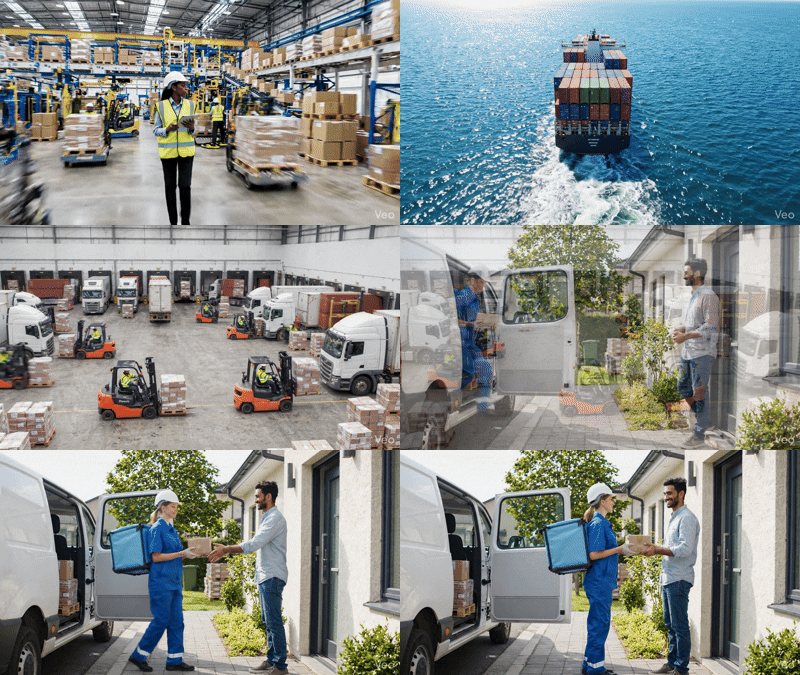
By 2026, the global retail and wholesale market is projected to reach approximately $90.7 trillion, fueled by a transformation influenced by shifting consumer behaviors, advancements in AI, and a challenging regulatory landscape. The emergence of a hybrid commerce model is reshaping traditional boundaries, prioritizing value and efficiency amid varying consumer spending dynamics.
-

The report emphasizes the significance of investment education in today’s economy, highlighting its evolution into a critical component for economic stability. It covers various investment theories and strategies, including Modern Portfolio Theory and the Capital Asset Pricing Model, while also addressing alternative assets and the importance of continuous learning for effective wealth management.
-

The investment landscape transitioning into 2026 features a recalibration of growth expectations due to prior volatilities, including significant tariffs and government shutdowns. While U.S. growth faces challenges from rising tariffs, emerging markets show resilience. Investors are urged to adopt strategic diversification and remain disciplined in asset allocation amid evolving economic dynamics.
-

The concept of social capital has transformed social science, emphasizing the role of relationships in economic productivity, political stability, and social cohesion. Differentiated into bonding, bridging, and linking forms, it has significant implications for community resilience and economic performance. However, it also carries risks such as exclusion and groupthink.
-

The economic landscape for 2026 is shifting towards concentrated, capital-expenditure-driven growth amid regional disparities. The U.S. is expected to lead with a 14% equity gain, while high-growth areas like the Sunbelt thrive. Conversely, coastal regions face job market challenges. Globally, emerging markets show promise, driven by demographics and innovation.
-

The 2026 retail landscape is evolving toward a sophisticated ecosystem integrating technology with consumer demands for convenience and transparency. Retailers focus on data-driven personalization, seamless digital-physical transitions, and sustainability initiatives. The shift to event-driven architecture enhances supply chain visibility, while AI technologies optimize pricing and inventory management, ensuring operational excellence and consumer loyalty.
-

Project optimization is crucial for maximizing resource efficiency within the constraints of time, cost, and scope, as highlighted by the Project Management Triangle. In 2025, the integration of methodologies like Lean Six Sigma, CPM, and AI-driven analytics transforms project management from reactive to proactive, enhancing predictability and strategic alignment while mitigating risks like scope creep…
-

The history of textile craftsmanship reflects human civilization’s evolution, from early animal hides to modern bio-engineered fibers. This report explores the progression of textile production, regional mastery in luxury, and technological innovations shaping the industry in 2025. It underscores the blend of artistry, culture, and sustainability in contemporary practices.
-

The modern agricultural framework relies on the preservation of plant genetic resources essential for food security. Despite the existence of a global network of seed banks and facilities like the Svalbard Global Seed Vault, vulnerabilities persist due to funding issues and climate impacts. Technology advances and seed sovereignty movements are critical to future food resilience.
-
Subscribe
Subscribed
Have a WordPress.com account? Log in now.

