technology
-

The cybersecurity market is experiencing rapid growth due to increasing digital threats, evolving business needs, and higher investment in security measures. As organizations prioritize cybersecurity as a strategic necessity, firms must specialize, embrace advanced technologies, and effectively address talent shortages to succeed in this competitive landscape, projected to reach $200 billion by 2028.
-

The global economy is shifting towards flexible workspaces, notably coworking models that support startups by enhancing productivity, networking, and operational agility. While home offices reduce costs, they often lead to isolation and burnout. Coworking spaces provide essential infrastructure and collaborative opportunities, facilitating growth and resource allocation for modern entrepreneurs.
-

The U.S. pay TV sector is undergoing significant changes, shifting from traditional cable to a software-driven connectivity model, with the market projected to decline slightly from USD 69.37 billion in 2024 to USD 57.83 billion by 2033, largely due to “cord-cutting” trends. New opportunities lie in specialized content and mobile services.
-

The global BPO market, valued at around USD 347.95 billion, is projected to grow to USD 840.60 billion by 2034, with a CAGR of 10.30%. This growth is driven by a shift towards strategic partnerships and technological advancements like AI. North America leads the market, while emerging hubs in Asia, Africa, and Latin America gain…
-

The global public transportation sector is evolving with digital orchestration, multimodal integration, and a shift toward Mobility-as-a-Service (MaaS), enhancing consumer access to transit options. Entrepreneurs face challenges in regulatory compliance and technology deployment while exploring diverse business models. The industry’s future hinges on AI, electrification, and workforce engagement strategies.
-

The physical retail landscape in 2026 is evolving into a sensory-driven experience that integrates digital and physical shopping. Consumers, especially Gen Z, prefer in-person interactions. Successful brick-and-mortar businesses require comprehensive planning, location analytics, and an understanding of regulatory frameworks, along with innovative marketing strategies and seamless operational integration.
-

The autonomous vehicle industry is transitioning from experimental phases to a structured market, projected to grow from $34.66 billion in 2025 to $237.12 billion by 2035. Key sectors include autonomous trucking, which addresses labor shortages and fuel optimization. Startups must navigate technical, legal, and financial challenges while focusing on safety and innovative regulatory compliance.
-
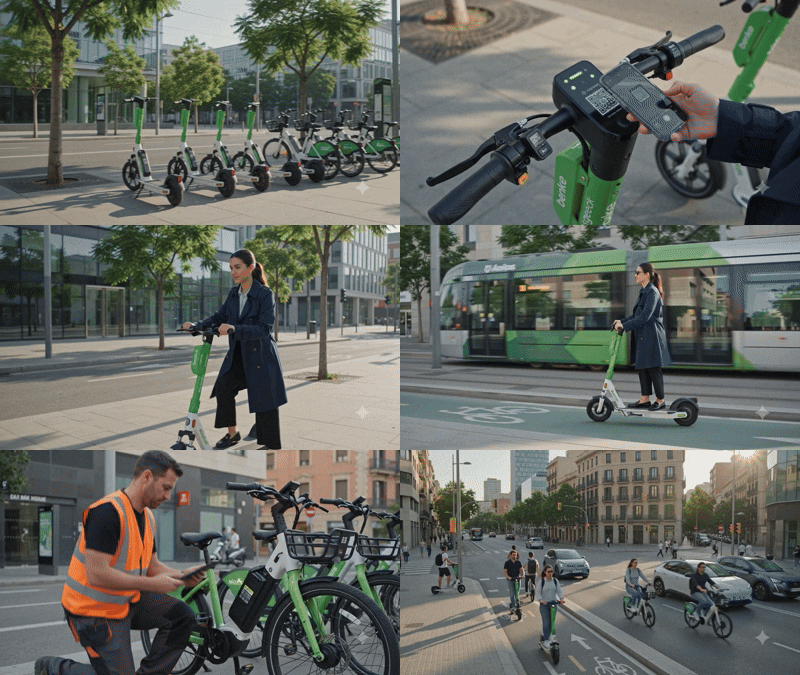
The shared micromobility sector is evolving rapidly, marked by increased ridership and technological integration. By 2026, operators face challenges from regulatory demands, trade tensions, and competition. However, emerging opportunities are found in suburban markets and last-mile logistics, aiming for sustainable, inclusive urban transport amidst a volatile economic landscape.
-

The global biotechnology industry is transitioning towards a disciplined growth model characterized by rigorous scientific inquiry and regulatory oversight as it moves into late 2025. Challenges remain in capital-efficient scaling, technology transfer, and intellectual property management, necessitating strategic partnerships and funding approaches to navigate high attrition rates and market complexities.
-

The healthcare landscape in 2026 is transitioning towards integrated, tech-driven ecosystems aimed at affordability and efficiency, prompted by a $4.5 trillion industry shift. Demand for HealthTech solutions is rising, especially post-COVID-19. Entrepreneurs must identify specialized niches, navigate regulatory complexities, and prioritize compliance to capitalize on this evolving sector.
 Journal for Policy & Market Research