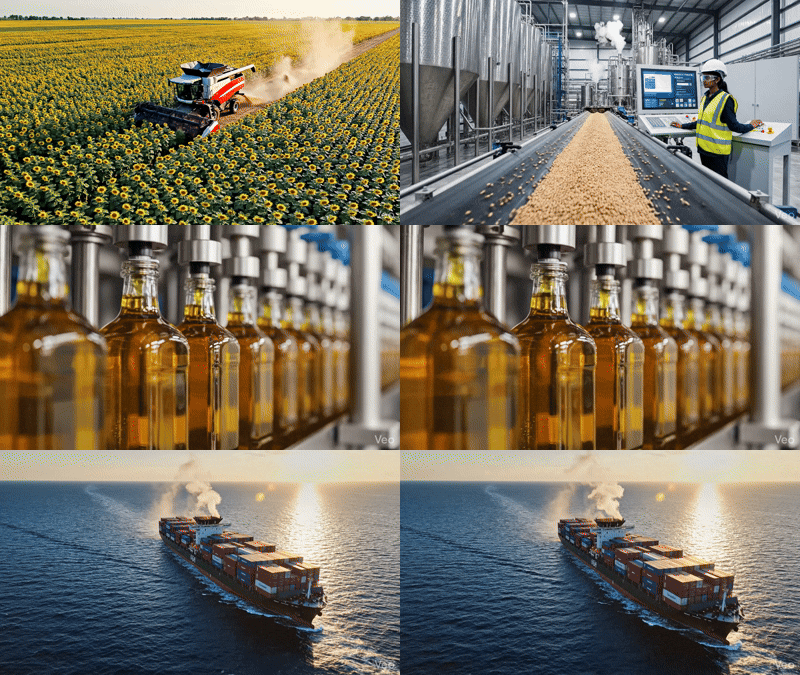
The global oilseed and vegetable oil industry is currently undergoing a transformative expansion, transitioning from traditional agricultural processing into a sophisticated sector integrated with global energy policies, biotechnological advancements, and a burgeoning circular bio-economy. As of 2025, the market is characterized by record-level production forecasts and a fundamental shift in demand drivers, particularly the rising requirement for biofuels and high-protein agricultural by-products. The global oilseed market is estimated at a valuation of USD 321.36 billion in 2025, with a projected trajectory reaching USD 461.62 billion by 2032, exhibiting a compound annual growth rate (CAGR) of 5.3%.[1] Other industry analyses provide an even more bullish outlook, suggesting the market could reach USD 581.59 billion by 2034.[2] This growth is inextricably linked to the soybean segment, which maintains a dominant 39.2% market share as of 2025, underpinned by its dual utility in human nutrition and animal feed.[1]
Global Market Dynamics and Regional Strategic Positioning
The geographical distribution of production and consumption is experiencing a significant realignment. North America maintains a leading position, anticipated to capture 38.1% of the global market share in 2025.[1] This dominance is largely a result of the advanced processing infrastructure and biotechnological research investments in the United States and Canada. In the United States, soybeans represent over 90% of the total oilseed output, with the remaining fraction composed of peanuts, sunflower seeds, and canola.[1] Despite this leadership, the United States is facing intensified competition from South America. Brazil, for instance, is forecast to achieve a record-high soybean crop of 175 million metric tons in the 2025/26 marketing year, positioning it as a formidable global exporter.[3]
The demand landscape is heavily influenced by the rapid urbanization and rising disposable incomes in the Asia-Pacific region. India and China have experienced shifting dietary patterns that translate directly into increased per capita consumption of edible oils.[1] China continues to be a central pillar of global trade, with soybean imports forecast to rise to 112 million metric tons in 2025/26.[3] In India, the government has intensified market interventions to stabilize domestic prices; agencies such as NAFED and NCCF procured 1.63 million tons of soybeans in early 2025 to cushion farmers from a global soymeal glut that had depressed local prices below the Minimum Support Price (MSP) of INR 4,892 per quintal.[1]
| Metric | 2025 Value/Estimate | 2032-2035 Projection | CAGR |
|---|---|---|---|
| Global Oilseed Market Size | USD 321.36 Billion [1] | USD 461.62 Billion [1] | 5.3% [1] |
| Alternate Market Valuation | USD 350.44 Billion [2] | USD 581.59 Billion [2] | 5.73% [2] |
| North American Market Share | 38.1% [1] | – | – |
| Soybean Segment Dominance | 39.2% [1] | – | – |
| Food & Beverage Market Share | 42.7% [1] | – | – |
| Vegetable Oil Market Size | USD 128.3 Billion [4] | USD 209.2 Billion (2035) [4] | 5.0% [4] |
The industrial application of vegetable oils, particularly for biomass-based diesel, is a secondary but increasingly critical growth driver. In the United States, soybean oil utilized for biofuel production is projected to reach 13.9 billion pounds in the 2025/26 period, marking a 6% increase from previous estimates.[3] Canola oil follows a similar trend, with biofuel use expected to reach 4.3 billion pounds.[3] This industrial demand creates a structural price floor for these oils, though it also introduces price volatility as vegetable oil values become more closely correlated with energy markets and petroleum prices.[5]
The Financial Architecture of Oilseed Processing Ventures
Establishing a viable vegetable oil processing plant requires a comprehensive understanding of the capital requirements and the economic variables that dictate long-term profitability. The financial feasibility is traditionally analyzed through the lens of processing scale, measured in tons per day (TPD).
Capital Expenditure and Scaling Strategies
The initial investment for an oilseed processing facility is primarily determined by its throughput and the sophistication of the extraction technology. Small-scale plants, often designed for niche markets or local community supply, require a capital expenditure (CAPEX) between USD 30,000 and USD 60,000 for a capacity of 10 to 20 TPD.[6] This tier of investment typically covers basic mechanical extraction equipment and fundamental installation services. Medium-scale operations, ranging from 30 to 50 TPD, see a jump in investment requirements to between USD 70,000 and USD 150,000, which includes more detailed layout planning and automated conveyor systems.[6]
Industrial-scale facilities processing over 100 TPD require investments starting at USD 300,000 and can escalate into the millions for fully automated production lines with integrated refining and packaging capabilities.[6] For specialized refining, the costs are distinct; a 1 TPD oil refinery plant is estimated at USD 19,800, while a 1 TPD dewaxing unit costs approximately USD 13,000.[7] A more comprehensive mini-refinery unit, capable of handling various crude oils, may range between USD 21,000 and USD 115,000 depending on specific equipment configurations and capacity.[7]
| Plant Scale | Daily Capacity (TPD) | Estimated Investment (USD) | Components Included |
|---|---|---|---|
| Small-Scale | 10–20 TPD | $30,000 – $60,000 | Basic Equipment + Installation [6] |
| Medium-Scale | 30–50 TPD | $70,000 – $150,000 | Equipment + Layout + Installation [6] |
| Large-Scale | 100+ TPD | $300,000 and above | Full Production Line + Automation [6] |
| 5 TPD Oil Mill | 5 TPD | $8,000 | Basic Pressing Only [8] |
| 5 TPD Pressing Line | 5 TPD | $5,500 | Pressing Infrastructure [7] |
Hidden costs often account for a 20% increase over the base machinery price. These include civil works, transformer replacements, water treatment facilities, customs clearance, and foundation reinforcement for heavy vibration-prone machinery such as screw presses.[6] Ensuring a robust electrical infrastructure is particularly critical; insufficient planning for utility upgrades often results in significant delays and budget overruns during the commissioning phase.[6]
Operational Expenditure and Profit Margin Dynamics
The operational expenditure (OPEX) is dominated by raw material procurement, which typically constitutes the largest single line item in the cost structure of a vegetable oil business. In a volatile commodity market, the cost exposure can be calculated as:
CostExposure(%)=TotalProductionCostRawMaterialCost×100[9]
Profitability in the sunflower oil refining sector, for instance, is characterized by average margins between 10% and 15%.[7] These margins are highly sensitive to the price of raw seeds, which for sunflower oil are competitively positioned at approximately USD 400 to USD 500 per ton.[7] For a 30 TPD soybean oil plant requiring an investment of USD 120,000, a monthly profit range of USD 6,000 to USD 10,000 is common, leading to a payback period of approximately 12 to 18 months.[6]
Profitability can be significantly enhanced through vertical integration and branding. Selling branded retail oil rather than bulk crude oil can increase margins by 20% or more.[6] Additionally, the sale of by-products, such as oilseed cake for animal feed, provides a critical secondary revenue stream. High-quality machinery reduces long-term maintenance costs and energy consumption, further protecting the net margin from erosive operational inefficiencies.[7]
Technical Paradigms in Oil Extraction and Refining
The selection of an extraction methodology is a strategic decision that affects not only the yield but also the chemical integrity and marketability of the final product. The industry utilizes three primary methods: cold pressing, hot pressing, and solvent extraction.
Mechanical Extraction: Cold and Hot Pressing
Mechanical extraction, also known as expeller pressing, utilizes a screw-type mechanism to physically crush seeds and force the oil through a screen. Cold pressing is a variant where the temperature of the oil is strictly maintained below 50 °C (122 °F) to preserve natural enzymes, antioxidants, and the sensory profile of the oil.[10, 11, 12] This method is highly valued for specialty oils like extra virgin olive, avocado, and flaxseed oil. However, it is the least efficient process, typically yielding only 30% to 40% of the oil present in the seed and leaving a high residual oil content in the press cake.[10, 11]
Hot pressing involves pre-conditioning the oilseeds through steaming or cooking at temperatures up to 120 °C.[10, 13] This thermal treatment reduces oil viscosity and facilitates higher recovery rates compared to cold pressing. While hot pressing produces a richer, more “roasted” flavor and a golden color, it can cause the loss of certain heat-sensitive nutrients like tocopherols.[10, 14] For small-to-medium enterprises, screw presses like the D-1688 model, costing between USD 3,000 and USD 5,000, are common for mechanical extraction.[15]
| Extraction Method | Temperature Threshold | Oil Recovery Efficiency | Best Application |
|---|---|---|---|
| Cold Pressing | < 50 °C [11, 12] | 30% – 40% [11] | High-end/Specialty Oils [14] |
| Hot Pressing | Up to 120 °C [13] | Moderate | Standard Cooking Oils [10] |
| Solvent Extraction | Variable (Distillation at 100 °C) | 97% – 99% [12] | Large-scale/Commodity Oils [16] |
| Expeller Pressing | Up to 60 °C [12] | 87% – 95% [12] | Medium-scale Production [16] |
Solvent Extraction and Industrial Refining
Solvent extraction is the industrial standard for large-capacity plants processing over 500 tons per day.[16] This method utilizes food-grade hexane to wash flaked and conditioned seeds, dissolving the oil into a mixture called miscella. The solvent is then evaporated and recovered through a distillation process, while the remaining meal is desolventized and toasted to remove residual hexane.[16] Solvent extraction is the most efficient method, recovering almost all available oil, but it requires substantial capital for safety systems and solvent recovery units.[12, 16]
Following extraction, crude oil must be refined to remove impurities such as gums, pigments, and free fatty acids. The standard Refining, Bleaching, and Deodorizing (RBD) process involves several chemical and physical stages:
• Degumming: The removal of phospholipids using water or phosphoric acid. Failure to remove gums can cause the oil to discolor and develop off-flavors during subsequent heating.[11, 17]
• Neutralization: Treating the oil with caustic soda to react with free fatty acids, forming soapstock that is separated via centrifuge.[11]
• Bleaching: Passing the oil through activated bleaching earth to remove coloring pigments like chlorophyll and carotenoids.[7, 11]
• Deodorization: A vacuum-steam distillation process carried out at temperatures above 200 °C to remove volatile odiferous compounds.[12, 18]
• Winterization/Dewaxing: Chilling the oil to crystallize waxes that would otherwise cloud the oil at lower temperatures, common in sunflower and corn oils.[7, 11]
The Circular Economy: Valorization of Oilseed By-products
In a modern processing facility, the economic value is not only derived from the oil but also from the valorization of the “waste” streams. Oilseed cakes, the solid residue remaining after extraction, represent a massive untapped resource for high-value applications in human nutrition and biotechnology.
Nutrient Density and Bio-refinery Integration
Oilseed cakes are exceptionally rich in protein, with concentrations reaching up to 56% in some species.[19] Historically, these cakes were utilized primarily as low-value animal fodder or soil compost. However, as global protein demand rises, the industry is shifting toward extracting protein isolates and bioactive peptides for human consumption. Soy and canola cakes lead the market in volume, but hemp, sunflower, and flaxseed cakes are increasingly researched for their antioxidant and emulsifying properties.[20, 21]
The concept of an integrated bio-refinery allows a processing unit to diversify its output beyond edible oil. Oilseed cakes serve as excellent substrates for solid-state fermentation, producing essential enzymes like lipase, phytase, and alpha-amylase.[19, 22] Furthermore, non-edible oilseed cakes from jatropha, castor, or karanja—which contain toxic alkaloids like ricin or curcin—are being repurposed for biogas production and as bio-pesticides.[19]
| Oilseed By-product | Protein Content (%) | Fiber Content (%) | Bioactive Potential |
|---|---|---|---|
| Sunflower Cake | 10.0% – 25.5% [19] | 16.0% – 55.0% [19] | High antioxidant capacity [21] |
| Soybean Meal | 14.0% – 47.0% [19] | 5.6% – 31.9% [19] | Source of isoflavones [19] |
| Rapeseed/Canola | 14.0% – 45.0% [19] | 5.5% – 19.5% [19] | Rich in sinapic acid [19] |
| Flaxseed Cake | 18.3% – 30.0% [19] | 20.0% – 35.0% [19] | High lignan content [19] |
The economic implication of this valorization is substantial. By transforming agricultural residues into high-value ingredients for the food and pharmaceutical industries, processors can mitigate the risks of price fluctuations in the primary oil market. For instance, protein isolates from hemp or sunflower seeds can serve as alternatives to soy protein in meat substitutes, addressing the growing demand for diverse plant-based diets.[19, 21]
Energy Efficiency and Industrial Modernization
Oilseed processing is an energy-intensive endeavor, with thermal energy accounting for over 95% of the total energy consumption in some facilities.[18] Strategic modernization focuses on identifying exergy losses and implementing heat recovery systems to reduce operational costs and carbon footprints.
Exergy Analysis and Heat Recovery Systems
The deodorizer is typically the most energy-intensive component of a refinery, responsible for approximately 56% of net energy input and over 52% of total exergy losses.[18] To counter this, modern plants employ waste heat utilization techniques. Final deodorized oil, which leaves the system at a high temperature, is used regeneratively to heat incoming crude oil through plate heat exchangers.[17] This “seed-to-bottle” heat integration eliminates the need for intermediate heating stages, significantly improving the thermodynamic efficiency of the plant.
Boilers are another critical area for efficiency gains, as they often account for nearly 70% of overall energy losses in traditional setups.[18] The thermal energy input can be optimized through:
EF=W×Cf[18]
Where EF is the thermal energy, W is the fuel quantity, and Cf is the calorific value of the fuel. Transitioning from fossil fuel boilers to biomass-fired systems or integrating solar thermal dryers for seed preparation can reduce CO2 emissions by 3 to 4 kg per ton of processed seeds.[13, 23] Furthermore, the installation of variable speed drives on fans and high-performance separators can lead to energy savings of up to 15 kWh per ton of processed seeds.[23]
Green Rural Energy and Decarbonization
Sustainable agri-food systems are increasingly adopting renewable energy for post-harvest processing. Solar dryers and biogas production from waste (such as palm kernels or olive cake) help reduce post-harvest losses while providing a decentralized energy source for rural processing units.[24] In industrial sunflower oil facilities, technology modernization has been shown to increase energy efficiency by 34%, primarily through the optimization of technological parameters such as pressing time, grinding level, and pressure.[23]
Strategic Supply Chain and Risk Management
Managing a successful oilseed business requires rigorous attention to supply chain integrity, specifically in terms of moisture control, aflatoxin prevention, and price risk hedging.
Biological Integrity: Aflatoxin Prevention and Detection
Aflatoxins represent one of the most significant biological threats to the oilseed supply chain. These toxic compounds, produced by Aspergillus fungi, are carcinogenic and can lead to the total loss of a commodity batch if not managed correctly. Moisture control is the most effective and economical preventative measure. Commodities must be dried immediately after harvest to safe moisture levels: less than 9% for peanut kernels and less than 13.5% for corn.[25]
Warehouses must be maintained at low temperatures and low humidity to inhibit fungal growth, and Facilities must be kept free of pests, as insect damage to seed hulls provides an entry point for fungal invasion.[25] In cases where contamination occurs, several mitigation strategies exist:
• Ammoniation: Industrial treatment with ammonia gas can convert toxins into non-toxic derivatives.[25]
• Refining: The alkali refining process can eliminate oil-soluble toxins through absorption and alkalinization during the neutralization stage.[25]
• Emerging Detection: Future trends involve AI-integrated biosensors and smartphone-based systems that allow for rapid, on-site aflatoxin quantification using gold nanoparticles.[26]
Commodity Hedging and Market Risk Stabilization
The volatility of oilseed and vegetable oil prices can quickly destabilize a business. Hedging is no longer optional; it is a vital tool for securing predictable cost and revenue streams.[27] Financial instruments such as futures and options contracts allow processors to lock in prices for their harvest or their feedstock.
• Futures Contracts: Binding agreements to buy or sell at a set price on a future date, providing a safety net against market shifts.[27]
• Options Contracts: Provide the right, but not the obligation, to trade at a specific price. Call options protect against price spikes for ingredients, while put options shield sellers from price drops.[27]
• Supplier Diversification: Establishing relationships with multiple suppliers across different regions ensures flexibility and reduces the impact of localized supply disruptions.[9, 28]
A thorough due diligence process should involve benchmarking purchase prices against market development and using spend analytics to maximize procurement savings. Collaborative partnership approaches with suppliers can also lead to fixed-price purchase agreements with pre-agreed caps on price increases, enabling better long-term financial planning.[28]
Regulatory Governance and Sustainability Compliance
The regulatory environment for edible oil processing is governed by stringent food safety and environmental standards. Compliance with these mandates is a prerequisite for both legal operation and market entry.
Food Safety and Quality Standards
In the United States, any business manufacturing or processing food for human consumption must register with the FDA.[29] Similarly, in India, a license from the Food Safety and Standards Authority of India (FSSAI) is mandatory. Key documentation for these approvals includes floor plans, proof of land ownership, and water test reports from certified labs.[29, 30]
International quality standards such as ISO 22000 and HACCP (Hazard Analysis and Critical Control Points) are critical for gaining competitiveness in export markets.[31] These systems provide a structured approach to identifying and managing safety risks throughout the production and packaging process. In specialized markets, certifications like AGMARK certify the purity and quality of products, which can be a key differentiator for high-end consumers.[30]
Environmental Permits and Pollution Standards
Processing units must manage the storage and handling of bulk quantities of acids, solvents, and hydrogen used during refining. State Pollution Control Boards typically require two stages of consent: Consent to Establish (CTE) before plant setup and Consent to Operate (CTO) before production begins.[30] Wastewater management is a significant focus, with effluent standards regulated for pH, BOD, COD, and oil/grease levels.[32]
| Parameter | Standard Limit (mg/l) | Significance |
|---|---|---|
| pH | 6 – 9 [32] | Acidity/Alkalinity Balance |
| BOD5 | 50 [32] | Organic Pollution Indicator |
| COD | 250 [32] | Total Oxygen Demand |
| Total Nitrogen | 10 [32] | Nutrient Enrichment Risk |
| Oil and Grease | 10 [32] | Surface Water Contamination |
Adopting sustainable waste management practices, such as returning organic residues to fields for nutrient management or adjusting air humidity in storage to prevent mold formation, is encouraged under the EHS guidelines.[32]
Sustainability Certifications: RSPO and market Access
For businesses involved in the palm oil sector, RSPO (Roundtable on Sustainable Palm Oil) certification has become a baseline for market access in Europe and North America. As of 2023, RSPO-certified areas covered 5.2 million hectares across 23 countries.[33] Certified sustainable palm oil (CSPO) now accounts for roughly 20% of global production.[33]
Certification offers several commercial advantages:
• Market Confidence: Many multinational brands like Nestle, Unilever, and Procter & Gamble have committed to using 100% RSPO-certified oil, making certification a requirement for suppliers entering their value chains.[33, 34]
• Yield Improvements: RSPO-certified smallholders in Ghana have recorded production yields three times the national average due to the adoption of better agricultural practices.[35]
• Livelihood Enhancement: Higher yields and premium prices translate into improved incomes for small-scale farmers and their dependents.[35]
Strategic Marketing and Consumer Positioning
The final stage of building a successful vegetable oil business is the development of a strong brand identity and a multi-channel distribution strategy.
B2B and Wholesale Strategies
The wholesale market, particularly for restaurants and food service providers, represents a significant portion of total consumption. B2B marketing focuses on solving pain points such as consistent supply, high smoke points, and competitive bulk pricing.[36, 37] Wholesale marketing strategies often include attractive bulk discounts and long-term contracts that provide stability for both the supplier and the buyer. Digital tools such as vendor management systems are used to track supply timelines and ensure order fulfillment.[36]
B2C Branding and Digital Optimization
For the consumer market, the focus shifts toward health benefits, purity, and sustainable sourcing. Branding strategies for small organic food brands often utilize storytelling—sharing the brand’s origins and mission to build an authentic connection with customers.[38, 39] The “Pixar pitch” is a recognized technique for conveying a brand’s “why” in a captivating six-sentence narrative format.[39]
Digital marketing platforms are central to modern distribution. SEO (Search Engine Optimization) and content marketing—such as sharing recipe videos or tutorials on the health benefits of cold-pressed oils—are used to attract organic traffic.[40] Social media platforms like Instagram and TikTok are particularly effective for visually appealing content that resonates with health-conscious demographics.[40, 41] eCommerce capabilities allow businesses to offer subscription boxes, ensuring a steady supply for customers and a predictable recurring revenue stream for the business.[36, 37]
Personalization is a key trend in B2C marketing. Using QR codes on packaging that link to recipe blogs or video tutorials can enhance customer engagement and drive traffic to the company’s digital storefront.[41] For niche specialty products, sample-sized bottles in gift sets or weddings serve as a low-cost entry point for introducing the product to new households.[41]
Future Outlook and Strategic Synthesis
The global oilseed and vegetable oil industry towards 2032 is poised for a period of sustained growth, driven by the dual demand for nutritious edible oils and sustainable biofuels. The market transition towards a circular bio-economy—where oilseed cakes are valued equally with the extracted oil—will be the defining characteristic of the next decade. Success for new and existing businesses will depend on their ability to integrate high-efficiency processing technologies with robust risk management and sustainability certifications.
As geopolitical tensions and climate variability continue to introduce uncertainty into commodity markets, the adoption of digital tools for precision agriculture, exergy-efficient refining, and real-time aflatoxin monitoring will become essential for maintaining competitive margins. The consolidation of global trade shares in South America and the surging consumption in Asia-Pacific suggest that a diversified geographical strategy is paramount. Ultimately, the oilseed business of the future is not merely a crushing and refining operation but a comprehensive bio-industrial platform capable of delivering high-quality nutrients, sustainable energy, and innovative bio-based materials to a global market.
——————————————————————————–
1. Oilseed Market Size, Share and Opportunities, 2025-2032 – Coherent Market Insights, https://www.coherentmarketinsights.com/industry-reports/oilseed-market
2. Global Oilseeds Market Size, Trends, Share, 2025-2034 – CMI, https://www.custommarketinsights.com/report/oilseeds-market/
3. Oil Crops Outlook: May 2025 – usda-esmis, https://esmis.nal.usda.gov/sites/default/release-files/j098zb08p/8049j4332/cc08kc551/OCS-25e.pdf
4. Vegetable Oils Market Share & Trends Statistics – 2035 – Fact.MR, https://www.factmr.com/report/vegetable-oils-market
5. Functional Edible Oils Market Share, Forecast | Growth Analysis, and Opportunities, https://www.marketsandmarkets.com/Market-Reports/functional-edible-oils-market-8501278.html
6. Edible Oil Plant Cost: Budgeting for Smart Investment, https://www.bestoilmillplant.com/Factory-design/edible-oil-plant-cost-analysis.html
7. How Much Does a Sunflower Oil Refinery Plant Cost?, https://www.abcmach.com/oil-pressing/sunflower-oil-refinery-plant-cost-profit.html
8. What’s the Cost to Setup a Profitable Vegetable Oil Processing Plant?, https://www.bestoilpressmachines.com/quick-links/vegetable-oil-processing-plant-setup-cost.html
9. Raw Material Hedging and Risk Management Strategy – Umbrex, https://umbrex.com/resources/industry-analyses/how-to-analyze-a-chemicals-company/raw-material-hedging-and-risk-management-strategy/
10. Introduction to edible oil processing methods and their differences, https://m.edibleoilextractionmachine.com/faq/edible_oil_processing_methods_and_their_differences_656.html
11. Know the difference between cold-pressed and heat-solvent cooking oils | by Advait Living, https://medium.com/@advaitliving/know-the-difference-between-cold-pressed-and-heat-solvent-cooking-oils-44f88d1276e1
12. Expeller-Pressed vs. Cold Pressed Oil Extraction Methods – Shay and Company, https://shayandcompany.com/blog/oil-processing-methods-and-what-they-all-mean/
13. Renewable Energy for Process Heat in Vegetable Oil Production – Kraftblock, https://www.kraftblock.com/blog/renewable-energy-for-process-heat-in-vegetable-oil-production
14. Cold Press vs Hot Press vs Solvent Extraction: What’s the Key Differences?, https://www.qiemachinery.com/cold-press-vs-hot-press-vs-solvent-extraction-whats-the-key-differences.html
15. How to start a vegetable oil company? – cooking oil machine, https://m.doingoilmachine.com/FAQ/how_to_start_a_vegetable_oil_company_286.html
16. Oilseed Extraction using Mechanical Extraction and Beyond – French Oil Mill Machinery Co., https://frenchoil.com/articles-events/oilseed-extraction-using-mechanical-extraction-and-beyond/
17. edible oil refining process optimization & sustainability | sopa, https://sopa.org/wp-content/uploads/2025/03/05-Edible-Oil-Refining-Process-Optimization-Sustainability.pdf
18. Energy and Exergy Analysis of a Vegetable Oil Refinery – Scirp.org., https://www.scirp.org/journal/paperinformation?paperid=22843
19. Extraction and Valorization of Oilseed Cakes for Value-Added Food …, https://pmc.ncbi.nlm.nih.gov/articles/PMC12249157/
20. Protein for Human Consumption From Oilseed Cakes: A Review – Frontiers, https://www.frontiersin.org/journals/sustainable-food-systems/articles/10.3389/fsufs.2022.856401/full
21. Protein for Human Consumption From Oilseed Cakes: A Review – Frontiers, https://www.frontiersin.org/journals/sustainable-food-systems/articles/10.3389/fsufs.2022.856401/pdf
22. A comprehensive review on oilseed cakes and their potential as a feedstock for integrated biorefinery – ResearchGate, https://www.researchgate.net/publication/354064107_A_comprehensive_review_on_oilseed_cakes_and_their_potential_as_a_feedstock_for_integrated_biorefinery
23. Methods for Enhancing Energy and Resource Efficiency in Sunflower Oil Production: A Case Study from Bulgaria – MDPI, https://www.mdpi.com/2673-4117/6/8/195
24. Green Technology Book Expo Edition – 3.3 Green rural energy solutions – Clean energy solutions for agriculture post-harvest – WIPO, https://www.wipo.int/web-publications/green-technology-book-expo-edition/en/3-3-green-rural-energy-solutions-clean-energy-solutions-for-agriculture-post-harvest.html
25. Mycotoxin prevention and control in foodgrains – Prevention and …, https://www.fao.org/4/x5036e/x5036E0q.htm
26. Current Approaches to Aflatoxin B1 Control in Food and Feed Safety …, https://www.mdpi.com/1422-0067/26/13/6534
27. Commodity Hedging 101 – CIH, https://www.cihedging.com/posts/articles/commodity-hedging-101/
28. 3 ways to tackle commodity price fluctuations and volatility – Sievo, https://sievo.com/blog/commodity-price-fluctuation
29. Business license requirements for food processing and manufacturing – Wolters Kluwer, https://www.wolterskluwer.com/en/expert-insights/business-license-requirements-for-food-processing-and-manufacturing
30. Edible Oil and Vanaspati Industry | Licences |Documents …, https://enterclimate.com/start-edible-oil-and-vanaspati-industry
31. SUSTAINABLE CERTIFICATION FOR VEGETABLE OIL, A PATH TO ENHANCED LIVELIHOODS AND MARKET SHARE, https://hub.unido.org/sites/default/files/publications/Consolidated%20impact%20stories.pdf
32. ENVIRONMENTAL, HEALTH, AND SAFETY GUIDELINES FOR VEGETABLE OIL PRODUCTION AND PROCESSING, https://www.ifc.org/content/dam/ifc/doc/2010/2015-vegetable-oil-processing-ehs-guidelines-en.pdf
33. Global Trends of Sustainable Palm Oil and China’s Pathway – RSPO, https://rspo.org/global-trends-of-sustainable-palm-oil-and-china-pathway/
34. RSPO Certification – Roundtable on Sustainable Palm Oil (RSPO), https://rspo.org/as-an-organisation/certification/
35. SUSTAINABLE CERTIFICATION FOR VEGETABLE OIL, A PATH TO ENHANCED LIVELIHOODS AND MARKET SHARE – UNIDO Knowledge Hub, https://hub.unido.org/sites/default/files/publications/V2_Ghana.pdf
36. Guide on Starting a Cooking Oil Wholesale Business – BlueCart, https://www.bluecart.com/guides/cooking-oil-wholesale-business
37. Cooking Oil Business Marketing Plan – BlueCart, https://www.bluecart.com/blog/cooking-oil-business-marketing-plan
38. Effective Marketing Strategies for Small Organic Food Brands – Emizainc, https://www.emizainc.com/effective-marketing-strategies-for-small-organic-food-brands/
39. How To Market Your Natural Food Company – Centra Foods, https://www.centrafoods.com/blog/how-to-market-your-natural-food-company
40. 6 Proven Digital Marketing Strategies For Edible Oil Companies, https://www.reinventdigital.com/6-proven-digital-marketing-strategies-for-edible-oil-companies/
41. 2022 Marketing Guide For Your Cooking Oil Business – Glassnow Blog, https://blog.glassnow.com/2022-marketing-guide-for-your-cooking-oil-business/
 Journal for Policy & Market Research
Leave a comment