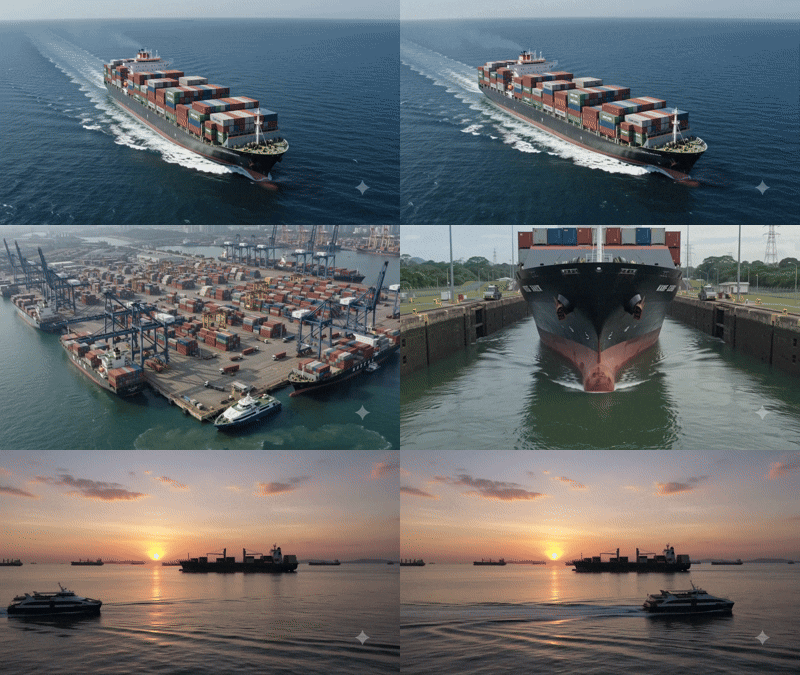
The maritime and inland water transportation industry serves as the primary conduit for international commerce, facilitating approximately 80% of global trade volume according to 2020 UNCTAD statistics.[1] As a sector characterized by high-capacity payload capabilities and lower per-unit transportation costs relative to air and land alternatives, waterborne transit remains the backbone of the global supply chain and an increasingly vital component of the regional tourism and transit sectors.[1] The strategic landscape for establishing and growing a business in this field is defined by intense capital requirements, a multi-layered international regulatory framework, and a rapid technological shift toward decarbonization and automated navigation.[2, 3, 4]
Market Segmentation and Global Industry Dynamics
A nuanced understanding of the water transportation market requires a distinction between the primary sectors: maritime freight, inland waterway transit, and recreational or passenger services. While ocean-going freight provides the scale necessary for international trade, the inland water passenger transport market is emerging as a high-growth niche, valued at approximately $1.9 billion in 2024 and projected to reach $2.13 billion by 2025 at a compound annual growth rate (CAGR) of 12.3%.[5] This growth trajectory is sustained by expanding urbanization, government initiatives to alleviate road congestion, and a flourishing tourism industry that prioritizes scenic and remote destination accessibility.[5, 6]
| Industry Sector | Primary Economic Drivers | Key Operational Characteristics |
|---|---|---|
| Maritime Freight | Global trade volume, commodity demand, fuel prices | High-capacity, long-distance, port-dependent [1] |
| Inland Passenger Transport | Urbanization, tourism, congestion mitigation | High frequency, diverse modalities (taxis, ferries) [5, 6] |
| Recreational Tours | Consumer discretionary spend, experiential travel | Seasonal demand, niche destination focus [5] |
| Specialized Logistics (LNG/Tanker) | Energy market volatility, specialized infrastructure | High CAPEX, rigorous safety and environmental rules [4, 7] |
The inland waterway sector is particularly driven by the increasing use of vessels for sightseeing services, as many of the world’s most sought-after scenic destinations remain exclusively accessible via waterways.[5] This creates a natural monopoly for water transportation providers in specific geographic regions, such as the Mine Bay Rock Carvings in New Zealand or the Horizontal Falls in Australia.[5] Furthermore, the outbound travel volume from the United States experienced a 63% year-over-year increase in 2022, signaling a robust recovery in the passenger segment that supports the expansion of ferry, cruise, and private charter services.[5]
Strategic Business Modeling and Startup Frameworks
Launching a water transportation enterprise requires a comprehensive multi-phase planning approach that balances initial capital outlay with long-term unit economics. Evidence suggests that successful transportation platforms often adopt a dual revenue model, combining transaction commissions—projected at variable rates around 120% in early stages—with optional subscription tiers for premium enterprise features.[8]
The Seven-Step Strategic Framework
The development of a professional maritime business plan typically encompasses seven foundational components designed to mitigate initial risk and secure investor confidence.
| Planning Phase | Strategic Focus | Financial/Operational Benchmarks |
|---|---|---|
| 1. Model and Concept | Defining the role as a digital or physical connector | Identification of dual revenue streams [8] |
| 2. Market Analysis | Segmentation between B2B/Enterprise and individual consumers | Strategy to shift toward high-AOV enterprise clients [8] |
| 3. Fleet Operations | Balance between owned assets and independent contractors | Targeting specific Customer Acquisition Costs (CAC) [8] |
| 4. Marketing/Sales | LTV (Lifetime Value) justification and repeat order rates | 800x repeat order projections for enterprise clients [8] |
| 5. Team Structure | Compensation mapping and skill gap identification | Managed FTE scaling (e.g., starting with 55 roles) [8] |
| 6. Financial Controls | Itemization of CAPEX and monthly fixed overheads | Tracking platform development costs and rent [8] |
| 7. Risk and Funding | Validating the funding runway and breakeven point | Identification of working capital needs (e.g., $288,000) [8] |
Initial fleet weighting often favors established fleets over independent drivers to ensure immediate service reliability and scale, which is essential for securing enterprise bookings.[8] However, as the business matures, the integration of independent operators can reduce over-reliance on high-cost partners and improve operational flexibility.[8] Financial modeling indicates that achieving a 15-month breakeven point is a standard target for modern maritime platforms, though this requires a significant cash buffer to cover negative EBITDA during the ramp-up phase.[8, 9]
Revenue Maximization and Monetization Strategies
Profitability in water transportation is highly sensitive to the “take-rate” and the Average Order Value (AOV). Enterprise segments typically generate a high AOV—estimated at $1,500 for specific logistics functions—justifying a higher CAC.[8] In contrast, individual shippers or passengers provide a lower AOV (approximately $80), requiring highly efficient digital acquisition strategies to remain profitable.[8] Subscription models are increasingly utilized to stabilize revenue, as they mitigate the risk associated with fluctuations in transactional volume.[8]
The Regulatory Landscape: International Treaties and Compliance
Operating a maritime business is fundamentally governed by the International Maritime Organization (IMO) and its primary treaties: MARPOL, SOLAS, and the STCW Convention. The year 2025 marks a significant inflection point in maritime regulation, as international bodies accelerate the shift toward decarbonization and digital documentation.[2, 10]
Environmental Mandates and MARPOL Annex VI
The International Convention for the Prevention of Pollution from Ships (MARPOL) remains the primary framework for environmental compliance. Annex VI, specifically, focuses on air pollution and greenhouse gas (GHG) emissions.[11, 12] The 2025 regulatory landscape is defined by the IMO’s Net-Zero framework, which targets a transition toward zero-emission shipping by approximately 2050.[2]
| Regulation | Implementation Date | Key Mandate |
|---|---|---|
| FuelEU Maritime | January 1, 2025 | 2% GHG intensity reduction for ships >5,000 GT in EU waters [2] |
| MARPOL Annex VI Phase 3 | January 1, 2025 | Mandatory EEDI (Energy Efficiency Design Index) improvements for new ships [2] |
| Mediterranean Sea ECA | May 1, 2025 | 0.1% sulfur limit on marine fuels [2] |
| Ballast Water Logs | February 1, 2025 | Adoption of new IMO electronic format for ballast records [2] |
| Norwegian Sea NOx ECA | March 1, 2026 | New Nitrogen Oxide Emission Control Areas for Arctic transit [11] |
Starting in October 2025, the IMO plans to adopt a global fuel standard and a greenhouse gas pricing system.[2] Vessels exceeding fuel intensity limits will be required to purchase remedial units or transfer credits from cleaner ships, with the resulting fees funding a global Net-Zero fund to assist developing states in their transition.[2] Additionally, the Red Sea and Gulf of Aden will obtain Special Area status on January 1, 2025, necessitating the installation of advanced oily mixture filters with alarms that trip at 15 ppm.[2]
Safety of Life at Sea (SOLAS) and Structural Standards
The SOLAS Convention establishes the minimum standards for ship construction, equipment, and operations. It is regarded as the most important international treaty concerning merchant ship safety.[13] Key chapters include:
- Chapter II-1 (Construction): Mandates watertight compartments in passenger ships to ensure stability after damage.[13]
- Chapter III (Life-Saving Appliances): Requires compliance with the International Life-Saving Appliance (LSA) Code for all lifeboats, rescue boats, and life jackets.[13]
- Chapter IV (Radiocommunications): Incorporates the Global Maritime Distress and Safety System (GMDSS), required for all passenger ships and cargo ships over 300 GT.[13]
- Chapter V (Safety of Navigation): Establishes operational rules applicable to all ships on all voyages, unlike other chapters that target international merchant vessels specifically.[13]
Compliance with the International Ship and Port Facility Security (ISPS) Code is mandatory under SOLAS Chapter XI-2, requiring vessels and ports to maintain rigorous security plans to deter threats such as terrorism and piracy.[14]
Professional Certification and Personnel Management
The human element is a critical component of starting a water transportation business. In the United States, the Coast Guard (USCG) regulates the licensing of mariners through the National Maritime Center (NMC), with requirements differing significantly based on vessel tonnage and the number of paying passengers.[15, 16]
Captain’s Licensing and Credentialing
A Captain’s License is required to operate any commercial vessel or to take paying passengers on the water.[16] The two most common entry-level licenses are the OUPV (Operator of Uninspected Passenger Vessels) and the Master License.[15, 17]
| License Feature | OUPV (Six-Pack) License | Master 25-100 GRT License |
|---|---|---|
| Passenger Limit | Up to 6 paying passengers | More than 6 passengers [15] |
| Vessel Type | Uninspected vessels only | Inspected and uninspected vessels [15] |
| Age Requirement | 18 years old | 19 years old [15, 16] |
| Citizenship | U.S. Citizen or Permanent Resident | U.S. Citizen only [15, 16] |
| Sea Time Requirement | 360 days (90 in past 3 years) | 360-720 days (depending on route) [15, 16] |
| Common Usage | Fishing guides, water taxis | Ferry operators, tour boats [15] |
Credentialing requires more than just sea time. Applicants must pass a physical examination, including vision (20/40 minimum) and hearing (“forced whisper”) tests, and submit a negative DOT-compliant 5-panel drug test taken within six months of application.[15, 17] Furthermore, a valid Transportation Worker Identification Credential (TWIC) from the TSA is mandatory for the background check necessary to issue a Merchant Mariner Credential (MMC).[15, 17]
Crew Training and Digitalization
The industry is moving toward digital certification. Starting January 1, 2025, seafarers are permitted to carry electronic versions of their credentials (MSC.1/Circ.1665), allowing Port State Control officers to scan QR codes for verification.[2, 10] Training programs must cover navigation, rules of the road, emergency response, and maritime law.[15] Ongoing compliance includes renewing the MMC every five years, which requires documenting 360 days of sea service in the preceding five-year period or passing a refresher course.[18]
Operational Maintenance and Lifecycle Management
The operational integrity of a water transportation fleet is sustained through a rigorous maintenance schedule, with dry docking serving as the primary mechanism for hull preservation and regulatory certification.[19]
Mandatory Inspections and Dry Docking Procedures
According to SOLAS regulations, merchant vessels must undergo a complete hull survey in a dry dock twice within every five-year period, with the interval between inspections not exceeding 36 months.[20, 21] Passenger ships face stricter requirements, with annual bottom inspections and at least two dry dock visits every five years.[21, 22]
| Maintenance Category | Frequency | Service Highlights |
|---|---|---|
| Routine Maintenance | Daily/Weekly | Engine readings, bilge checks, steering lubrication [7] |
| Intermediate Survey | 2.5 Years | In-water or afloat hull examination, machinery checks [7] |
| Mandatory Dry Docking | 2.5 – 5 Years | Hull blasting, ultrasonic thickness measurement [7, 19] |
| Special Survey | 5 Years | Major structural and system-wide certification [7] |
| Extended Dry Docking | 7.5 Years | Available for select vessels using in-water divers [21, 22] |
The dry docking process involves significant logistical coordination. Vessels must enter the dock with minimal ballast and no cargo, typically following a “blocking plan” approved by a classification society to ensure the ship’s load is evenly distributed across blocks.[20, 21] Critical services performed during this period include high-pressure washing to remove biofouling (barnacles and algae), sandblasting to clear rust and old paint, and the application of anti-fouling coatings.[19, 21] Ultrasonic thickness gauges are used to verify that the hull steel has not compromised its structural integrity.[19, 21]
Berthing and Port Logistics
Securing port access is a prerequisite for any maritime transportation business. Port operations are divided into contractual and operational phases.[23] The contractual phase involves securing berthing agreements with municipal ports or private terminals, which often use the “landlord port” model where the private sector manages operations while the government retains land titles.[24, 25]
Negotiating these agreements requires a multi-disciplinary team encompassing law, finance, and operations.[26] Key considerations include:
- Due Diligence: Conducting audits to verify the safety and compliance of the counterparty, often referred to as a “safe port warranty”.[23]
- Risk Allocation: Determining who bears the cost of delays, non-damage events (like strikes), and property damage to piers or wharves.[24, 27]
- Competition Clauses: Governments may provide minimum revenue guarantees or undertakings not to develop competing facilities within a geographic region to attract private investment.[24]
Financial Landscape: Procurement, Funding, and Insurance
The maritime industry is notoriously capital-intensive. Launching a specialized operation, such as Liquefied Natural Gas (LNG) transport, can require an initial CAPEX of $445 million per vessel, while a small charter or ferry operation may range from $100,000 to $1 million depending on the fleet’s scale and age.[4, 28]
Vessel Procurement: Buying vs. Leasing
A critical strategic decision for any new venture is the method of vessel acquisition. Traditional debt and equity financing remain common, but nautical leasing has emerged as a significant alternative.[29, 30]
| Acquisition Method | Key Characteristics | Advantages / Disadvantages |
|---|---|---|
| Outright Purchase | Immediate ownership via cash or loan [31] | High CAPEX; total control; owner assumes all depreciation risk [31, 32] |
| Traditional Loan | Vessel serves as collateral; principal/interest payments [29] | Conserves capital; ownership transfer upon final payment [29] |
| Nautical Leasing (LOA) | Long-term rental with purchase option [31] | Lower upfront cost; tax-deductible payments; no asset appreciation for lessee [31, 32] |
| Sale and Leaseback | Selling owned vessel to lessor and leasing it back | Immediate liquidity injection for business expansion [30] |
The Lease-Versus-Purchase-Analysis (LVPA) model is used to determine the net present value (NPV) of cash flows for both options. Analysis suggests that the decision is highly sensitive to the company’s estimated cost of capital and the residual value of the vessel.[33] When the cost of capital is high (e.g., a 13.6% hurdle rate), leasing often presents a lower NPV cost than purchasing.[33] Conversely, for companies with low-cost debt, purchasing allows for equity accumulation and long-term financial stability.[32]
Startup Costs and Monthly Burn Rates
Operational financial models for a boat charter or rental platform indicate a fixed monthly burn rate of approximately $32,867, excluding variable booking-related expenses.[9]
| Expense Category | Typical Monthly Cost | Description |
|---|---|---|
| Core Payroll | $26,667 | CEO, Engineer, and Marketing for a startup platform [9] |
| Office Rent | $3,000 | Fixed overhead for administrative operations [9] |
| Fixed Insurance | $500 | General business policy (excludes vessel-specific hull/P&I) [9] |
| Software Licenses | $800 | Platform tools and digital infrastructure [9] |
| Legal Retainer | $700 | Ongoing compliance and contractual management [9] |
| Vessel Maintenance | 10% of Value (Annual) | Budgeted as ~0.83% of vessel cost per month [34] |
Large-scale operations face significantly higher recurring costs. Mandatory marine insurance for an LNG carrier, for example, can total 375,000permonth(300k for Hull & Machinery and $75k for Protection & Indemnity).[4] This highlights the necessity of signed quotes and exact route complexity analysis before finalizing financial projections.[4]
Venture Capital and Green Maritime Funding
The surge in “Blue Economy” investment has created a robust funding ecosystem for maritime innovation. Startups focusing on decarbonization, automation, and logistics platforms are particularly attractive to specialized venture capital firms.[35, 36]
- Venture Capital: Firms like TecPier (Germany), theDOCK (Israel), and Signal Ventures (UK/Greece) focus on seed and Series A rounds for maritime tech, with check sizes ranging from $100k to $2.5m.[37]
- Accelerators: Programs like Katapult Ocean (Norway) and PIER71 (Singapore) offer initial investments of €150k to €500k, alongside mentorship and corporate pilot opportunities.[36, 38]
- Green Grants: The New York State Energy Research and Development Authority (NYSERDA) has announced $300 million for maritime port development to support offshore wind.[39] Similarly, PROW Capital’s Green Shipping Fund provides €420 million in debt financing for vessels that outperform standard efficiency benchmarks by at least 20%.[40]
Technological Innovation: Efficiency and Automation
The maritime industry is undergoing a digital transformation driven by the need for cost reduction and environmental compliance. Innovations in propulsion, hull design, and voyage optimization are redefining operational margins.[3, 41]
Voyage Optimization and AI-Driven Routing
AI-powered route planning software can reduce fuel consumption by 5% to 8% for container lines and bulk carriers.[3] Systems like Wayfinder integrate real-time weather, sea state, and AIS data to provide dynamic voyage optimization.[42]
| Technology Component | Impact on Operations | Economic Benefit |
|---|---|---|
| Weather Routing | Avoidance of hazardous sea conditions | Reduced engine overuse and safety risk [3] |
| Just-In-Time Arrival | Elimination of port idling | Significant fuel and emissions savings [3] |
| Speed Profiling | Determining optimal speed for fuel curves | Compliance with IMO Carbon Intensity Indicator (CII) [3] |
| Algorithmic Planning | 10% – 20% reduction in miles driven | Thousands in annual fuel savings (e.g., UPS ORION system) [43] |
For logistics and delivery fleets, route optimization platforms have reported 30% to 40% reductions in delivery route counts and costs, while achieving on-time delivery rates as high as 99%.[43] This level of efficiency is critical for modern B2B maritime logistics providers aiming for a rapid return on investment (ROI), sometimes achieved in as little as 20 days post-implementation.[44]
Hull Optimization and Sustainable Propulsion
In 2025, hull optimization is considered a “hot” trend due to the direct impact on frictional resistance and fuel spend.[41]
- Advanced Coatings: Specialized low-friction and anti-fouling coatings minimize drag by preventing marine growth. Premium coatings can save a capesize bulk carrier up to $1.3 million annually in fuel.[41]
- Air Lubrication Systems (ALS): By introducing air bubbles beneath the hull, ALS technology reduces frictional resistance, yielding net power savings of 4% to 5%.[41]
- Energy Saving Devices (ESDs): Stators and ducts, such as the Becker Mewis Duct®, create a pre-swirl in water inflow, improving propeller efficiency and leading to fuel savings of up to 10% for tankers.[41]
- Electric/Hybrid Propulsions: The global electric ferry market is valued at over $8.9 billion in 2025.[45] Hybrid systems reduce fuel consumption by over 20% compared to traditional diesel, with a break-even point often reached in just over a year for passenger vessels.[46, 47]
Marketing and Business Growth Strategies
The complexity of maritime logistics requires a marketing approach that emphasizes reliability, technological integration, and strategic alliances.[48, 49]
B2B Logistics Marketing
B2B maritime logistics marketing has shifted toward digital-first strategies. Statistics indicate that 80% of B2B sales interactions occur in digital channels, and 90% of buyers have a shortlist before even starting their research.[48]
- Solution-Based Messaging: Successful firms differentiate themselves by conveying a brand vision focused on solving logistics problems (e.g., warehouse inefficiency) rather than merely listing services.[48, 50]
- Precision Targeting: LinkedIn is a primary tool for connecting with decision-makers, where marketing investments are optimized through AI-driven insights into buyer intent.[50]
- SEO and Content: Logistics firms use high-quality video content—including explainer videos and client testimonials—to build trust and organic traffic.[50]
Collaborative Marketing in Tourism
For passenger-based water transportation businesses, “collaborative marketing” or “co-opetition” is a vital growth strategy. The “rising tide lifts all boats” philosophy suggests that working with neighboring destinations increases overall visitation.[49]
- Themed Trails and Itineraries: Providers can package their services into regional itineraries, making a destination more appealing to international tourists who seek a comprehensive list of activities.[49]
- Pooled Resources: Partners can combine budgets to afford higher-impact digital advertising, new website builds, and attendance at major international trade shows.[49]
- Unified Brand Presence: By promoting a region rather than a single company, operators increase exposure and provide a “something-for-everyone” approach that attracts diverse traveler demographics.[49]
Risk Management and Resilience Planning
The water transportation sector is vulnerable to external shocks, from fuel price volatility to extreme weather and geopolitical conflicts. Mitigation strategies are essential for long-term viability.[42, 51]
Financial and Operational Risk Mitigation
Resilience in the supply chain is achieved through diversification and scenario planning.
- Supplier Diversification: Organizations should maintain redundant suppliers in different geographic regions to prevent hurricanes or geopolitical events from halting all shipments.[51]
- Fuel Hedging: Calculating historical price volatility and maintaining a mix of fixed-price and spot-market procurement helps protect profit margins.[52]
- Route Mapping: Identifying alternative sea, land, and rail routes for critical nodes ensures that operations can continue if a major port or channel (such as the Panama Canal or Red Sea) is restricted.[42, 53, 54]
Cybersecurity in a Digital Era
As ports and vessels transition to “smart” technologies, cybersecurity has become a paramount risk. The industry faces challenges in recruiting IT talent and securing “legacy” software that was not designed with modern threats in mind.[55] Effective frameworks include network segmentation to isolate critical systems, end-to-end encryption for data in transit, and robust backup systems to ensure data integrity.[55, 56]
Conclusions and Strategic Recommendations
The water transportation industry in 2025 presents a dual reality: it remains a high-barrier-to-entry sector with significant capital and regulatory risks, yet it offers immense potential for growth through technological disruption and the expansion of the “Blue Economy.” For those looking to start and grow a business in this space, the following strategic pillars are recommended.
First, the integration of environmental sustainability must be viewed as a financial imperative rather than a mere compliance burden. Early adoption of green propulsion systems and high-efficiency hull coatings not only prepares a firm for strict IMO and EU mandates but also unlocks specialized funding streams and attracts sustainability-conscious enterprise clients.
Second, the digitalization of the B2B journey is the primary driver of market share acquisition. Success depends on the ability to leverage AI-driven routing, blockchain-backed documentation, and digital marketing strategies that capture the buyer’s journey early in the process.
Third, operational resilience must be built into the core business model. This includes maintaining a significant cash buffer to survive the high-burn startup phase, utilizing nautical leasing to preserve capital for growth initiatives, and establishing collaborative tourism partnerships to diversify passenger revenue.
Ultimately, the maritime sector is moving toward an era of “just-in-time” logistics and zero-emission operations. Businesses that align their strategic planning with these global trends will be best positioned to navigate the complex, high-stakes waters of the global transportation market.
——————————————————————————–
- Maritime transport – Wikipedia, https://en.wikipedia.org/wiki/Maritime_transport
- New Maritime Regulations for 2025: What You Need to Know …, https://shlosmanlaw.com/new-maritime-regulations/
- Voyage Optimization in Shipping 2025: Fuel Savings, Emission …, https://chiefengineerlog.com/2025/10/08/voyage-optimization-and-route-planning-in-maritime-shipping-driving-energy-efficiency-and-emission-reduction-in-2025/
- LNG Shipping Startup Costs: $447M CAPEX & $95M EBITDA; – Financial Models Lab, https://financialmodelslab.com/blogs/startup-costs/liquefied-natural-gas-shipping-and-transportation
- Inland Water Passenger Transport Market Report 2025 – Research and Markets, https://www.researchandmarkets.com/report/inland-water-passenger-transport
- Inland Water Passenger Transport Market Size, Overview 2034, https://www.thebusinessresearchcompany.com/report/inland-water-passenger-transport-global-market-report
- Maintaining oil tankers and meeting dry dock requirements – United Petro Group, https://www.unitedpetrogroup.com/energyworldnew/1756390234_document.pdf
- 7 Steps to Write a Transportation Company Business Plan;, https://financialmodelslab.com/blogs/write-business-plan/transportation-company
- How Much Does It Cost To Run A Boat Charter Platform Monthly? – Financial Models Lab, https://financialmodelslab.com/blogs/operating-costs/charter-boat
- Charting the 2025 maritime regulatory landscape | Gard’s Insights, https://gard.no/insights/charting-the-2025-maritime-regulatory-landscape/
- MARPOL | LR – Lloyd’s Register, https://www.lr.org/en/services/statutory-compliance/marpol-international-convention-for-the-prevention-of-pollution/
- International Convention for the Prevention of Pollution from Ships (MARPOL), https://www.imo.org/en/about/conventions/pages/international-convention-for-the-prevention-of-pollution-from-ships-(marpol).aspx
- International Convention for the Safety of Life at Sea (SOLAS), 1974, https://www.imo.org/en/about/conventions/pages/international-convention-for-the-safety-of-life-at-sea-(solas),-1974.aspx
- Maritime Supply Chain Security: Navigating Through a Sea of Compliance Requirements, https://jtscm.co.za/index.php/jtscm/article/download/44/41
- Captain’s License Requirements: Your Complete Checklist | Sea …, https://www.seaschool.com/blog/captains-license-requirements-your-ultimate-checklist
- What are the Requirements for Earning a Captain’s License ? – Maritime Institute, https://maritimeinstitute.com/u-s-coast-guard-captains-license-credential-requirements-oupv-up-to-100-gt/
- When Do You Need a USCG Captains License? – MM-SEAS, https://www.mmseas.com/post/when-do-you-need-a-captains-license
- Learn How to Get a Captain’s License | Boat Ed®, https://www.boat-ed.com/blog/how-to-get-a-captains-license/
- Docking: Understand the details for ideal ship maintenance | Wilson …, https://wilsonsons.com.br/en/blog/docking-understand-the-details-for-ideal-ship-maintenance/
- The Ultimate Guide to Dry Docks: Types, Functions, and Essential Requirements, https://www.marineinsight.com/guidelines/dry-dock-types-of-dry-docks-requirements-for-dry-dock/
- Dry Docking: Safety, Repairs & Maintenance for Ships, https://www.arnolditkin.com/blog/maritime/dry-docking-safety-repairs-maintenance-for-ships/
- What is a Dry Dock? 8 Things You Need to Know – OUCO Industry, https://ouco-industry.com/what-is-a-dry-dock-8-things-you-need-to-know/
- Time Pressure Guide – Ports and Terminals Due Diligence Guide – Nautical Institute, https://www.nautinst.org/ni-academy/ni-academy-resource-centre/time-pressures-in-the-maritime-industry/time-pressure-guide-ports-terminals/time-pressure-guide-ports-terminals-due-diligence.html
- Public Private Partnerships in Ports / Port Reform – PPP Resource Center – World Bank, https://ppp.worldbank.org/sector/transportation/ports
- Chapter 4.2 – Terminal Concessions and Land Leases | Port Economics, Management and Policy, https://porteconomicsmanagement.org/pemp/contents/part4/terminal-concessions-and-land-leases/
- Approaching a Marine Terminal Lease Negotiation Port Administrative & Legal Issues Seminar, https://www.aapa-ports.org/files/SeminarPresentations/05_Admin_Legal_Welsh_Hugh_Lease_Negotiation.pdf
- Ports & Terminals: Risk Challenges and Solutions – Marsh, https://www.marsh.com/content/dam/marsh/Documents/PDF/US-en/ports-and-terminals-risk-challenges-solutions.pdf
- How to Start a Boat Charter Business [2025 Guide: 9 Steps + Free Business Plan] – Serif, https://www.serif.ai/start-a-business/how-to-start-a-boat-charter-business-2025-guide-9-steps-free-business-plan
- Commercial Vessel Financing & Leasing – Crestmont Capital, https://www.crestmontcapital.com/blog/commercial-vessel-financing-leasing
- A new world of ship leasing and sale and leaseback transactions | ReedSmith, https://www.reedsmith.com/our-insights/blogs/ship-law-log/102k6kr/a-new-world-of-ship-leasing-and-sale-and-leaseback-transactions/
- Buying a boat: new or leasing, which option? – Oria Marine, https://www.oria-marine.com/en/articles/purchase-of-a-new-boat-or-leasing-which-option
- Leasing vs. Buying: The Ultimate Guide to Making the Right Investment – Ship Universe, https://www.shipuniverse.com/leasing-vs-buying-the-ultimate-guide-to-making-the-right-investment/
- Exploring the Lease Versus Purchase Analysis Model – Vorys, https://www.vorys.com/publication-exploring-the-lease-versus-purchase-analysis-model
- How to Start a Charter Boat Business: A Step-by-Step Guide | Blue Life Charters, https://bluelifecharters.com/how-to-start-a-charter-boat-business/
- Maritime Venture Capital, https://maritimeventurecapital.com/
- Marine accelerators supporting startups in 2025 – Yachting Ventures, https://yachtingventures.co/marine-accelerators-supporting-startups-in-2025/
- Top 15 Maritime & Marine Focussed Venture Capital Funds in 2024, https://theseedfund.co.uk/2024/08/12/top-15-maritime-marine-focussed-venture-capital-funds-in-2024/
- Top Marine Accelerators & VCs (2025) — Open Deadlines | IncubatorList, https://incubatorlist.com/best-marine-startup-accelerators-incubators-and-vcs
- $300 Million Announced for Port Infrastructure Development – NYSERDA, https://www.nyserda.ny.gov/About/Newsroom/2025-Announcements/2025-12-19-300-Million-Announced-To-Support-Port-Infrastructure-Development
- Green Shipping Fund – Mobility and Transport – European Commission, https://transport.ec.europa.eu/transport-modes/maritime/ship-financing-portal/green-shipping-fund_en
- Hull Optimization Strategies in 2025: What’s Hot and What’s Cold …, https://www.shipuniverse.com/hull-optimization-strategies-in-2025-whats-hot-and-whats-cold/
- 2024 Wayfinder Voyage Optimization Savings Report – Sofar Ocean, https://www.sofarocean.com/posts/wayfinder-voyage-optimization-savings-report-2024
- The Real ROI of Route Optimization Software: How Top Brands Cut Delivery Costs by 40% – Finmile, https://finmile.co/whitepaper77-route-optimization-software-cut-delivery-costs.pdf
- How to Get +265% ROI with eLogii’s Route Planning Software, https://elogii.com/blog/route-planning-software-roi
- Electric Ferry Market Trends, Share and Forecast, 2025-2032, https://www.coherentmarketinsights.com/industry-reports/electric-ferry-market
- Electric Boats & Ships Market Size, Trends, Report [2032], https://www.fairfieldmarketresearch.com/report/electric-boats-ships-market
- Commercial vessels – Oceanvolt, https://oceanvolt.com/commercial-vessels/
- Marketing for Logistics and Transportation Companies | Ocean 5 Strategies, https://www.ocean5strategies.com/marketing-for-logistics-and-transportation-companies/
- Collaborative Marketing in Tourism – Travel Alliance Partnership, https://travelalliancepartnership.com/collaborative-marketing-in-tourism-working-together-to-lift-all-boats/
- 7 High-Impact Logistics Marketing Strategies for B2B Growth, https://jsmmtech.com/7-high-impact-logistics-marketing-tactics-for-b2b/
- The Top 10 Supply Chain Risks of 2025 and How to Mitigate Them – NetSuite, https://www.netsuite.com/portal/resource/articles/inventory-management/supply-chain-risks.shtml
- Fuel Price Volatility Risk Management | Umbrex, https://umbrex.com/resources/industry-analyses/how-to-analyze-an-electricity-generation-company/fuel-price-volatility-risk-management/
- Navigating Extreme Weather Events and Disruptions: A Guide for Shippers, https://www.supplychainbrain.com/blogs/1-think-tank/post/40960-navigating-extreme-weather-events-and-disruptions-a-guide-for-shippers
- Determining Logistical Strategies to Mitigate Supply Chain Disruptions in Maritime Shipping for a Resilient and Sustainable Global Economy – MDPI, https://www.mdpi.com/2071-1050/17/12/5261
- Chapter 11.4 – Port Safety, Security, and Cybersecurity, https://porteconomicsmanagement.org/pemp/contents/part11/safety-security-and-cybersecurity/
- The Global Smart-Port Revolution: Transforming Maritime Operations and Security Worldwide, https://tsi-mag.com/the-global-smart-port-revolution-transforming-maritime-operations-and-security-worldwide/
 Journal for Policy & Market Research
Leave a comment