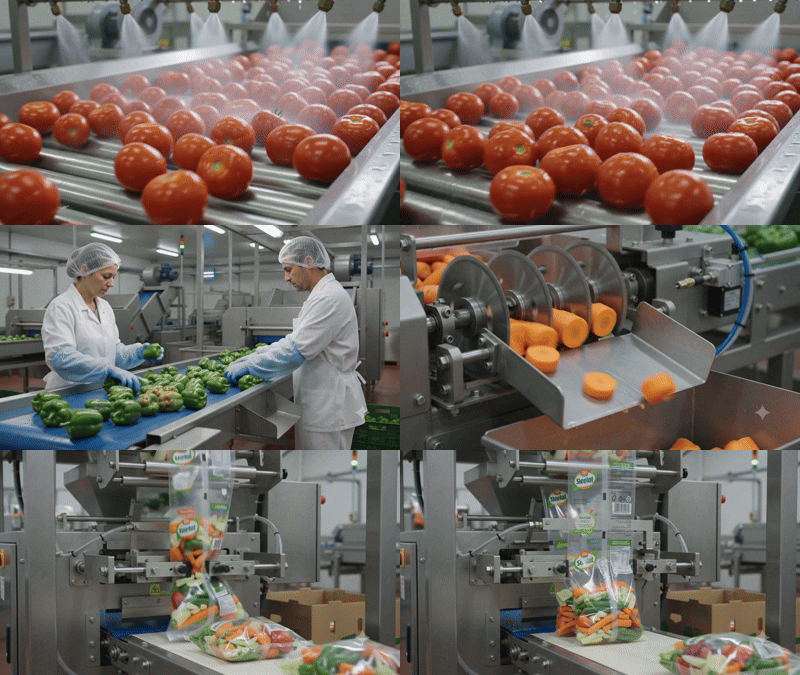
The global landscape of the fruit and vegetable processing industry is undergoing a period of unprecedented structural transformation as of 2026. This evolution is driven by a convergence of technological breakthroughs, shifting consumer behavior towards nutrient-dense convenience, and a regulatory environment that increasingly prioritizes proactive food safety over reactive measures. The industry, valued at approximately USD 328.48 billion in 2025, is projected to expand to USD 435.37 billion by 2030, representing a compound annual growth rate (CAGR) of 5.80%.[1] Within this broader market, the processed fruit segment specifically is accelerating even faster, with estimates suggesting a climb to USD 683.42 billion by 2031 at an 8.5% CAGR, significantly outpacing the fresh produce sector.[2] This trend underscores a fundamental shift where the industrial conversion of raw agricultural commodities into canned, frozen, dried, puréed, or juiced products is no longer merely a preservation strategy but a primary value-addition engine for the modern global food system.[3]
Global Market Dynamics and the 2025–2030 Forecast
The 2026 market environment is characterized by a “time of complexity and contrast,” where economic uncertainty and shifting trade policies coexist with robust demand for premium, value-added formats.[4] Urbanization remains the most potent driver of this demand, as dual-income households and hectic lifestyles necessitate ready-to-eat and ready-to-cook meal solutions that require minimal preparation while maintaining the nutritional profile of fresh produce.[1, 3, 5] This consumer behavior is particularly visible in the rise of the frozen segment, which is forecast to grow at 7.41% annually through 2030, reflecting a growing public perception that individual quick freezing (IQF) and high-pressure processing (HPP) better retain sensitive vitamins and minerals than traditional thermal canning.[1, 6, 7]
Geographically, the Asia-Pacific region continues to lead as the largest market, capturing over 33% of the global share in 2024.[1] However, the fastest growth is emerging in the Middle East and Africa, where an 8.29% CAGR is fueled by significant investments in cold-chain infrastructure and the expansion of the retail sector.[1] India and China represent massive growth engines; India’s food processing market is anticipated to reach USD 1.27 trillion by 2027, driven by a burgeoning middle class and rising disposable incomes.[6, 8]
| Market Metric | 2025 Value (Projected) | 2030/32 Value (Projected) | CAGR (%) |
|---|---|---|---|
| Global Processing Market | $328.48 Billion [1] | $435.37 Billion [1] | 5.80% [1] |
| Total Fruit & Veg Market | $893.50 Billion [9] | $1.1 Trillion (2032) [9] | 5.20% [9] |
| Processed Fruit Segment | $420.00 Billion (Est) | $683.42 Billion (2031) [2] | 8.50% [2] |
| Fruit Juice Market | $155.36 Billion [2] | $222.64 Billion (2033) [2] | 4.60% [2] |
| Global Processed Food | $2.15 Trillion [6] | $2.68 Trillion [6] | 4.45% [6] |
The industry is also navigating significant headwinds. Geopolitical instability and weather shocks have introduced unprecedented volatility into raw material pricing.[1] For instance, in early 2025, US agricultural markets were disrupted by the introduction of broad tariffs, which distorted trade corridors and increased the costs of refrigeration, packaging, and logistics.[4] Climate change is simultaneously forcing a pivot toward drought-resilient varieties and the adoption of advanced irrigation technologies, particularly in major producing regions like Spain.[9] These pressures are encouraging smaller processors to focus on niche markets—such as upcycling “ugly” produce to meet zero-waste mandates—as a way to differentiate and secure margins.[1]
Strategic Business Planning and Niche Selection
The foundation of a successful processing venture lies in the rigorous identification of a specific agricultural niche that aligns with both local resource availability and global demand trends. The process begins with a comprehensive assessment of the local climate, soil conditions, and the existing infrastructure for production, harvesting, and post-harvest handling.[10, 11] Modern entrepreneurs are increasingly looking beyond traditional commodities to “alternative crops” and specialty varieties that command premium prices.[9]
Niche Identification and Market Positioning
Tropical fruits, once considered niche items in Northern markets, have moved into the mainstream. The tropical fruit market is expected to grow at 6.4% CAGR through 2029, with products like mango pulp, frozen berries, and papaya chunks seeing high demand in the retail and foodservice sectors.[2, 7, 12] Another significant opportunity lies in the “plant-based” revolution. Manufacturers are increasingly utilizing vegetables, legumes, and pulses as functional ingredients in meat alternatives, a sector projected to have a market value for plant-based substitutes of USD 85 million by 2030.[8]
The identification of buyers must precede large-scale production. Small-scale startups often thrive by targeting direct-to-consumer channels, such as farmers’ markets or Community Supported Agriculture (CSA) programs, which allow for the capture of higher margins and the collection of first-party consumer data.[10, 13] Larger commercial operations, however, must focus on nurturing relationships with distributors, supermarkets, or the HoReCa (Hotel, Restaurant, Cafe) segment, which is currently expanding at a 7.52% CAGR.[1, 10]
The Business Plan as a Strategic Roadmap
A comprehensive business plan for a 2026 startup must integrate traditional agricultural knowledge with modern digital acumen. It should detail the entire value chain, from raw material sourcing and production processes to distribution channels and marketing strategies.[11, 14] Financial goals must be clearly defined, distinguishing between variable costs (seeds, fertilizer, labor, packaging) and fixed costs (insurance, taxes, loan payments, depreciation).[10, 15]
| Planning Milestone | Recommended Timeframe | Critical Considerations |
|---|---|---|
| Niche Identification | 1-2 Months | Climate suitability, market demand, competitor analysis.[11] |
| Land Lease/Purchase | 1-6 Months | Zoning laws, proximity to suppliers, environmental regs.[11, 14] |
| Equipment Acquisition | 1-3 Months | Lead times for specialized tech, automation levels.[11] |
| Operational Setup | 3-6 Months | Buffer for unexpected challenges, permitting, staff training.[11] |
| Licensing & Permits | 1-3 Months | Health and safety standards, food safety certifications.[11] |
Risk management strategies should be baked into the plan from the outset. This includes diversifying product offerings to mitigate the impact of a single crop’s failure, implementing hedging strategies for price volatility, and exploring crop insurance options to protect against “Acts of God” or production losses.[11, 16]
Facility Design, Engineering, and Construction Standards
A fruit and vegetable processing facility must be engineered as a hygienic fortress, designed to prevent contamination from insects, animals, and microorganisms while optimizing the flow of materials.[17] The design must account for the specific physiological needs of produce, which continues to respire after harvest, releasing moisture and ethylene gas that can accelerate spoilage if not properly managed.[18]
Structural Integrity and Material Selection
The construction of the building must utilize materials that are easy to clean, non-corrosive, and durable. In tropical climates, overhanging roofs are essential to shield walls from direct sunlight and reduce the internal heat load.[17] High-level vents, screened with mesh, allow heat and steam to escape, promoting a flow of fresh air that is critical for worker comfort and product stability.[17]
Walls and floors are the primary contact surfaces and require the most stringent specifications. Internal walls should be plastered with a high-quality finish to eliminate cracks and ledges that accumulate dust.[17] The lower four feet (1.08 meters) of the walls must be waterproof—ideally tiled with glazed tiles or painted with white gloss paint—to withstand the frequent splashing and high-pressure cleaning inherent in wet processing.[17]
| Facility Component | Design Requirement | Rationale |
|---|---|---|
| Floors | Smooth-finished, crack-free concrete | Prevents microbial harborages; facilitates cleaning.[17, 19] |
| Drainage | 1 in 8 slope toward central channel | Ensures rapid removal of waste water and prevents pooling.[17, 20] |
| Coving | Curved joints between floor and wall | Eliminates sharp corners where dirt and bacteria collect.[17] |
| Lighting | Enclosed in shatter-proof coverings | Prevents glass contamination; ensures worker safety.[20, 21] |
| Ceilings | Paneled with no exposed rafters | Prevents dust, insects, or birds from nesting above products.[17] |
| Windows | Sloped sills and mosquito mesh | Prevents item storage on sills; keeps out pests.[17] |
Lighting and Utility Engineering
Lighting choices in a processing plant must go beyond simple visibility. Natural daylight should be maximized to reduce costs, but artificial lighting is necessary for consistent operations. Fluorescent tubes are generally efficient, but incandescent bulbs must be used near fast-moving machinery to avoid the “stroboscopic effect,” where rotating parts appear stationary due to the flicker rate of fluorescent lights, creating a severe safety hazard.[17]
Water supply and sanitation systems must be redundant and robust. Since municipal supplies can be unreliable, the installation of high-level covered storage tanks is recommended, providing at least one day’s reserve for production.[17, 20] Water used for washing products or as an ingredient must be treated—often through sedimentation, filtration, or chemical sterilization like hypochlorite.[17] For cleaning surfaces, water should contain 200 ppm of chlorine, while water used as an ingredient is typically kept at 0.5 ppm to maintain a balance between safety and flavor integrity.[17]
Processing Equipment and Technical Operations
The heart of the processing business lies in its machinery, which must revolve around five core stages: cleaning, sorting, pretreatment, processing, and packaging.[22] The selection of equipment directly determines product quality, production efficiency, and market competitiveness.[22]
Preparation and Primary Processing
The cleaning stage is tailored to the physical characteristics of the produce. Brush washing machines with soft nylon brushes are used for delicate fruits like grapes and strawberries to remove dirt without damaging the skin.[22] For berries like raspberries and blueberries, ultrasonic washing machines use high-frequency vibrations to dislodge tiny particles and microorganisms in the pre-cleaning stage of juice production.[22]
Sorting equipment has become highly sophisticated, utilizing high-precision weight sensors and AI-driven vision systems. Weight grading machines can sort fruits like apples and citrus with an error margin of less than 1 gram, while industrial cameras equipped with AI algorithms can identify blemishes, mechanical damage, and ripening levels with 98% accuracy.[22, 23]
Secondary Processing and Preservation
Depending on the final product, various specialized machines are required:
- Peeling and Pitting: Citrus peeling machines now use vacuum suction or rotary blades to achieve peeling rates exceeding 95%, with capacities up to 10 tons per day.[22] Apple pitting machines use stamping designs to achieve a 99% pitting rate with less than 5% pulp loss, which is essential for jam and canning lines.[22]
- Extraction and Juicing: Screw juicers utilizing propulsion and screen filtration can achieve juice yields over 85% while retaining natural fibers.[22] For clear juices, filtration using fine muslin cloth or stainless steel strainers is the standard.[17]
- Thermal Stabilization: Ultra-High Temperature (UHT) sterilization (135–150°C for 2–4 seconds) is used for room-temperature juice packaging, extending shelf life up to 12 months without refrigeration.[22]
- Drying and Dehydration: Beyond traditional solar dryers, commercial cabinet and tunnel dryers are the workhorses of the industry.[17] Freeze-drying is the fastest-growing segment (8.10% CAGR) because it locks in nutrients and flavor by sublimating moisture under vacuum at temperatures below -30°C.[7, 22]
| Processing Method | Target Product | Key Technology |
|---|---|---|
| IQF (Individual Quick Freezing) | Sliced veg, berries | Fluidized bed freezing.[1] |
| HPP (High-Pressure Processing) | Fresh juices, guacamole | Cold pasteurization using 6000 bar pressure.[1] |
| Canning | Peaches, tomatoes | Retort pouches or hybrid flexible formats.[1, 24] |
| Freeze-Drying | Specialty snacks | Vacuum sublimation.[7, 22] |
| Pulsed Electric Field (PEF) | Juices, pre-cut veg | Non-thermal microbial inactivation.[7] |
Food Safety Systems and Regulatory Compliance
In 2026, food safety is a shared global responsibility, and compliance with standards like the US Food Safety Modernization Act (FSMA) or the EU’s HACCP-based rules is a fundamental prerequisite for market entry.[25, 26] The focus has shifted from responding to illnesses to preventing them through rigorous, site-specific safety plans.[26]
The US FSMA Framework
Under FSMA, every processing facility is required to have a written Food Safety Plan (FSP) tailored to its specific equipment, layout, and raw materials.[26, 27] This plan must be reanalyzed at least once every three years or whenever a process change occurs.[26]
- Hazard Analysis: The facility must identify known or reasonably foreseeable biological, chemical, and physical hazards. This includes naturally occurring toxins, environmental pathogens (like Listeria), and hazards introduced for economic gain.[26]
- Preventive Controls: Processors must implement written controls for identified hazards. These include process controls (e.g., specific cooking temperatures), food allergen controls (e.g., preventing cross-contact between peanuts and other products), and sanitation controls to maintain a clean environment.[26]
- Verification and Oversight: Facilities must conduct verification activities, such as product testing and environmental monitoring, to ensure that controls are consistently effective.[26, 27]
- Supply Chain Program: Manufacturers are responsible for ensuring that raw materials requiring a control are received only from approved suppliers who meet the same level of public health protection.[26, 27]
International Trade and Certification
For those looking to export, understanding the “Harmonized System” (HS) codes is critical for customs clearance. EU and UK markets have stringent rules regarding pesticide residues and phytosanitary certificates for imported produce.[28, 29] The UK, for example, requires pre-notification of “medium A risk” fruits and vegetables via the IPAFFS system and a certificate of conformity for certain marketing standards.[30, 31]
Traceability has become a defining standard. Modern buyers demand transparency from the field to the plate. Implementing digital systems that track unique batch codes through every stage of washing, trimming, cutting, and refrigeration is essential for a “due diligence” defense in the event of a food safety dispute.[25, 32]
Supply Chain Management, Procurement, and Seasonality
The perishability of fruits and vegetables makes supply chain management a high-stakes endeavor. Processors must manage the inherent tension between harvest cycles and constant consumer demand.[33, 34]
Managing Seasonal Variability
The availability of fresh produce is dictated by climate, rainfall, and natural harvest cycles. When crops are abundant during peak seasons, prices drop, which is the optimal window for large-scale processing of items like tomatoes or mangoes.[34, 35] Conversely, in the off-season, limited availability leads to soaring prices, often forcing processors to pivot to different crops—such as moving from mango processing in the summer to apples and pears in the winter—to maintain facility throughput.[35]
To mitigate these risks, successful businesses practice “diversified sourcing,” relying on multiple suppliers across different geographic regions to maintain a consistent year-round supply.[34, 36] This strategy is increasingly supported by predictive analytics and AI-driven forecasting, which analyze historical sales, weather patterns, and regional demands to align production with actual market needs.[25, 34]
Grower Contracts and Best Practices
Formal contracts with growers provide the stability needed for industrial-scale processing. A well-drafted contract should move beyond simple “spot market” transactions to include:
- Quality Incentives: Pricing structures that reward growers for meeting specific parameters for ripeness, size, or color.[16]
- Clear Specifications: Precise, objectively measurable standards for quality and condition.[37]
- Payment Procedures: Defined timeframes for inspection and payment, including protocols for handling disputes or quality rejections.[37, 38]
- “Acts of God” Clauses: Provisions for abnormal situations beyond the grower’s control, such as droughts or floods, that might disrupt supply.[16]
| Contract Clause | Importance | Strategic Implication |
|---|---|---|
| Quantity Quotas | High | Ensures efficient utilization of processing capacity.[16] |
| Price Fixing/Flex | High | Protects both parties from extreme market volatility.[16] |
| Inspection Timeframe | Medium | Prevents disputes over product degradation after delivery.[37] |
| Intellectual Prop | Low/Med | Protects unique varieties or proprietary husbandry practices.[38] |
| Arbitration | Medium | Provides a clear process for dispute resolution without litigation.[16, 38] |
Financial Engineering: Startup Costs, Margins, and Funding
The financial landscape for a processing startup is characterized by high upfront capital expenditures (CAPEX) and the need for significant working capital to cover the “revenue lag” between raw material purchase and product sale.[39]
Startup Capital Requirements
Total startup costs for a small-scale vegetable operation can range from USD 110,000 to USD 200,000 for a basic 1-hectare farm with post-harvest facilities.[39] For a dedicated processing plant, costs scale rapidly: a small plant (100–1,000 kg/h) may require USD 10,000 to USD 100,000 in machinery alone, while a larger plant (1,000–2,000 kg/h) can see machinery budgets between USD 100,000 and USD 500,000.[40] When land, building construction, and labor are factored in, total costs for a commercial-grade facility can range from USD 1 million to over USD 10 million.[41]
| Cost Category | Small Scale (Est.) | Large Scale (Est.) | Critical Factor |
|---|---|---|---|
| Land & Building | $50,000 – $100,000 | $500k – $2 Million+ | Proximity to raw materials.[41] |
| Processing Machinery | $14,000 – $50,000 | $500k – $5 Million | Level of automation.[40, 41] |
| Working Capital | $60,000 – $95,000 | $500k – $2 Million | 6-9 month pre-harvest runway.[39, 41] |
| Logistics/Vehicles | $30,000 – $40,000 | $100,000 – $500,000 | Cold chain integration.[25, 39] |
| Regulatory/Permits | $500 – $5,000 | $50k – $500,000/yr | Location-specific compliance.[11, 41] |
Profitability and Margin Analysis
The processing industry generally operates on a high-volume, low-net-margin basis. Broadline distributors typically operate on gross margins of 10–20%, but after accounting for logistics, refrigeration, labor, and fuel, net profit margins are thin, usually between 2% and 5%.[42]
To increase profitability, processors focus on “value-added” products—such as pre-cut produce or specialty gourmet items—which command higher margins than commodity staples.[42] Economies of scale are also critical; by increasing the volume of tonnes produced, processors can spread fixed overhead costs (management, insurance, licensing) across more units, reducing the per-tonne production cost and increasing the net profit.[43]
Funding Opportunities and Grants
In 2026, significant funding is available to help producers enter value-added activities. The USDA Value-Added Producer Grant (VAPG) is a premier program, providing up to USD 75,000 for planning activities (feasibility studies, business plans) and up to USD 250,000 for working capital (processing, packaging, advertising).[44, 45] These grants are nationally competitive and require a 1:1 match in cash or in-kind contributions.[45]
| Grant Program | Agency | Award Cap | Focus Area |
|---|---|---|---|
| VAPG | USDA | $250,000 | Planning & Working Capital.[45] |
| Specialty Crop Block | State/USDA | Varies | Market competitiveness of fruits/veg.[44] |
| REAP | USDA | Varies | Renewable energy & efficiency.[44] |
| CNIP | CDFA/State | Varies | Nutrition incentives for local produce.[46] |
| Ag Innovation | Farm Bureau | $100,000 | Entrepreneurship in agriculture.[44] |
Distribution and Marketing Strategies for the Modern Processor
The choice of distribution channel—Direct-to-Consumer (DTC), retail, or foodservice—is a strategic decision that shapes every aspect of the processing line.[11, 13]
The Rise of Direct-to-Consumer (DTC)
The global food DTC market is projected to reach USD 195.39 billion by 2031, growing at a CAGR of 18.7%.[13] By bypassing intermediaries like wholesalers, brands can reclaim 20% to 40% of the margins typically lost to retail trade spend.[13] The DTC model is particularly valuable for its ability to capture “first-party data”—such as customer email addresses and preferences—which food brands can use to accelerate product launches and reduce go-to-market costs by up to 20%.[13]
Retail and Foodservice Integration
While DTC offers high margins, retail and foodservice remain the primary channels for volume. The foodservice/HoReCa segment is particularly dynamic, advancing at a 7.52% CAGR as restaurants seek high-quality processed ingredients to manage their own labor shortages.[1] For retail, processors are increasingly focused on the “premium frozen” aisles and ready-to-eat refrigerated meals, which are the fastest-growing segments in the cold food market.[7]
Successful marketing today requires clear storytelling around sustainability and transparency. Packaging design has moved from mere presentation to a critical branding tool, with “minimalist and transparent” designs that communicate a commitment to pesticide-free or organic sourcing.[25, 47]
Technological Transformation: AI, Robotics, and Smart Storage
As the industry moves toward 2030, technology is the primary differentiator for successful scaling. Artificial Intelligence (AI) and robotics are moving from the experimental to the essential phase, particularly as labor shortages intensify.[5, 48, 49]
Robotics and AI in the Processing Line
Over 50% of large-scale operations are expected to adopt AI-powered robotics for harvesting and planting by the end of 2025.[48] In the facility, robots now handle complex tasks such as sorting, cutting, and packaging with greater accuracy and speed than manual labor.[5] AI systems also improve energy efficiency and provide predictive maintenance, alerting operators to potential machine failures before they cause costly downtime.[5, 50]
The “Robotics-as-a-Service” (RaaS) model is emerging as a solution for smaller processors who cannot afford the high upfront costs of automation. Startups like Chef Robotics offer meal-kit assembly and mobile packaging through subscription-based pricing, allowing smaller players to scale efficiently.[5]
Advanced Post-Harvest Storage
Controlled Atmosphere (CA) storage is the “time machine” of the fruit industry.[51] By precisely regulating oxygen (O2), carbon dioxide (CO2), and humidity, CA storage can extend the shelf life of produce by up to four times.[52] For example, under normal conditions, apples may only store for 3–4 months, but under CA conditions (<4%O2), they can be kept fresh for 9–12 months.[52]
| Produce Type | CA Temperature | Oxygen Level | CO2 Level | Extended Shelf Life |
|---|---|---|---|---|
| Apple | 0 – 5 °C | < 4 % | < 0.7 % | 9–12 Months.[52] |
| Pear | -1 – 0 °C | 1 – 3 % | 0 – 1 % | 12 Months.[52] |
| Avocado | 7 – 12 °C | 2 – 3 % | 3 – 10 % | 2 Months.[52] |
| Mango | 8 – 13 °C | 3 – 7 % | 5 – 8 % | 3–6 Weeks.[52] |
| Blueberry | -0.5 – 0 °C | 2 – 3 % | 10 – 12 % | 2 Months.[52] |
The latest iteration of this technology, Dynamic Controlled Atmosphere (DCA), uses sensors to monitor the fruit’s physiological response in real-time, allowing oxygen levels to be dropped to the absolute minimum—just above the “anaerobic compensation point”—putting the fruit into a “deep coma” that preserves peak freshness for months.[51, 52]
Sustainable Packaging and the Circular Economy
Packaging is undergoing a revolution driven by environmental concerns and regulatory mandates like the EU Packaging and Packaging Waste Regulation (PPWR). The industry is moving toward “mono-material” solutions and paper-based trays that are 100% recyclable.[18, 53]
Trends in Eco-Friendly Materials
The demand for biodegradable and compostable materials is expected to soar by 2026. Processors are increasingly turning to plant-based plastics, mushroom packaging, and seaweed-derived films to replace traditional single-use plastics.[47, 54] These materials not only reduce the carbon footprint but also meet the demands of the growing segment of eco-conscious consumers.[47]
Smart Packaging and the Digital Twin
The intersection of technology and packaging has given rise to “smart” systems. These include built-in sensors that track freshness and monitor temperature throughout the cold chain.[47, 53] Digital twins—virtual models of real-world supply chain processes—are being used by companies like IFCO to optimize the management of reusable packaging containers (RPCs), using real-time monitoring to reduce transportation costs and fuel consumption through dynamic route planning.[53]
Synthesis of Strategic Imperatives
The successful establishment and growth of a fruit and vegetable processing business in 2026 require a multidimensional focus on facility hygiene, technological integration, and financial planning. The market clearly rewards those who can move beyond simple preservation to provide high-value, nutrient-dense products in sustainable, smart packaging.
As labor costs rise and climate volatility increases, the adoption of AI and robotics will be the primary lever for maintaining margins. Simultaneously, the shift toward Direct-to-Consumer models provides a powerful opportunity to reclaim margins and build a resilient brand. By grounding operations in rigorous compliance with standards like FSMA and leveraging the growing availability of specialized grants, processors can navigate the “complexity and contrast” of the modern agricultural sector to build a thriving, future-proof enterprise.
——————————————————————————–
- Fruit & Vegetable Processing Market – Size, Revenue & Share – Mordor Intelligence, https://www.mordorintelligence.com/industry-reports/fruit-and-vegetable-processing-market
- TOP 20 FRUIT MARKETING STATISTICS 2025 | Amra And Elma LLC, https://www.amraandelma.com/fruit-marketing-statistics/
- Fruit & Vegetable Processing Market Size and Outlook 2030 – TechSci Research, https://www.techsciresearch.com/report/fruit-and-vegetables-processing-market/2207.html
- Produce Industry Trends – Mid-year Update 2025, https://www.freshproduce.com/siteassets/files/consumer-trends/2025-produce-industry-trends—mid-year-update.pdf
- The Global Food Processing Automation (FPA) Market and Competitive Landscape, 2025-2033 – Robotics and AI Revolutionizing Food Safety and Quality Standards – GlobeNewswire, https://www.globenewswire.com/news-release/2025/11/03/3179019/28124/en/The-Global-Food-Processing-Automation-FPA-Market-and-Competitive-Landscape-2025-2033-Robotics-and-AI-Revolutionizing-Food-Safety-and-Quality-Standards.html
- Processed Food Market Size, Competitors & Forecast to 2030, https://www.researchandmarkets.com/report/processed-food-market
- Processed And Frozen Fruits Market Size, Share & 2030 Growth Trends Report, https://www.mordorintelligence.com/industry-reports/processed-and-frozen-fruits-market
- Fruit and Vegetable Processing Market Size, Share, Forecast – MarketsandMarkets, https://www.marketsandmarkets.com/Market-Reports/fruit-vegetable-processing-market-140232885.html
- Fruit and Vegetable Market 2025 Global and European Outlook – Gedeth Network, https://gedeth.com/blog/2025/10/02/fruit-and-vegetable-market-2025/
- Planning for a New Commercial Vegetable Business | Mississippi State University Extension Service, https://www.extension.msstate.edu/publications/planning-for-new-commercial-vegetable-business-0
- How to Start an Agricultural Business [2025 Guide: 8 Steps + Free Business Plan] – Serif, https://www.serif.ai/start-a-business/how-to-start-an-agricultural-business-2025-guide-8-steps-free-business-plan
- Everything You Need to Know About Food Import and Export in 2025 – JK International, https://www.jkinternational.net/everything-you-need-to-know-about-import-and-export-in-the-food-industry-2025-guide/
- How To Sell Food DTC: Proven Trends and Strategies for 2026 …, https://www.shopify.com/enterprise/blog/dtc-food
- How To Start A Fruit And Vegetable Processing Business, https://www.washturnkey.com/blog/how-to-start-a-fruit-and-vegetable-processing-business/
- Farm Financial Management fruit & Vegetable Producers – nwdistrict.ifas.ufl.edu |, https://nwdistrict.ifas.ufl.edu/phag/files/2018/03/Farm-Finances-PFV-2018.pdf
- Contracts and their specifications – Contract farming – Partnerships for growth, https://www.fao.org/4/y0937e/y0937e06.htm
- 2.5. Establishing production facilities, https://www.fao.org/4/w6864e/w6864e0b.htm
- Rethinking sustainable food packaging for freshness, impact and less waste – Mondi Group, https://www.mondigroup.com/news-and-insight/2025/rethinking-sustainable-food-packaging-for-freshness-impact-and-less-waste/
- Facility | Washington State Department of Agriculture, https://agr.wa.gov/departments/food-safety/food-safety/food-processors/facility
- Chapter 1 – Technical manual on small-scale processing of fruits and vegetables, https://www.fao.org/4/x0209e/x0209e02.htm
- Food Safety Practices to Expect from Your Fresh-Cut Produce Processor, https://www.fns.usda.gov/fs/produce-safety/processor
- What are the essential equipment requirements for a fruit processing production line?, https://www.fruit-processingline.com/news/what-are-the-essential-equipment-requirements-for-a-fruit-processing-production-line-270876.html
- Recent Advancements and Innovations in Post-Harvest Handling, Storage, and Technology for Vegetables: A Review Abstract, https://files.sdiarticle5.com/wp-content/uploads/2025/02/Revised-ms_ACRI_130626_v1.pdf
- Canned Fruits – Market Share Analysis, Industry Trends & Statistics, Growth Forecasts (2025 – 2030), https://www.giiresearch.com/report/moi1689833-canned-fruits-market-share-analysis-industry.html
- Top 10 Best Practices For Fresh Fruits and Vegetables Supply Chain Management, https://www.farmerp.com/blog/best-practices-fresh-fruits-vegetables-supply-chain-management/
- Food Safety Modernization Act (FSMA) | FDA, https://www.fda.gov/food/guidance-regulation-food-and-dietary-supplements/food-safety-modernization-act-fsma
- Frequently Asked Questions on FSMA – FDA, https://www.fda.gov/food/food-safety-modernization-act-fsma/frequently-asked-questions-fsma
- Requirements for processed vegetables, fruit, berries and nuts – Kommerskollegium, https://www.kommerskollegium.se/en/import–export/firms-in-developing-countries-wanting-to-export-to-sweden/export-guide/living-up-to-requirements/legal-requirements/requirements-for-processed-vegetables-fruit-berries-and-nuts/
- Importing fruit and vegetables – Food Standards Agency, https://www.food.gov.uk/business-guidance/importing-fruit-and-vegetables
- Import plants and plant products from the EU to Great Britain – GOV.UK, https://www.gov.uk/guidance/import-plants-and-plant-products-from-the-eu-to-great-britain
- Importing and exporting fresh fruit and vegetables – GOV.UK, https://www.gov.uk/guidance/importing-and-exporting-fresh-fruit-and-vegetables
- EU LEGAL REQUIREMENTS FOR IMPORTS OF FRUITS AND VEGETABLES (A SUPPLIERS GUIDE) – GOV.UK, https://assets.publishing.service.gov.uk/media/57a08c2fe5274a31e0001056/60506EU-REGULATIONS-GUIDE-2006.pdf
- Fruit and Vegetable Production – Missouri Center for Career Education, https://www.missouricareereducation.org/doc/fruitveg/FruitVeg_L1_Financial_Res.pdf
- Navigating through Seasonality & Demand Fluctuations for Fresh Produce – AgriERP, https://agrierp.com/blog/managing-fresh-produce-seasonality-and-demand-fluctuations/
- How Seasonal Variations Affect Fruit Supply and Processing – Avondale Foods, https://avondalefoods.com.au/blogs/how-do-seasonal-variation-affect-fruit-supply-and-processing/
- How To Navigate Peak Fruit & Produce Season – Silo, https://usesilo.com/blog/how-to-navigate-peak-fruit-and-produce-season
- Legal Best Practices for the Wholesale Farmer, https://rvpadmin.cce.cornell.edu/uploads/doc_481.pdf
- 10 Essential clauses in supply contracts in the agri-food industry – Bounsel, https://www.bounsel.com/blog/10-clauses-supply-contracts-agrifood-industry/
- How to Calculate Small-Scale Vegetable Farming Startup Costs – Financial Models Lab, https://financialmodelslab.com/blogs/startup-costs/small-scale-vegetable-farming
- Cost of Small Scale Vegetable Processing Plant | Many Factors, https://www.foodprocessinglines.com/2023/12/06/cost-of-small-scale-vegetable-processing-plant/
- Create A Vegetable Processing Plant Cost, https://www.washturnkey.com/blog/create-a-vegetable-processing-plant-cost/
- How the Food Distribution Industry Works | Umbrex, https://umbrex.com/resources/how-industries-work/agriculture-and-food/how-the-food-distribution-wholesaling-industry-works/
- Increasing Productivity, https://nre.tas.gov.au/Documents/Increasing-Productivity—Achieving-economies-of-scale-in-vegetable-production.pdf
- Farm Grants: How to Get Free Money in 2025 – NerdWallet, https://www.nerdwallet.com/business/loans/learn/farm-grants
- Value Added Producer Grants in Florida – USDA Rural Development, https://www.rd.usda.gov/programs-services/business-programs/value-added-producer-grants-5
- Grant Programs – California Department of Food and Agriculture – CDFA, https://www.cdfa.ca.gov/grants/
- Top Food Packaging Trends to Watch in 2025 – LK Unpacked, https://unpacked.lkpkg.com/resources/top-food-packaging-trends-to-watch-in-2025/
- Ag Robotics & AI Robotics In Agriculture: 2025 Trends – Farmonaut, https://farmonaut.com/precision-farming/ag-robotics-ai-robotics-in-agriculture-2025-trends
- The 2025 Crop Robotics Landscape, Mapping Progress and Possibility – The Mixing Bowl, https://www.mixingbowlhub.com/landscape/the-2025-crop-robotics-landscape
- Food Processing Trends 2025: Innovation, AI & Sustainability, https://www.niir.org/blog/food-processing-trends-2025/
- “Controlled atmosphere, tailored ripening, and new global balances” – FreshPlaza, https://www.freshplaza.com/north-america/article/9797251/controlled-atmosphere-tailored-ripening-and-new-global-balances/
- Fruit and Vegetable Storage: The Right Atmosphere Matters – epluse.com, https://www.epluse.com/news/blog/detail/2025-09-04-ca-dca-storage-fruit-and-vegetables-stay-fresh-longer-thanks-to-a-controlled-atmosphere/
- Top 6 sustainable packaging trends for 2025 – IFCO Systems, https://www.ifco.com/top-6-sustainable-packaging-trends-for-2025/
- Sustainable Packaging Trends of 2025 – EcoEnclose, https://www.ecoenclose.com/blog/sustainable-packaging-trends-of-2025


Leave a comment